It’s a bird, it’s a plane, it’s . . .
When Ted and I biked on Sunday, the high temperature was 67 degrees. When we biked past the National Weather Service on the MO Research Park of the Busch Greenway, Ted wanted to stop in to see some of his previous co-workers. While we were chatting, one of the forecasters told us they were preparing to issue a winter weather advisory for Monday. And so they did–just a short while after we left to continue our bike ride.
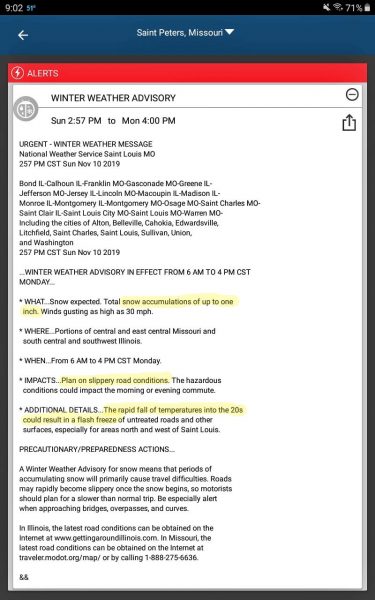
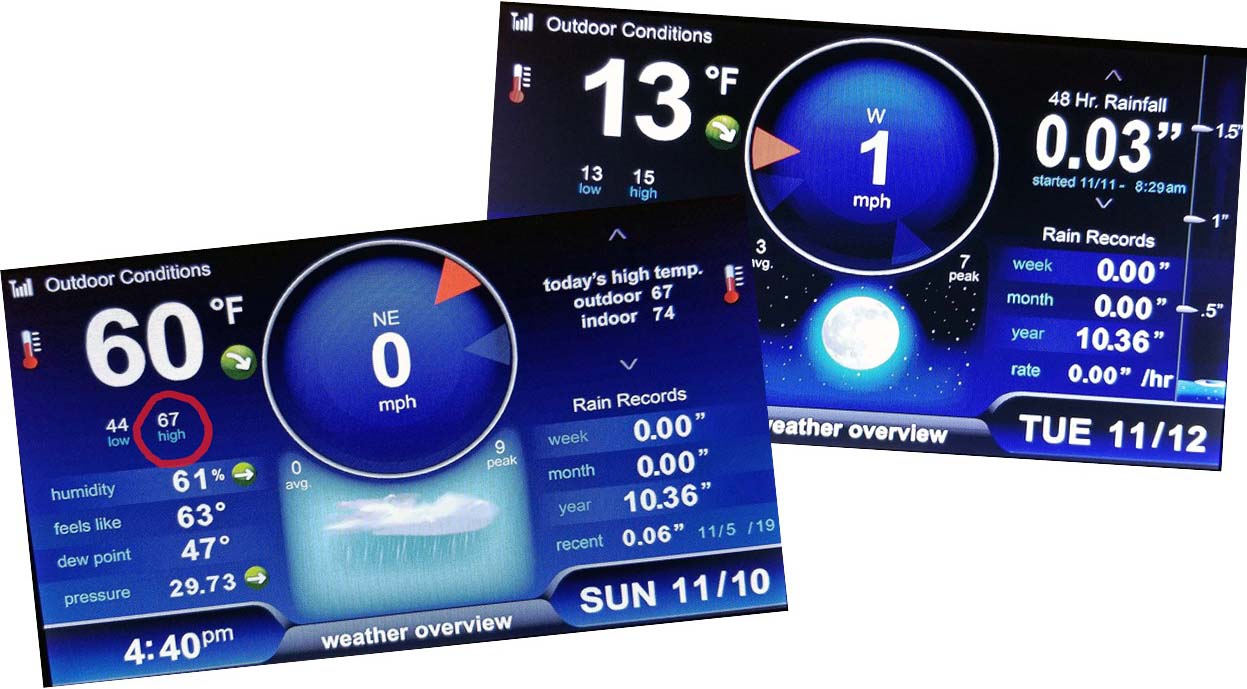
Those NWS forecasters were spot on, including the flash freeze–except we had more snow than expected. Compare our Sunday (high 67) and Monday (13 degrees) temperatures. I took the Monday picture when we went to bed. Overnight, the temperature dropped some more, down to 8 degrees at our house. The official low temperature (at the airport) was 11 degrees–one degree lower than the previous record of 12 degrees set in 1911–108 years ago!
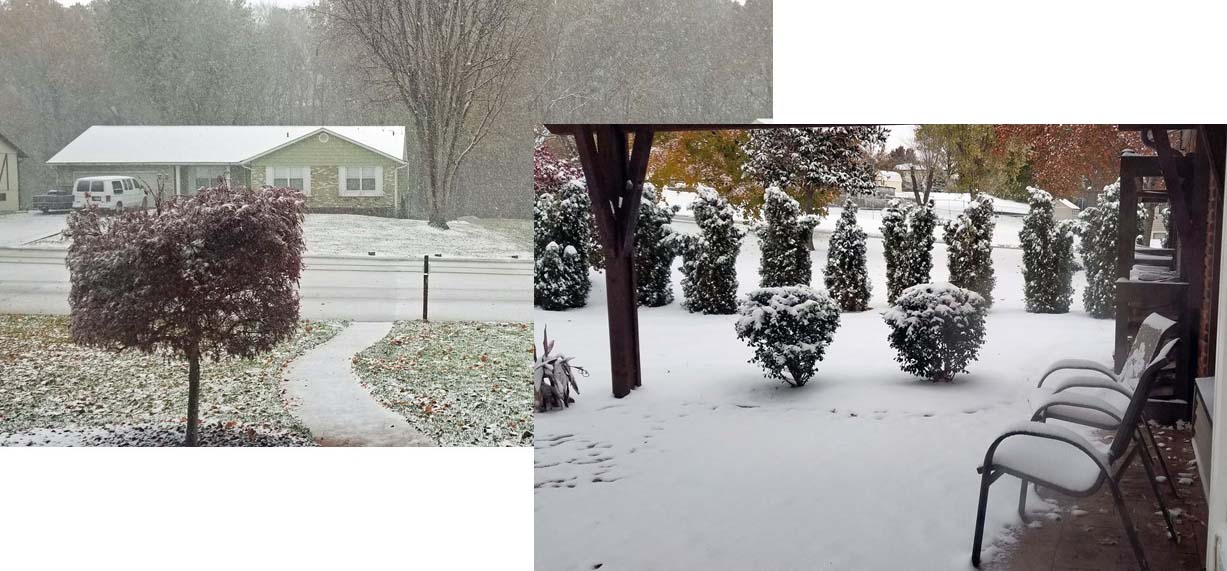
After biking in 67-degree sunshine Sunday, we woke up Monday to falling snow that continued until late afternoon. The previous record for snowfall on November 11 was one inch in 1991; the airport had an official 1.5 inches yesterday, and we had 2 inches at our house. The average date for a St. Louis snowfall of at least one inch is December 21–more than a month later than this.
After the snow stopped, the skies cleared, the moon appeared, the temperature dropped some more, and a meteor streaked across the sky just before 9:00 p.m. Within minutes, people were posting security camera videos of the event.
According to NASA, the meteor was a basketball-size piece of rock that broke off from the asteroid belt between Mars and Jupiter before entering Earth’s atmosphere. It passed near St. Louis just 59 miles above the ground and continued for about 70 miles before breaking into pieces when it was about 12 miles above the ground. The meteor traveled at 33,500 mph, creating a sonic boom that was heard for miles.
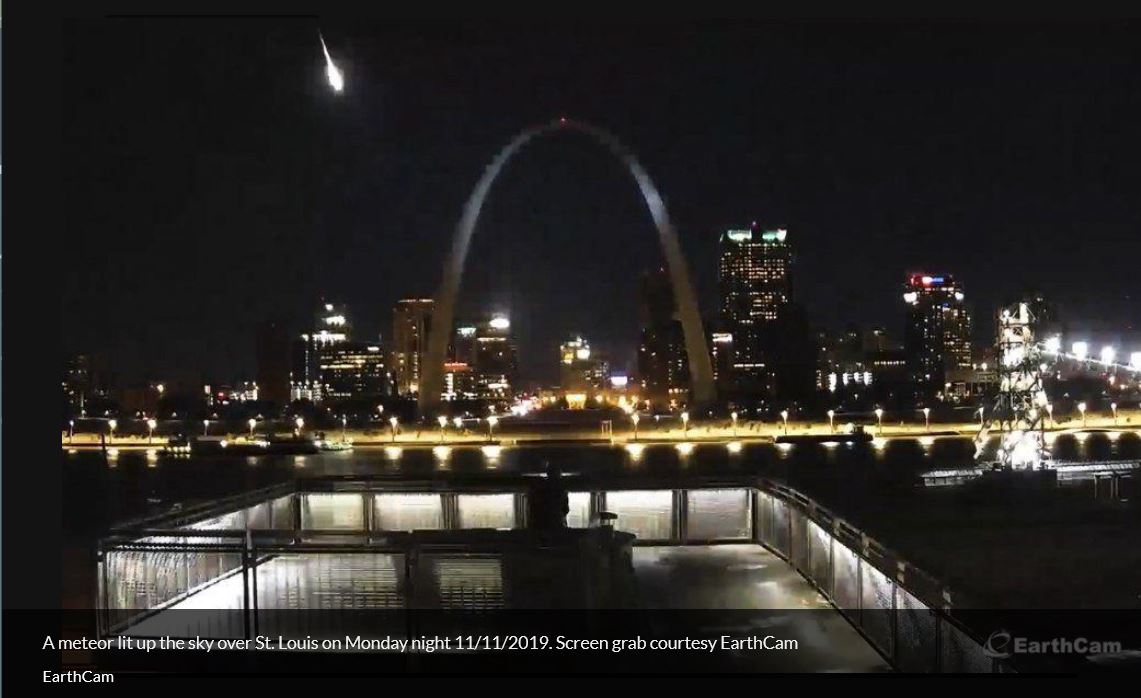
Ted and I didn’t see the meteor first-hand because we weren’t outside in the cold for the few seconds it streaked through the sky, but videos show a bright flash as the meteor streaked by. If we had been outside and seen the flash, we’d have probably looked at each other and asked, “What was that?” and the meteor would already have been out of sight.
The temperature didn’t go up much today, As a result, we also set another 100+ year record for the lowest maximum temperature for today. We made it up to 21 degrees. The previous record low maximum was 22 degrees, also set in 1911. The normal high for today is 58 degrees.
What a day, with record low temperatures, record snowfall, and a falling meteor, all within less than 24 hours.
The weather forecast for Saturday and Sunday was beautiful–sunny with high temperatures in the upper 60s. Monday’s forecast included nasty language: cold and snow. Ted and I decided to take our bikes out over the weekend for what could be the last time before spring. We chose two of our favorite routes: The Dardenne Creek Greenway on Saturday and the Busch Greenway / Katy Trail on Sunday.
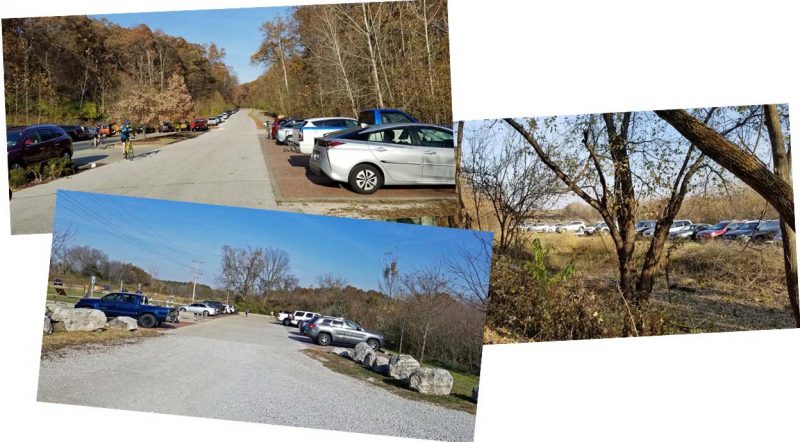
With such good weekend weather, we met a lot of like-minded people on the usually sparsely populated greenways and trails. All of the trail access parking lots were crowded with cars that brought families of bicyclists, walkers, and hikers.
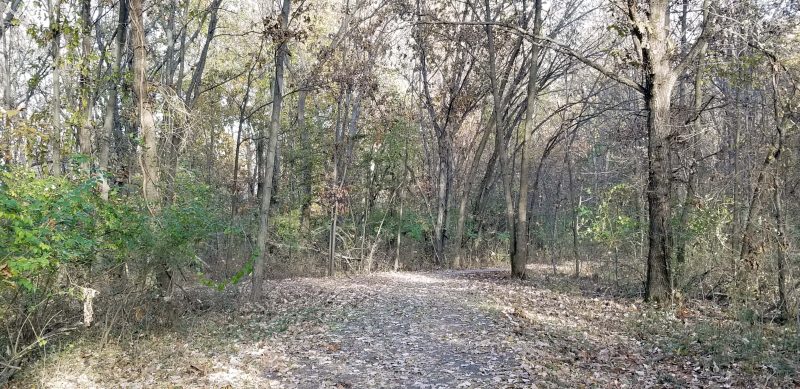
Sometimes, the fallen leaves made it difficult to see the path.
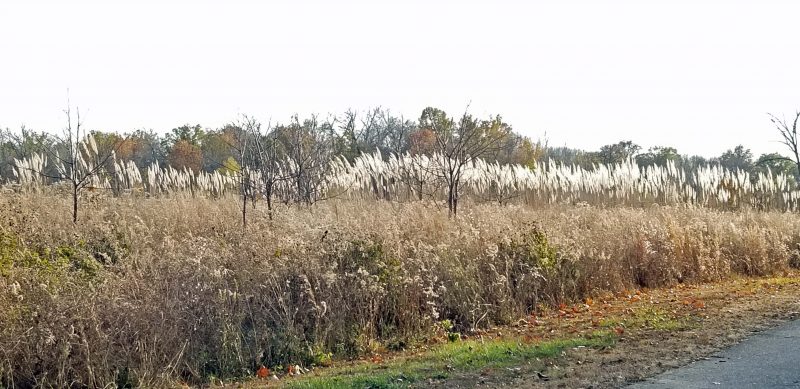
The field of Queen Anne’s lace on the Dardenne Greenway now flaunts more seasonal grasses.
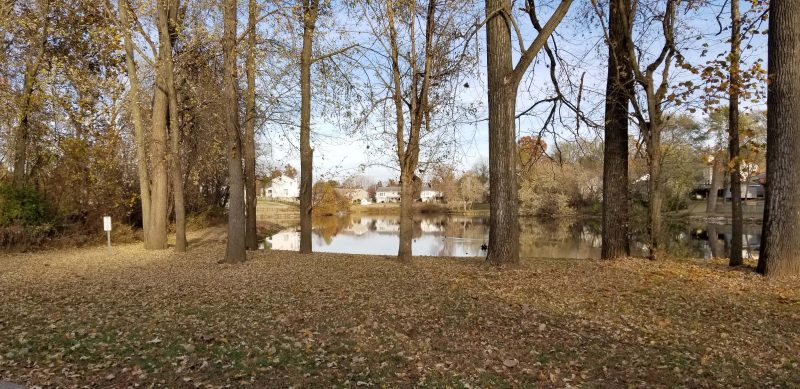
The summer green lake views have changed to their official fall colors.
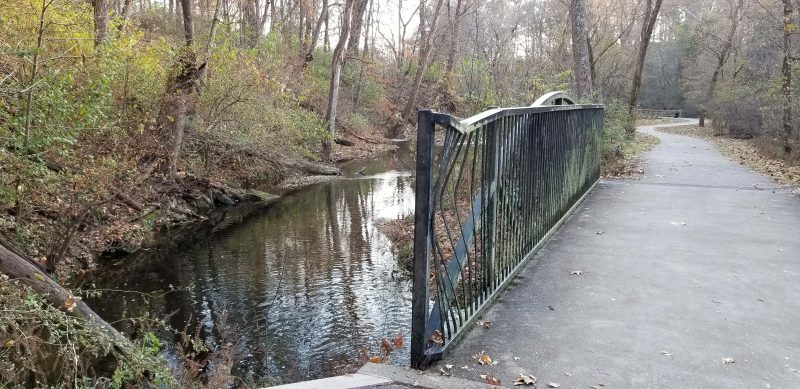
The bridges and creek views are always scenic. Someone hit this bridge rail hard!
Sunday was such a beautiful day and we were enjoying ourselves so much that we biked farther than usual on the Katy Trail. This meant we saw some new sights.
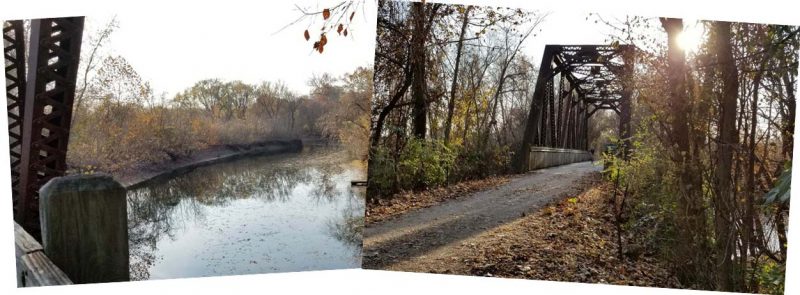
We crossed the Femme Osage Creek, which has an awesome old railroad bridge.
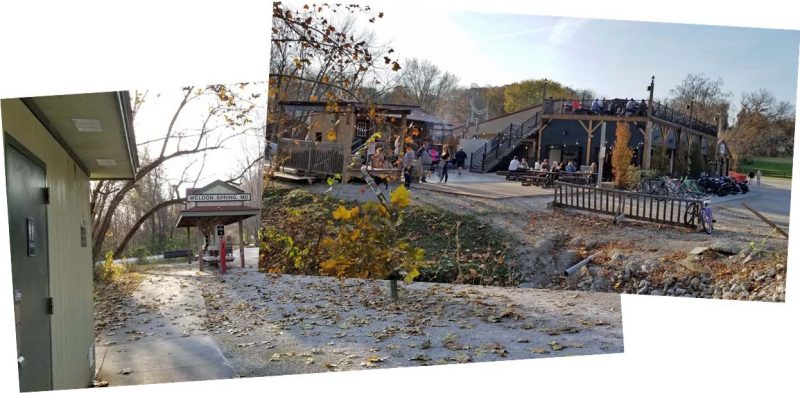
Farther on, we stopped at the Weldon Spring bike stop and discovered it has parking, bike racks, benches, trail information, and rest rooms. It was only three more miles to the Defiance bike stop, so we kept pedaling. There we found a restaurant and lots of happy people enjoying the outdoor patio and rooftop seating.
When we loaded our bikes back onto our bike carrier, we had pedaled 15 miles on Saturday and 27 miles on Sunday. Whew! What a great way and a great weekend to (probably) finish the biking season.
Since we bought our e-bikes on August 28, my odometer says I’ve pedaled more than 400 miles. Good job, Diane.

In my recent reading, I came across photos of an unusual and captivating pedestrian bridge. It is near Da Nang, Vietnam and is called the Golden Bridge. The nearly 500-foot golden walkway rises above the trees, and seems to be held in two giant concrete hands called the “hands of gods.” The bridge loops nearly back on itself and creates a feeling of being guided along by a giant stone god.
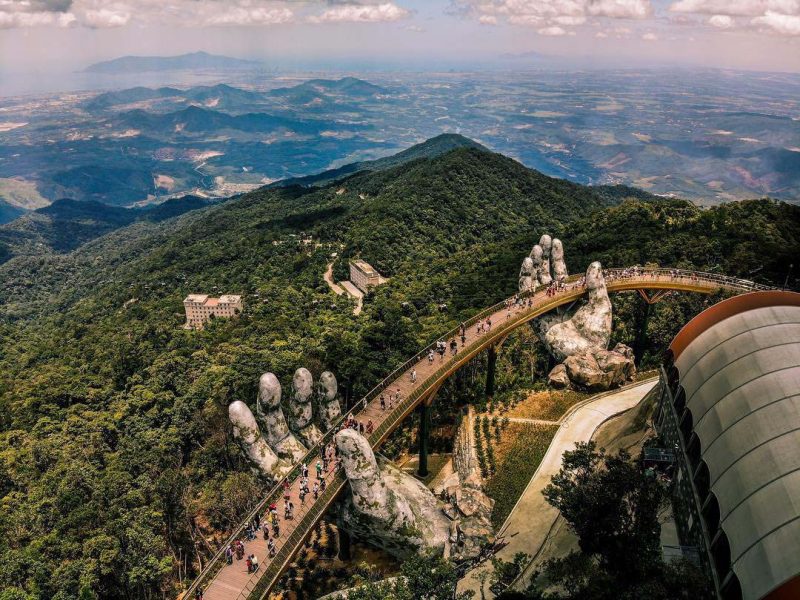
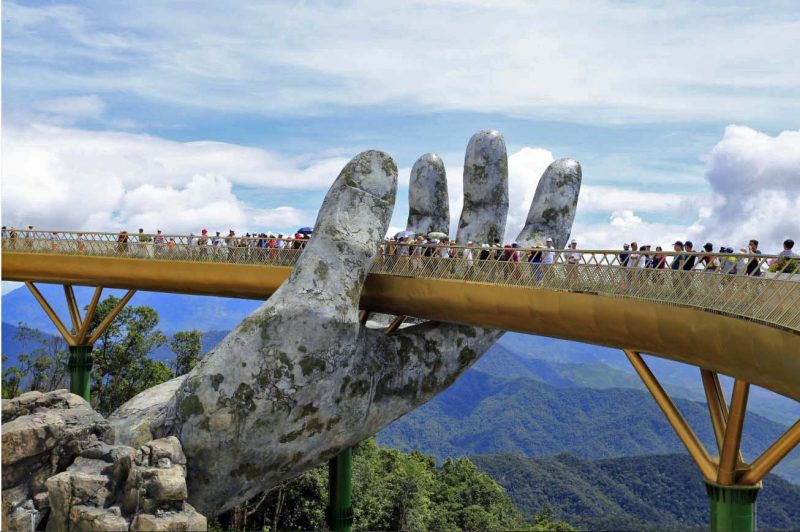
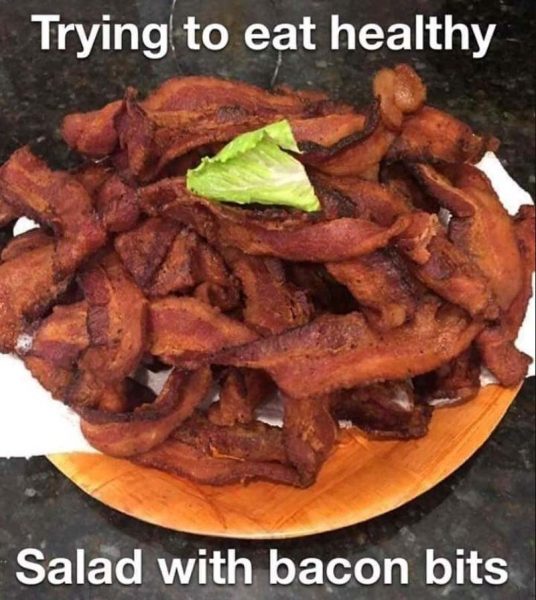
I closed my Facebook account about a year ago and don’t miss it. Ted still uses Facebook and, every now and then, he shows me some cute posts. These were fun.


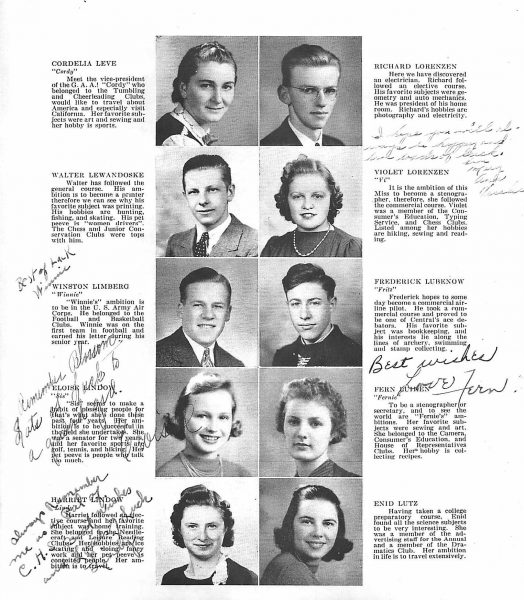
I have my mother’s 1940 high school yearbook. That was the year she graduated, so there’s a short (and interesting) paragraph beside her picture. As I read her friends’ notations in the yearbook, I couldn’t help noticing two things. (1) Mom must have been as social as Kari and seems to have known nearly everyone. There were 387 graduates in her class, and it looks like most of them signed her yearbook. (2) I lost count of how many of Mom’s friends used the word “swell,” as in “we had a swell time” or “you are a swell girl.” That must have been the most popular slang word of the day because I also noticed it in the letters my mom wrote to a friend in the early 1940s.
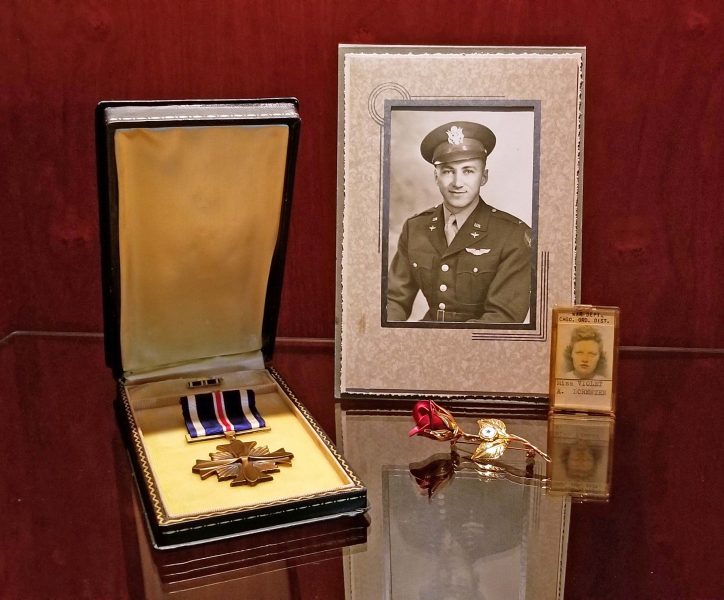
I also have my dad’s Distinguished Flying Cross, which he was awarded in 1945 as a Lieutenant during World War II. Dad was a B-25 pilot and was engaged in intense enemy aircraft fire that damaged his plane. In spite of the damage, he was able to keep his plane on course so that his bombardier could release the plane’s bombs and devastate a vital enemy railroad, contributing to a successful mission.
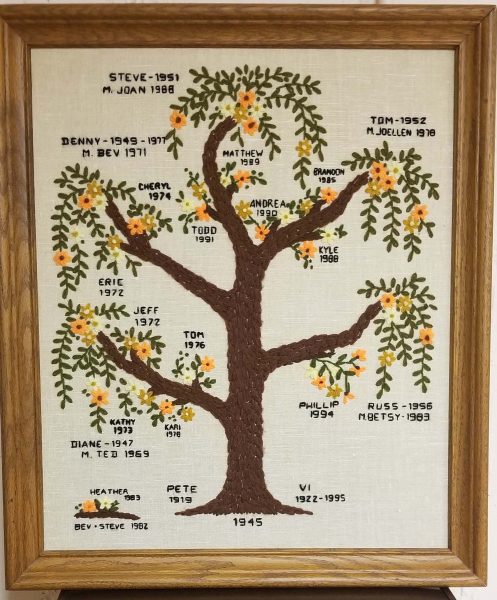
In the 1980s, I embroidered a crewel family tree as a gift for my mom and dad. It documented our immediate family, from Mom and Dad’s marriage through their grandchildren at that time. I included extra yarn so Mom could update the information as needed. The family tree hung on the dining room wall until after Mom died in 1995. At some point after that, it was returned to me. My brother Russ said he always admired it and would like to have it. I made another family tree for myself showing Ted’s and my families, so I don’t need the one I gave to my mom. I sent it to Russ (with the extra yarn for updates), and I hope he’ll enjoy it for many years.
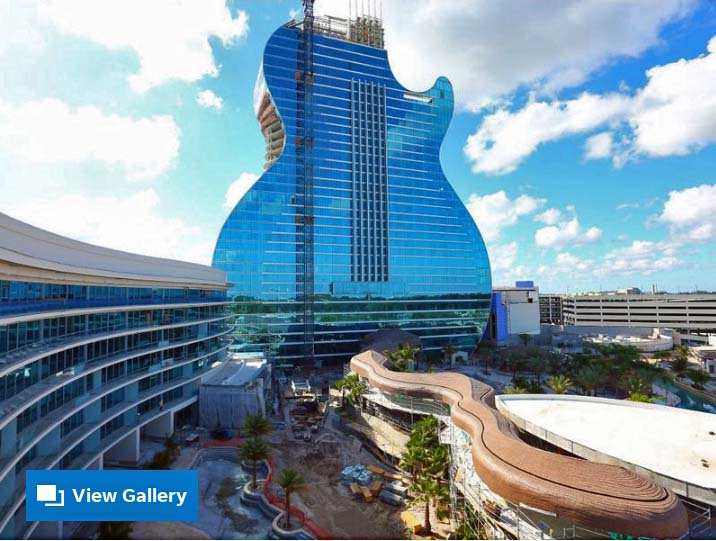
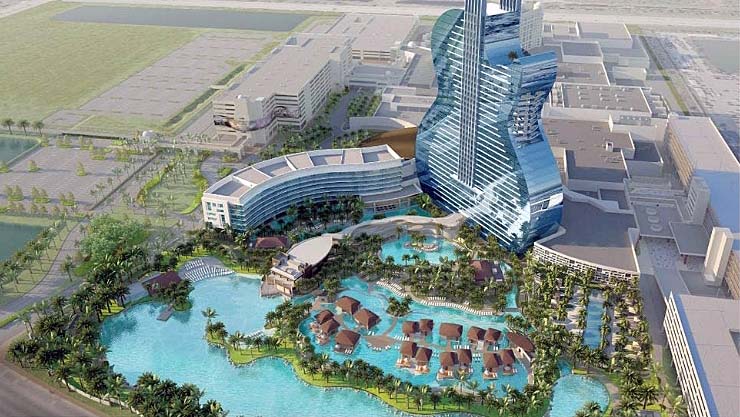
A unique Hard Rock Hotel recently opened in Hollywood, FL. It is shaped like an acoustic guitar and can be seen from the air when taking off or landing at the Ft. Lauderdale airport. The door handles in the hotel are shaped like–what else?–electric guitars. The Oasis wing of the hotel includes swim-up suites.
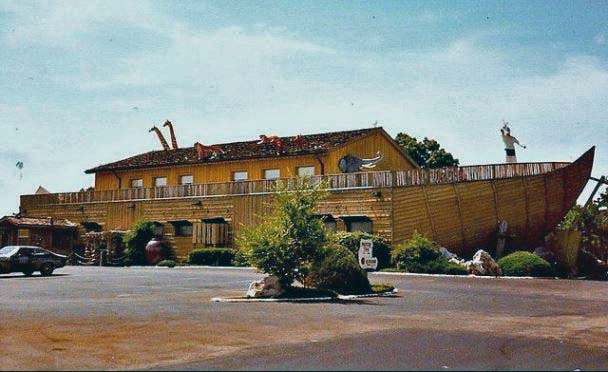
The Noah’s Ark restaurant and hotel, a former St. Charles, MO landmark, was similarly unique. It was shaped like an ark with a white-haired “Noah” and animals on the ship’s deck / roof, and elephant-head doorknobs with the trunk forming the handle. Noah’s Ark was modest compared to what Hard Rock has done, but maybe Hard Rock got the idea from Noah’s Ark.
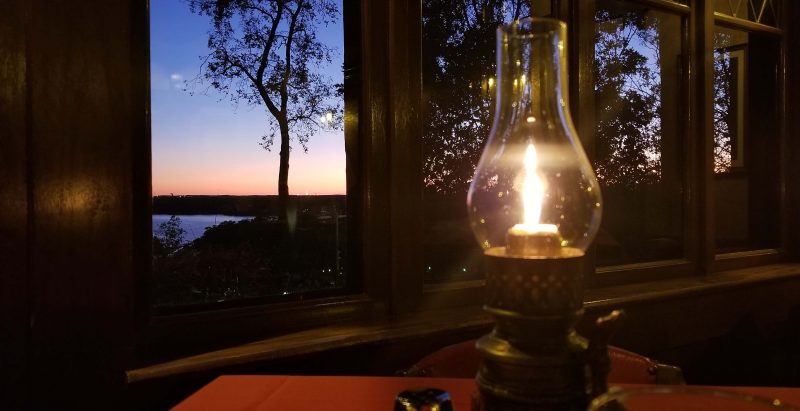
I think Ted is beginning to understand why I enjoy having a “birthday season” each year. Earlier this week, he suggested that we go to Bentley’s at the Lake of the Ozarks for his traditional birthday dinner on Friday night. Since this was seven weeks ahead of his December 20 birthday, he seemed to feel he had to justify it. (Why? I don’t justify my birthday season–I revel in it!) He pointed out that the trees are turning color; the weather forecast for Friday was for clear, sunny skies; we’d be out of the country on his birthday; and Bentley’s closes for the month of January–meaning he’d have to wait almost until my March birthday dinner at Bentley’s to have his December birthday dinner.
I didn’t need convincing, so we drove to the Lake in the sunshine, admired the colorful trees along the way, and had a delicious dinner. Happy birthday, Ted–and may you have as happy a birthday season as I always do.
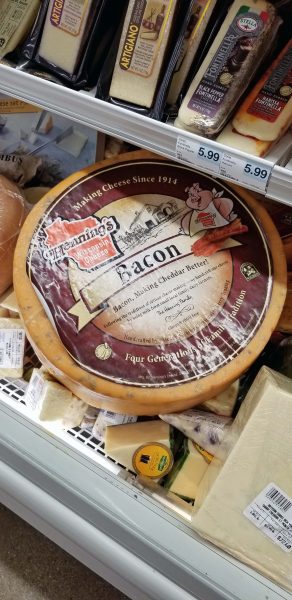
Ted and I stopped at a Hy-Vee grocery store recently. Hy-Vee stores feature a world-wide selection of cheeses and we like cheese, so we checked out the display. We were: (1) pleasantly surprised to see cheese from Henning’s Cheese Factory (just outside of Ted’s hometown of Kiel, WI); and (2) shocked at the size of this Henning’s cheese on display. We estimated it at about 20 pounds–probably more. There was no price on it, so we thought it might just be part of the display and will later be cut into smaller pieces for sale. Whatever . . . it provided an exciting moment at a grocery store.
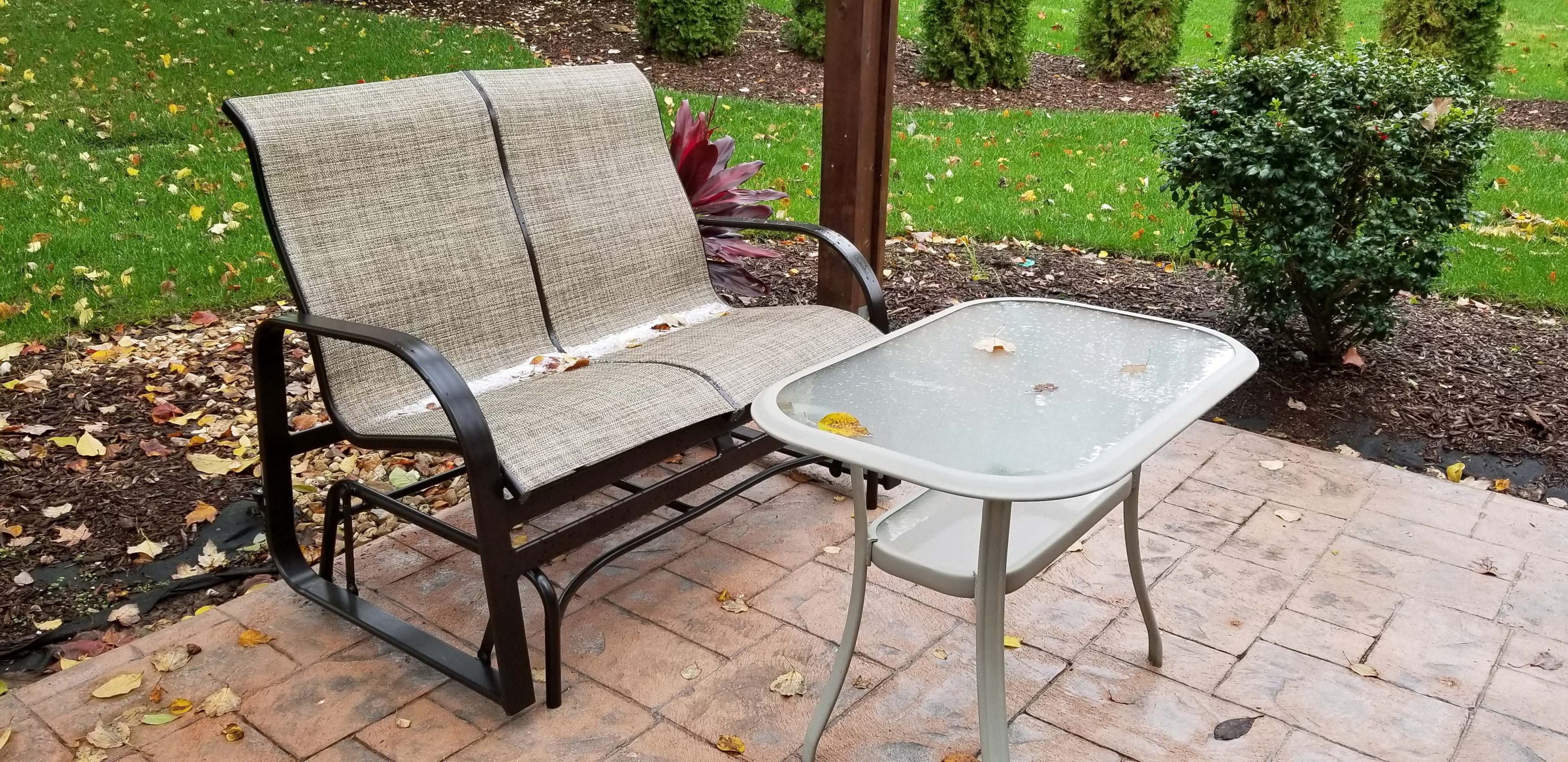
Today we had our first hard freeze of the fall season and our first snowfall. We didn’t get much snow, but just 15 miles north of us, Troy had about an inch of it. It was definitely cold and blustery today with a low temperature of 30 degrees and a high of 37. The wind chill was in the low 20s. Tomorrow’s forecast: 53 degrees and sunny. Much better.
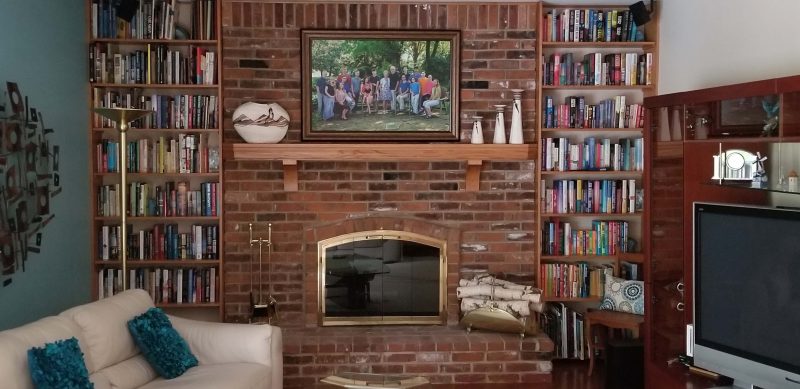
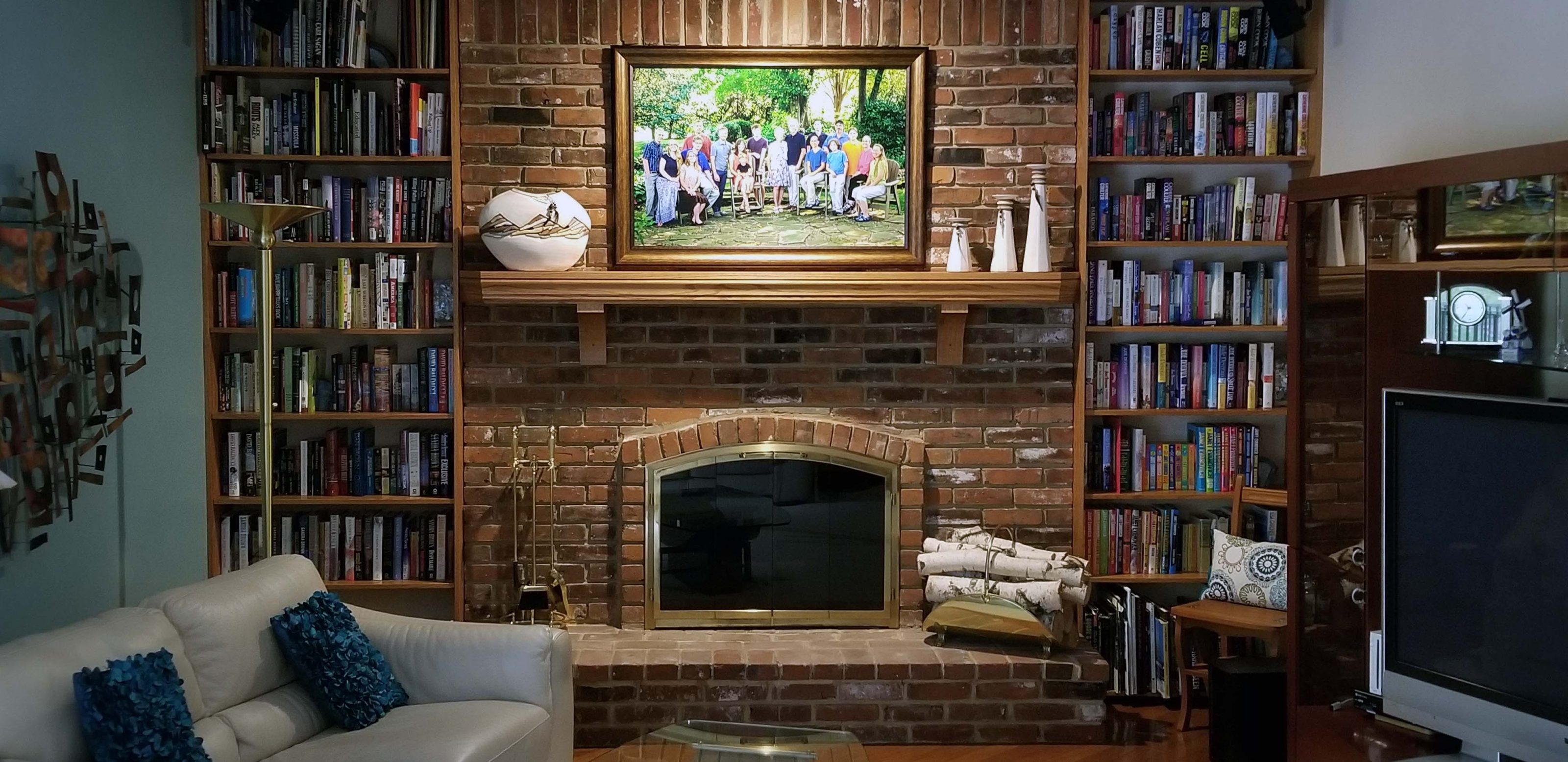
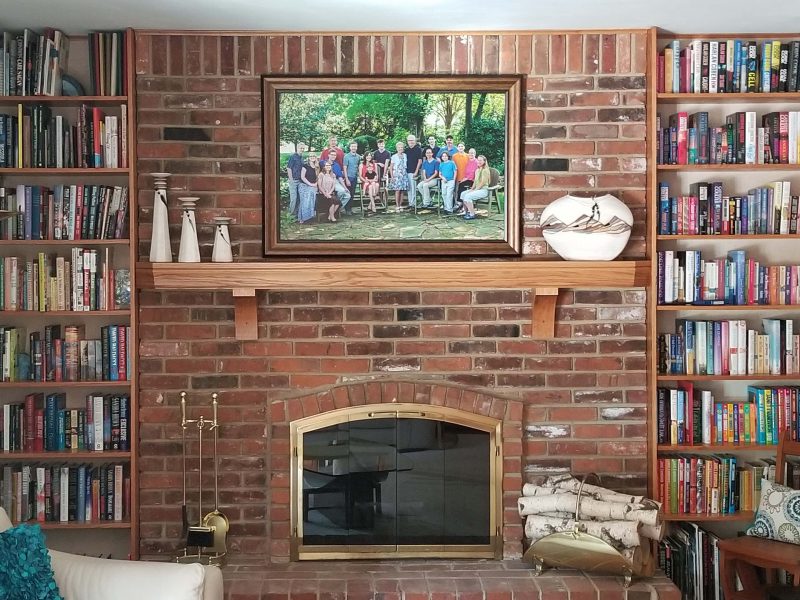
The fireplace end of our family room is dark because the eight-foot window wall is at the opposite end of the room, beside the kitchen. As a result, our family portrait tends to be shadowed, especially in the evening. Today, we had an art light installed in the family room to highlight the portrait of our wonderful family so we can enjoy it when we sit in the family room.
Before (in daylight):
After (in the evening) :
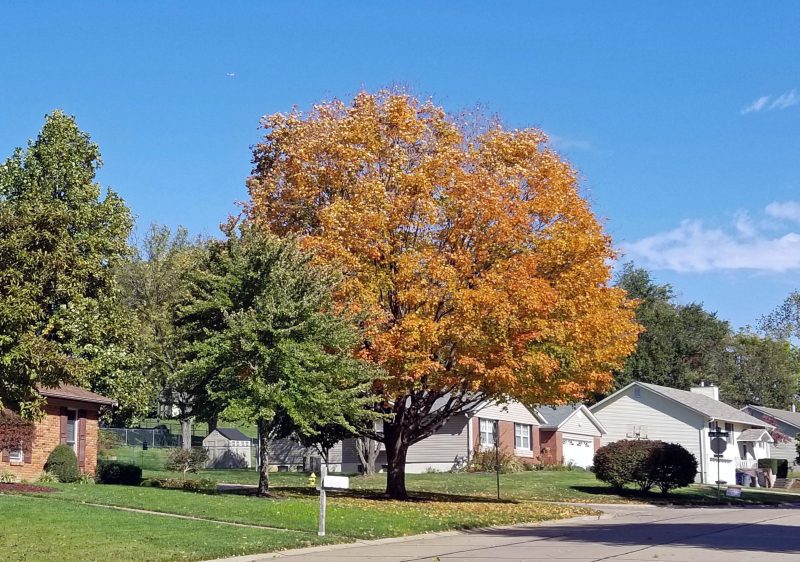
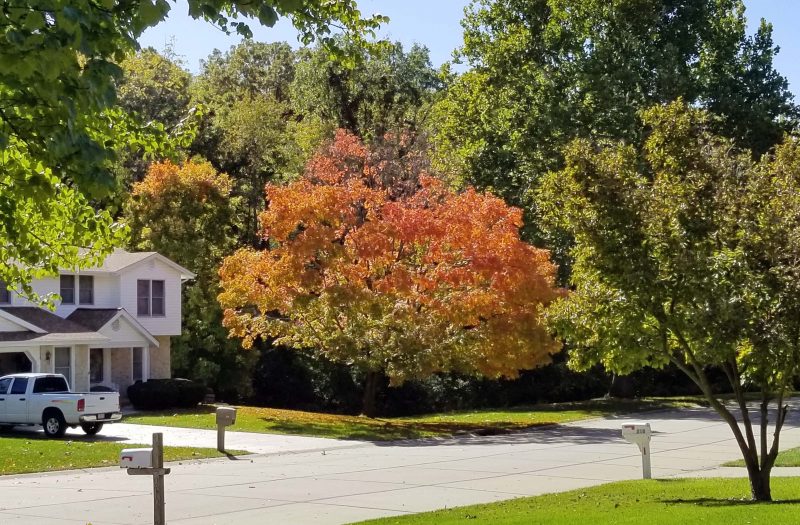
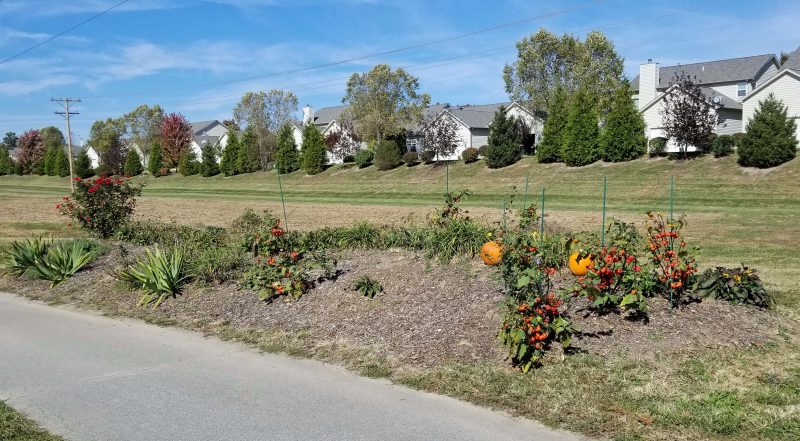
It’s fall, so once again, I’m enjoying some little traditions in the neighborhood.
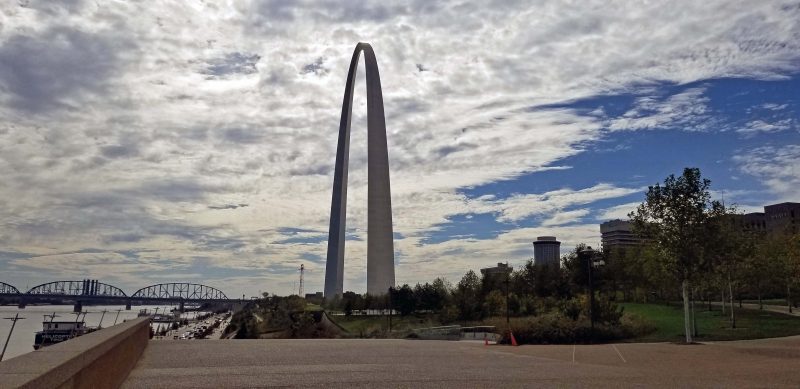
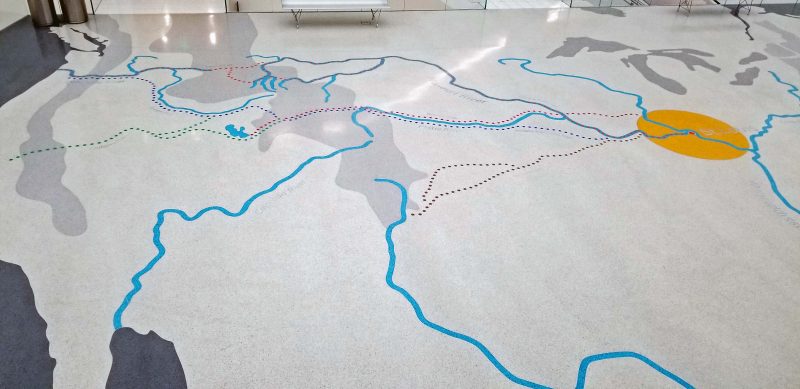
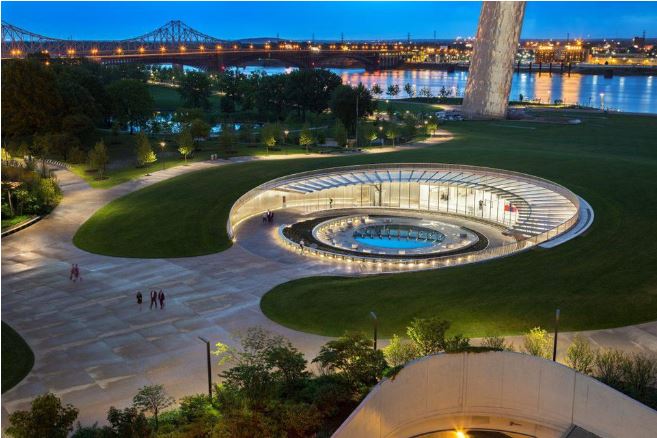
Ted and I want to take a St. Louis-themed hostess gift to our Australian friends when we visit them in January 2020. Of course, the iconic symbol of St. Louis is the Gateway Arch, and the Gateway Arch gift shop has the best selection of model arches, so we spent the afternoon exploring the new visitors’ center.
The Gateway Arch underwent a five-year makeover from 2013-2018 at a cost of $380 million. The tram and parts of the visitors’ center were open during construction and could be accessed by temporary paths bordered by plywood walls. The entire facility re-opened on July 3, 2018. Over 100 acres of the grounds were updated and now include more access paths to the Arch; a viewing platform overlooking the Arch grounds and the Mississippi River was added; and a land bridge was built over I-44 to provide safer pedestrian access to the Arch from the downtown area. The makeover also added 46,000 additional square feet of space for the visitors’ center, including a major expansion and update of the Arch museum. The Gateway Arch was upgraded from a National Memorial to a National Park in 2018. Woo-ee! Ted and I have not been to the Arch since the work was completed, so we explored it today.
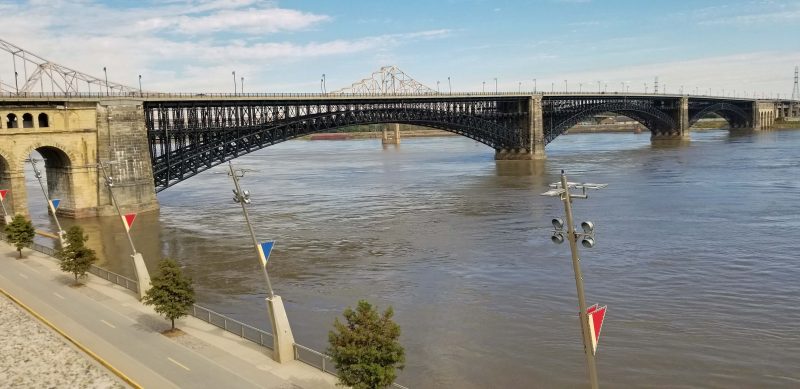
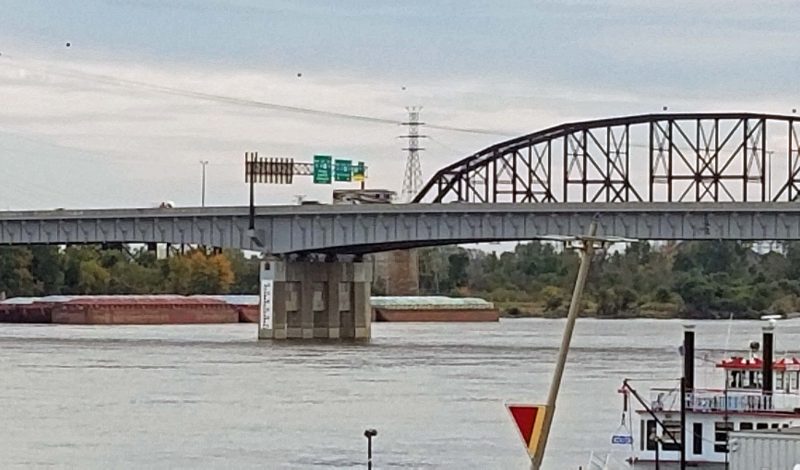
*The Eads Bridge was a construction marvel when it opened in 1874. It was the first bridge to cross the Mississippi River south of the Missouri River; its central arch was the longest rigid span ever built (520 feet); it had the deepest underwater foundations of any bridge in the world (100 feet below the water surface); and it was the first large-scale application of steel as a structural material.
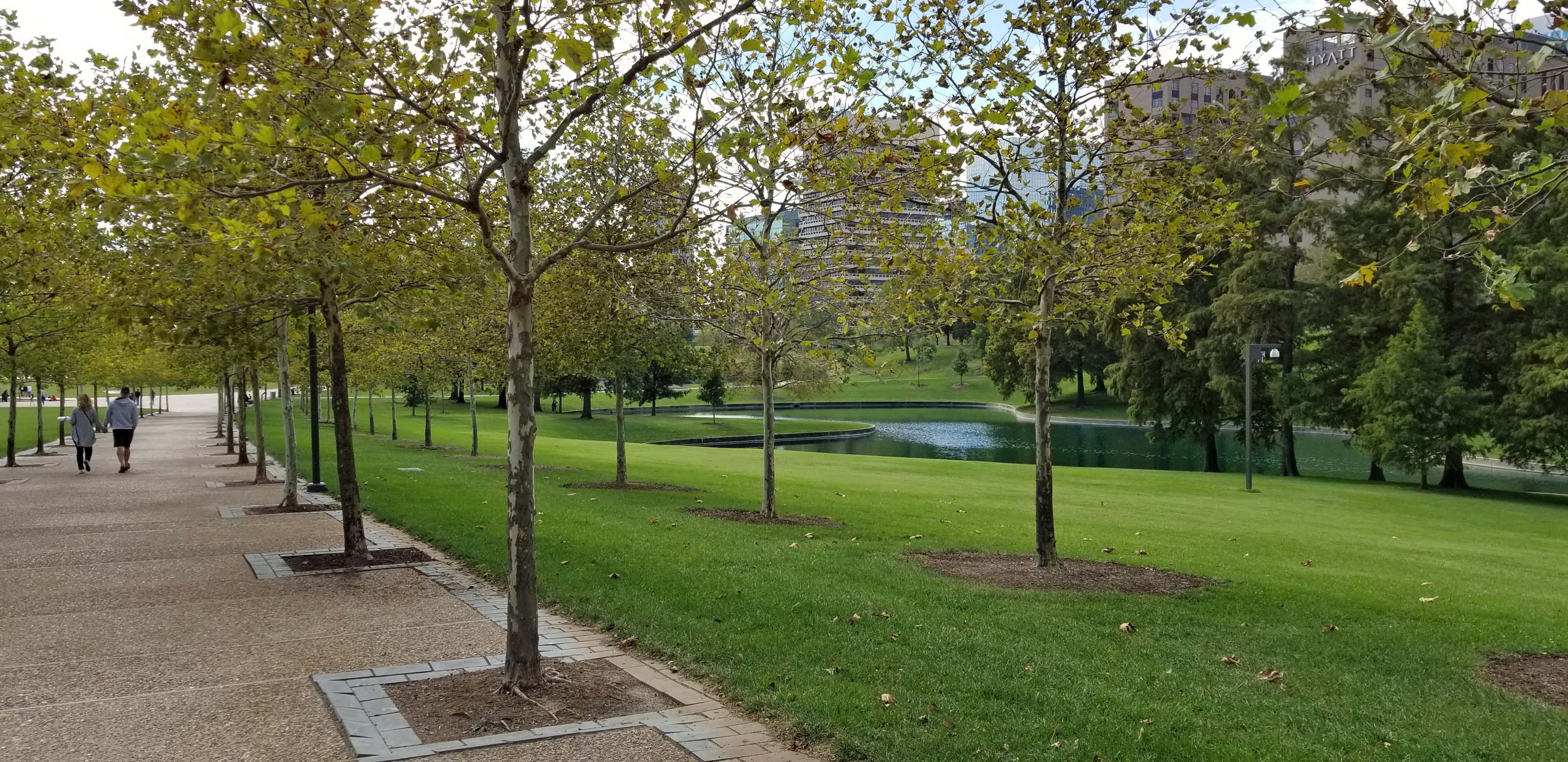
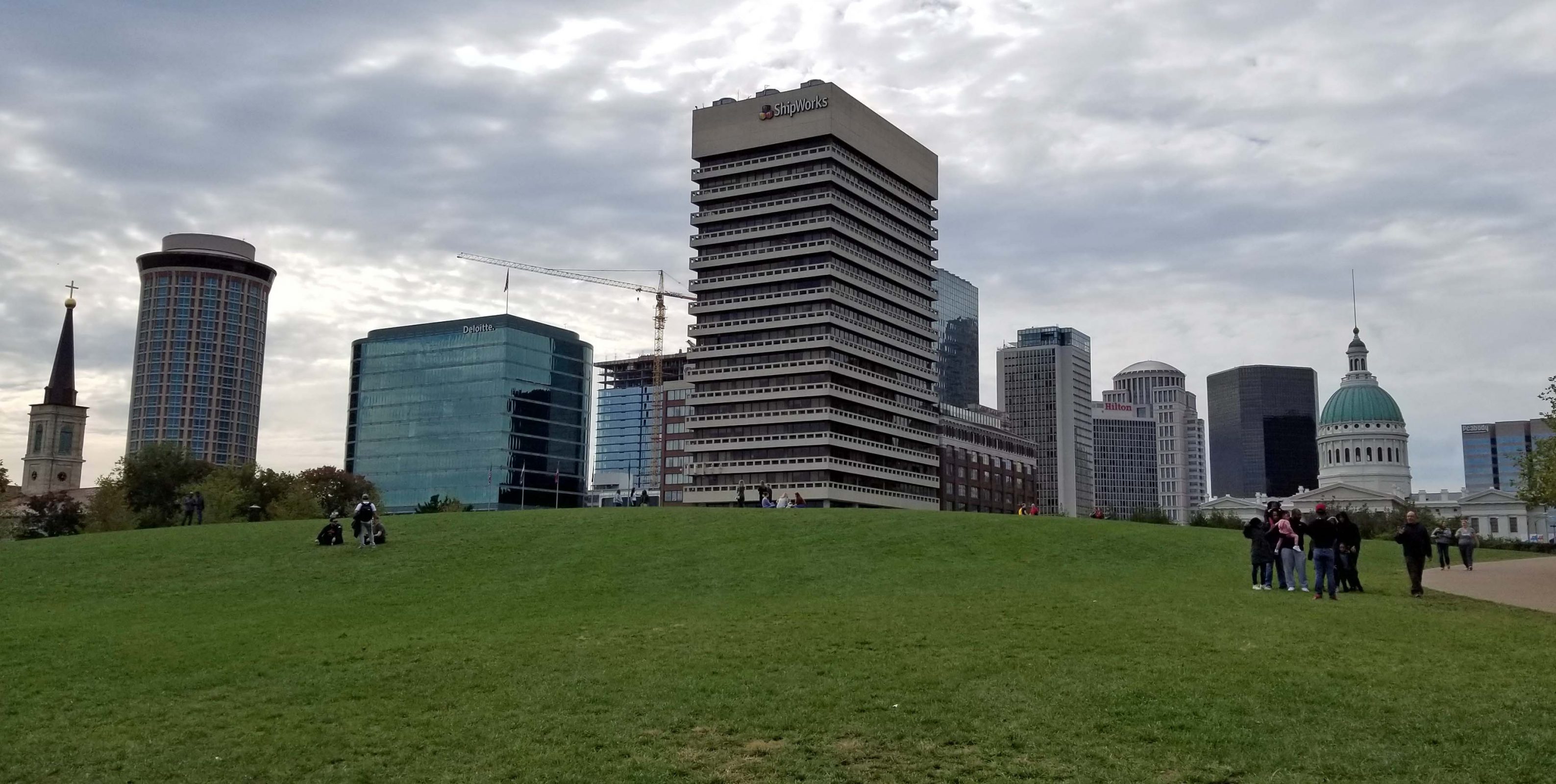
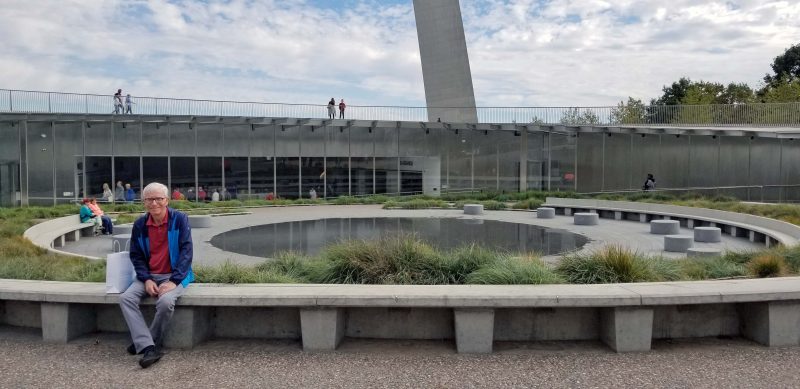
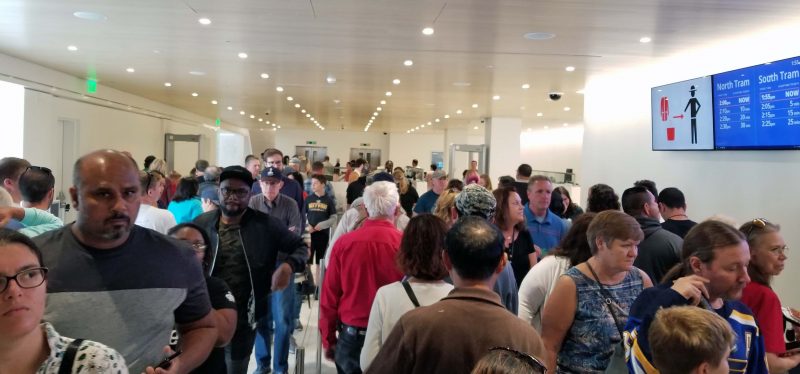
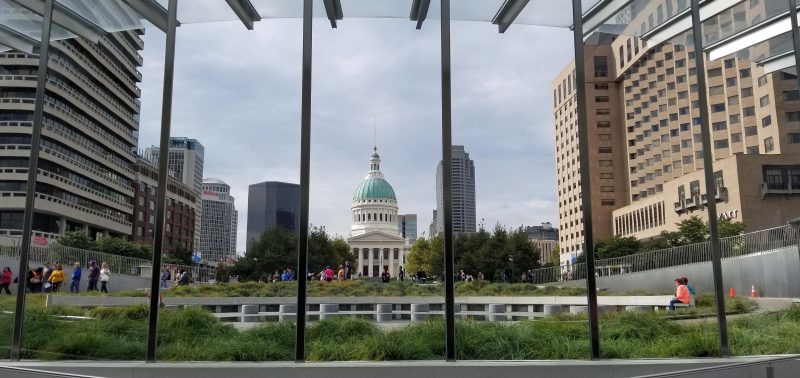
It was fun to spend a sunny fall day exploring the “new” Gateway Arch, and yes, we found a model Arch to take to our Australian friends.
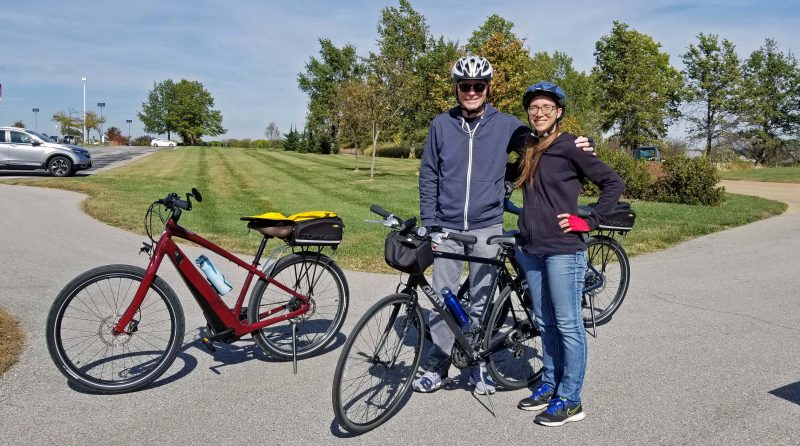
Kari and I have talked about taking some bike rides together. I’d like to ride around her neighborhood for a change of scene, and she wants to try some of the new greenways closer to our house. Today was the day. I think we biked every loop along the Dardenne Creek Greenway and put on about ten miles before it was time for Kari to leave for home. Ted and I had some more time to bike, so we went a little farther in the other direction along the connected Cottleville trail before going home. I learned from a sign along the trail that Cottleville was named for Captain Lorenzo Cottle, an early settler and a veteran of the Black Hawk War and the Seminole Wars.
As always, it’s wonderful to bike on the greenways where there is no automobile traffic.
It was a dark and rainy night. . . . Ted and I went out for dinner and this is what we saw at the table beside ours.
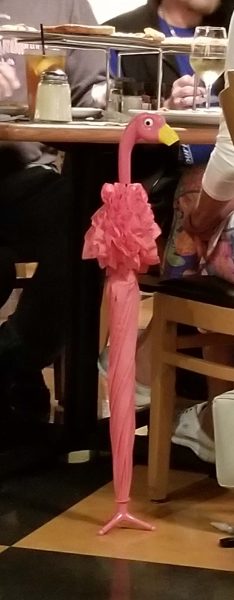
Who would have an umbrella like this? Why, a lady with flowered pink pants and a pink band on her hat, of course.
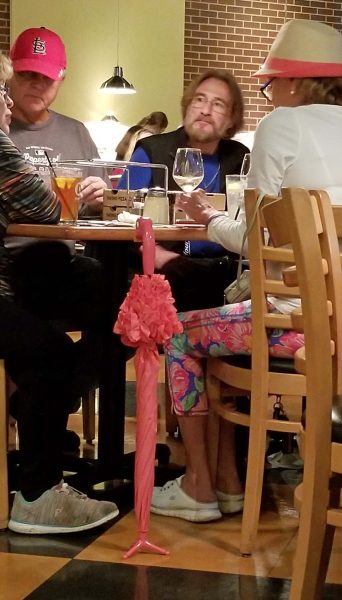
The flamingo turned around. I think it’s hungry and ready to eat.
I needed some spices from the Spice Shop on Historic Main Street in St. Charles. What a pleasant surprise to find the street and stores decorated for the Legends and Lanterns Hallowe’en celebrations this month. Every weekend in October features Hallowe’en-themed entertainment and activities.

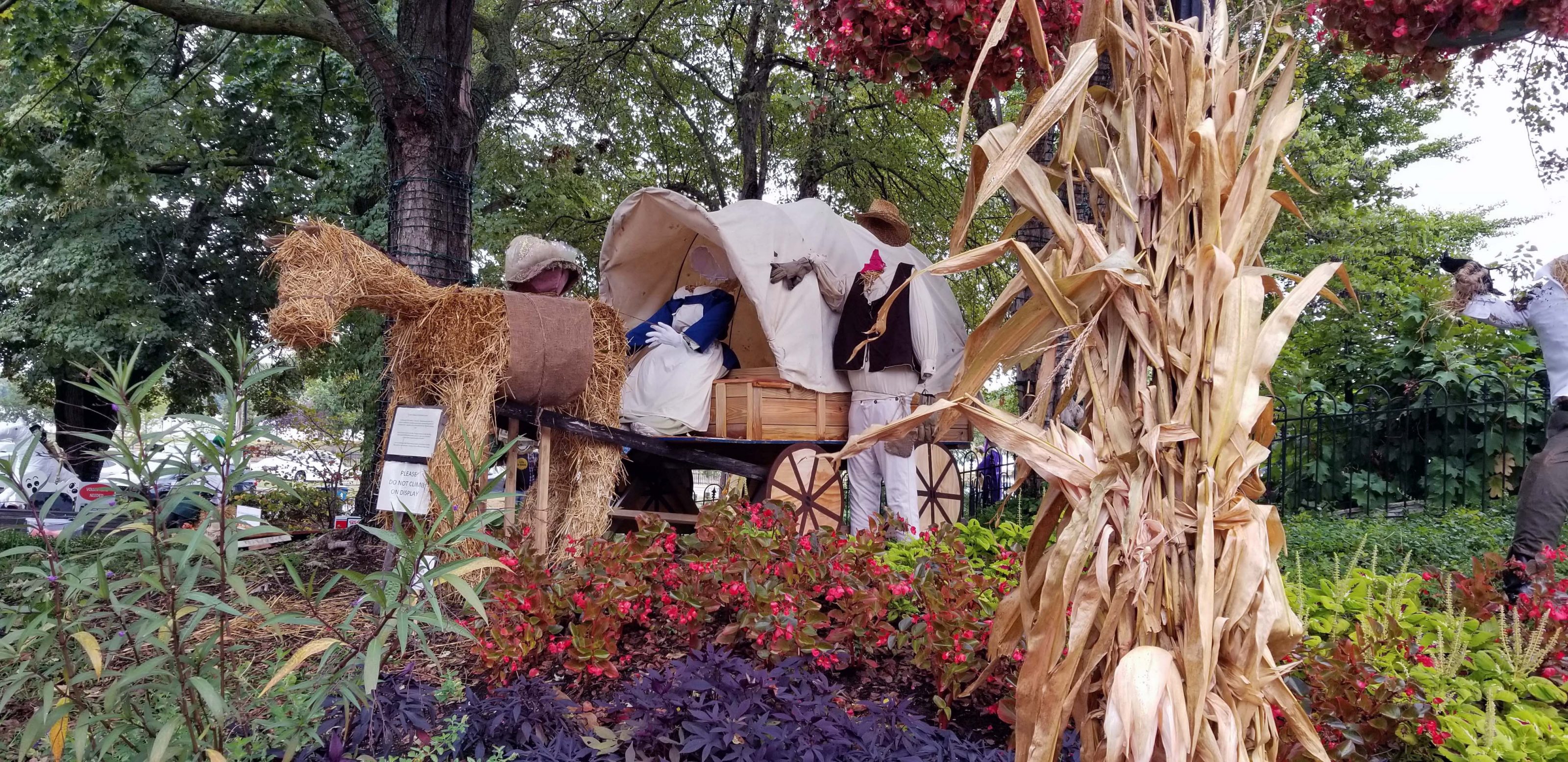
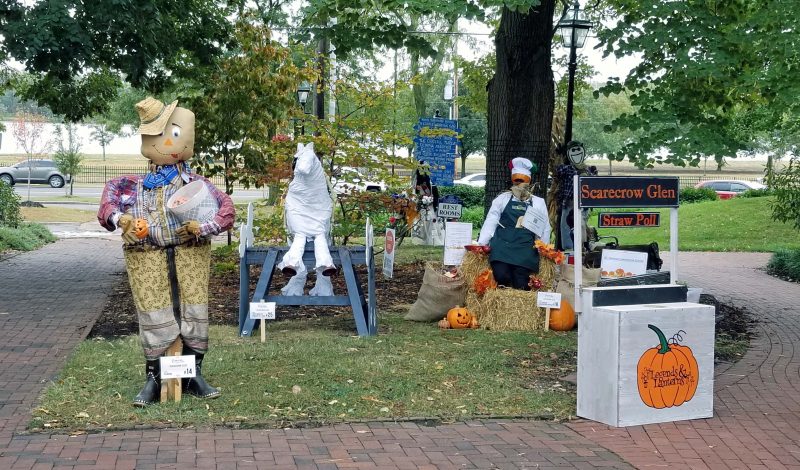
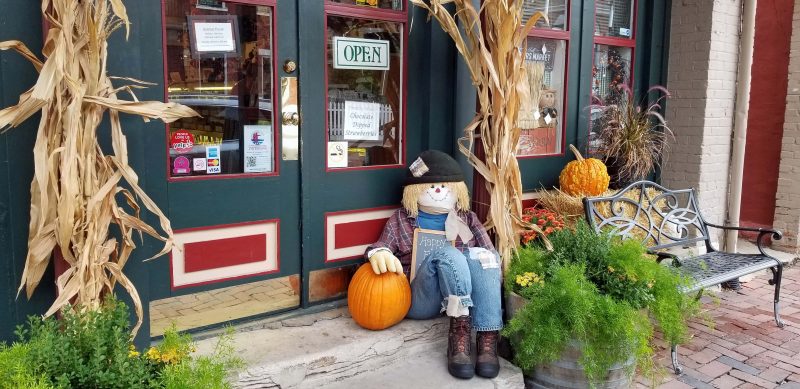
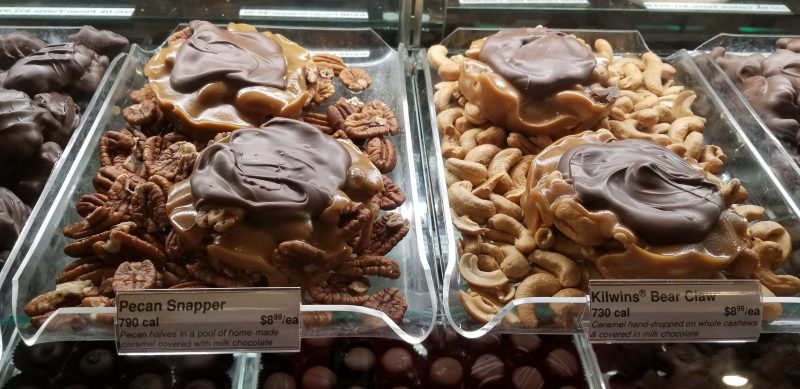
After walking down the street and enjoying the decorations, we stopped at Kilwin’s and bought some chocolate. Yum!
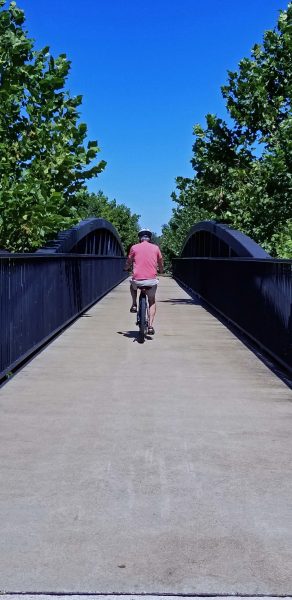
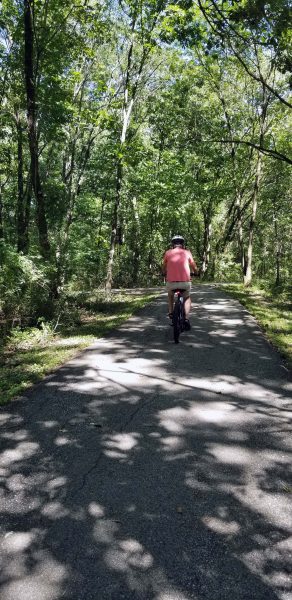
About two weeks ago, Ted and I went biking on the Busch Greenway through the Busch Wildlife area and the Missouri Research Park (past the National Weather Service Office), then continued along the Katy Trail* for several miles. It was another beautiful ride.
*The Katy Trail State Park follows the railroad bed of the M-K-T Railroad for 240 miles across Missouri. It is the longest recreational rail trail in the United States.
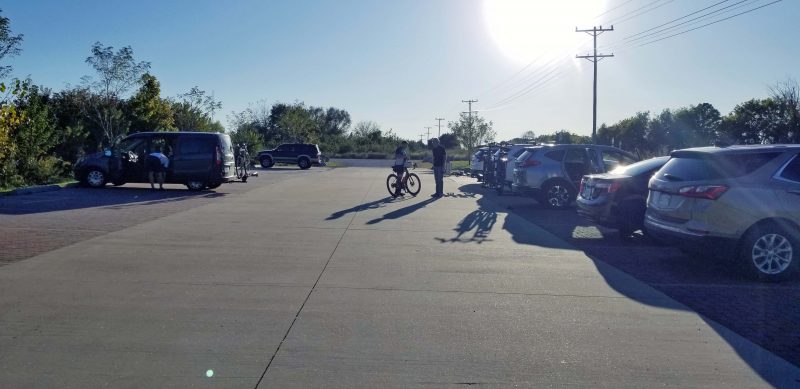
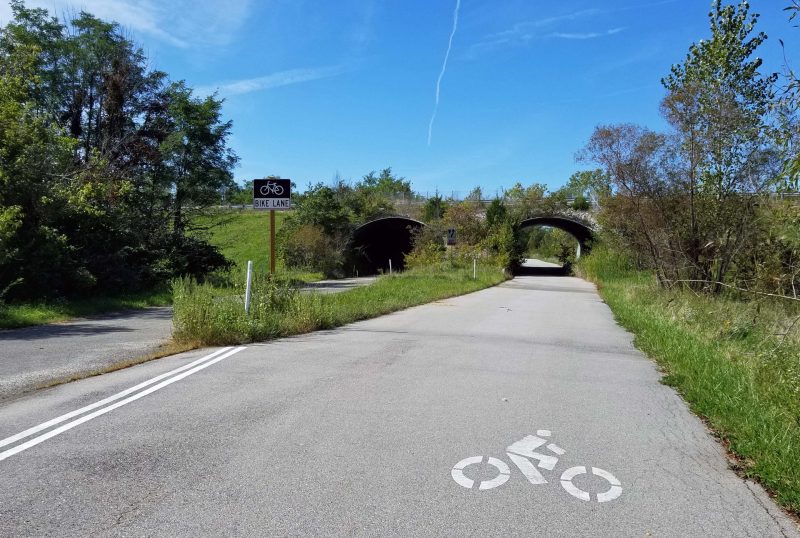
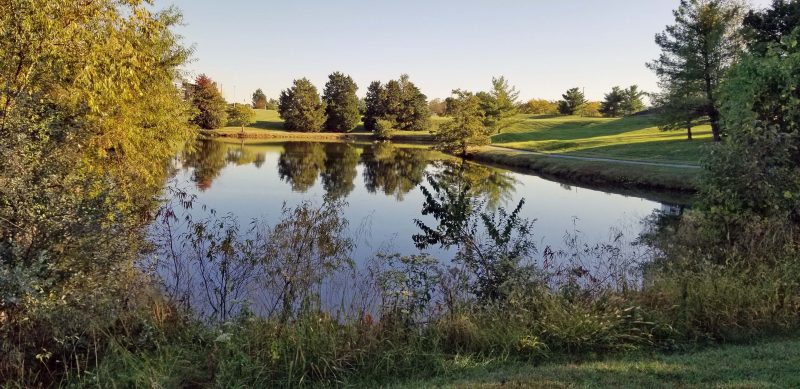
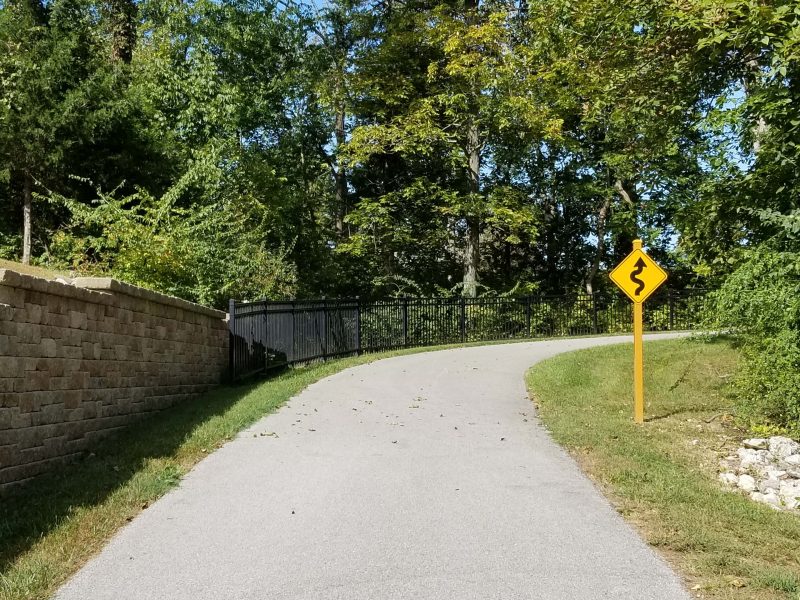
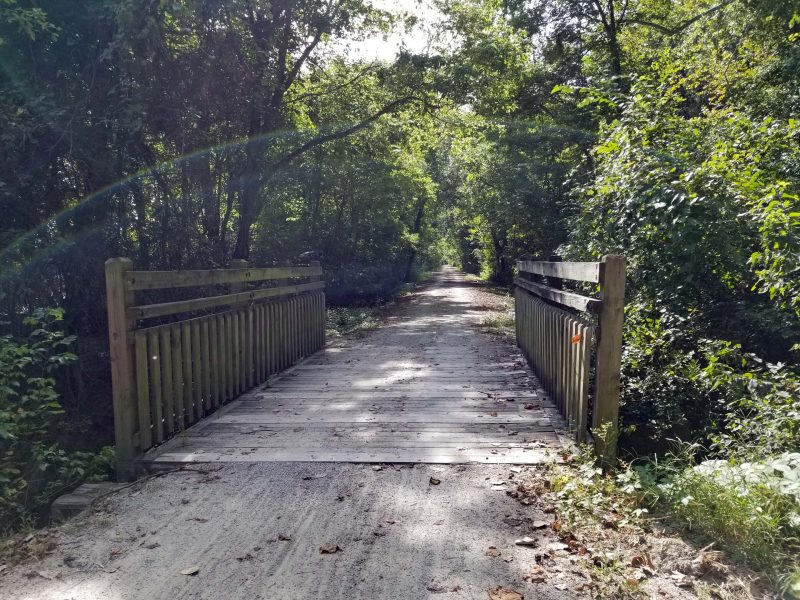
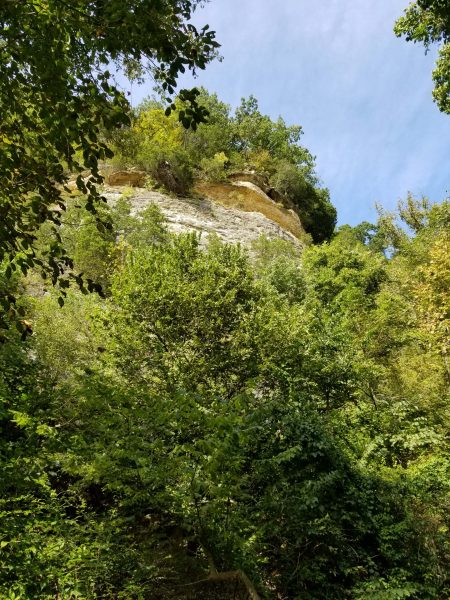
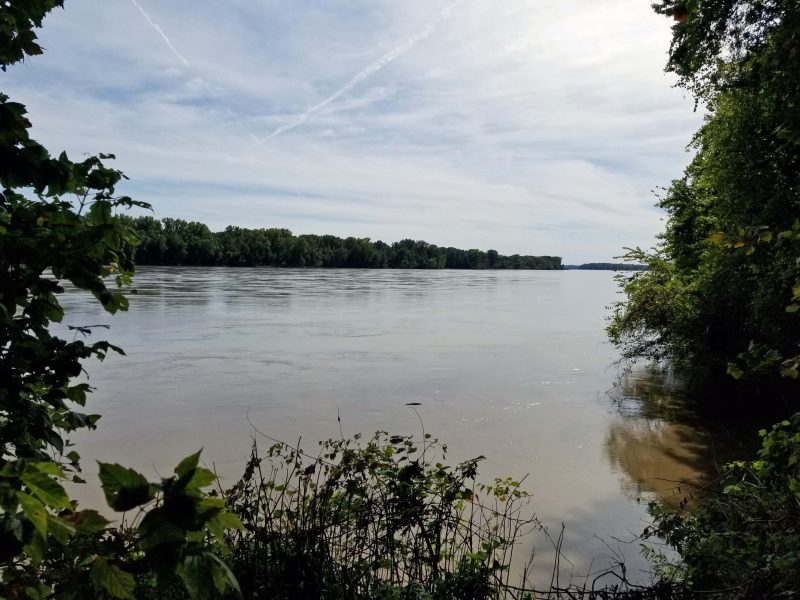
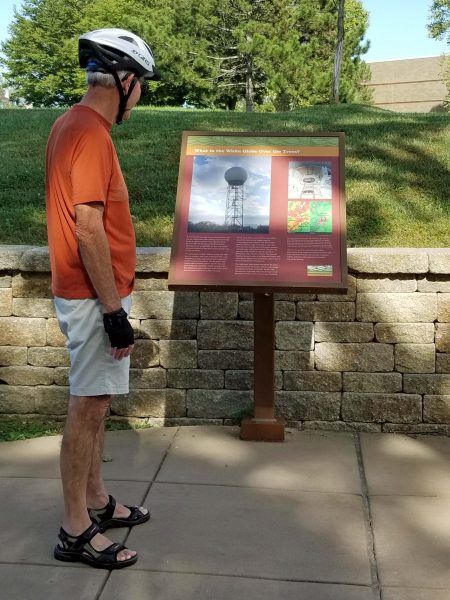
We biked 22 miles on these trails and I want to go again soon.
This boggles my mind. Why would I want strawberry-flavored cranberries? Logically, I’d choose either strawberries or cranberries, wouldn’t I?

I shared a two-story, three-bedroom house with five other girls during my senior year in college. We had so much fun together back then that we’ve started having occasional reunions. We meet in Madison because it’s central for all of us–especially for Leila, who lives there. Last year, we decided we’re still having so much fun together, we need to meet every year. This year’s date was October 5.
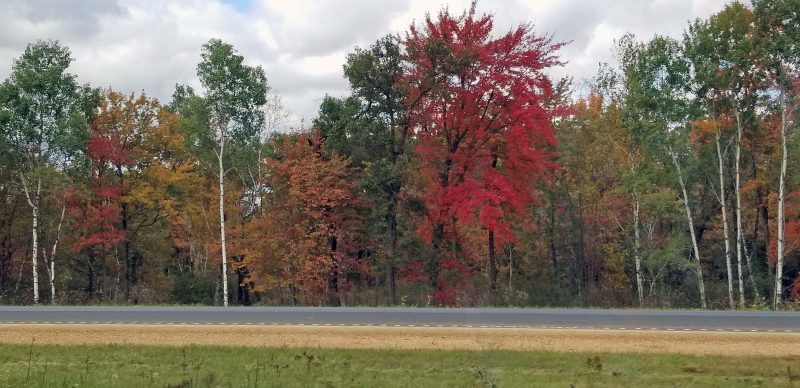
As long as we were going to be in Madison, Ted and I decided to include visits to my Aunt Ruth and Uncle Ken; to Ted’s sister, Mutzie, and his niece and nephew-in-law, Lisa and Doug; and to Kathy and Annette. The most remarkable thing we experienced on this trip was a huge weather shift. Due to a strong cold front, the temperature dropped over 40 degrees between the time we left home and when we arrived at our motel in Beloit, WI seven hours later. I think summer is over.
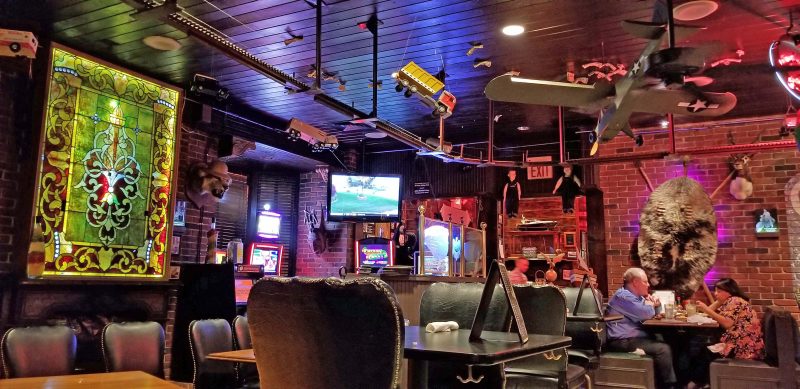
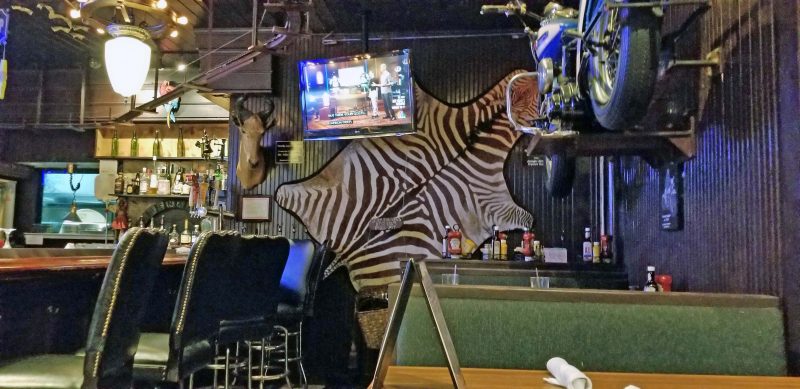
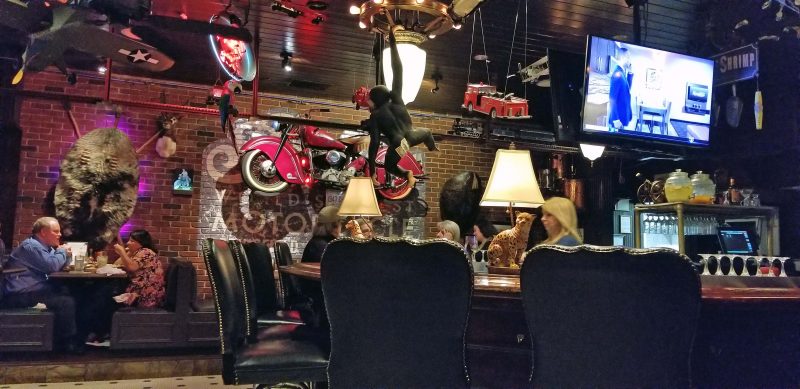
Our first night’s dinner restaurant was the Stone Eagle in Rockford, IL. It was unusual, to say the least. We were attracted to it by the large number of cars in the parking lot and by the sign that declared “This is not a chain restaurant.” Indoors, it looked like someone bought out every flea market in town for a year and found a place for each item in the restaurant. Our server told us they have a guidebook that lists each item with information about it. I felt like we were looking for the hidden pictures, such as “Can you find the money jammed into the ceiling planks?” The food was delicious and we’ll stop in again if we’re in Rockford at mealtime.
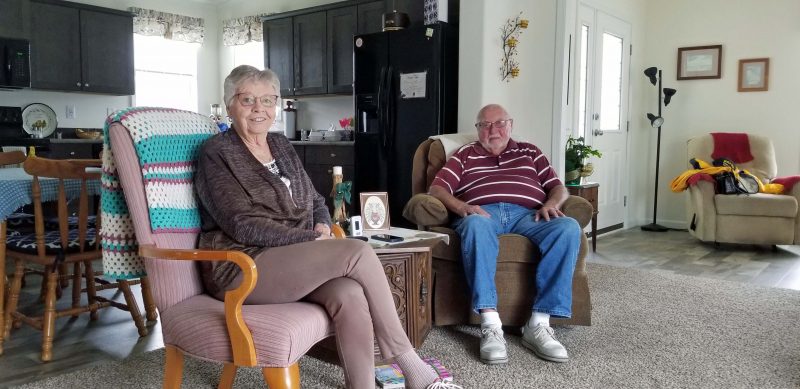
Our first family stop was in Holmen, WI (near LaCrosse) to visit with Ruth and Ken. They just moved into this new house two months ago. The subdivision is so new, the internet cables are not yet laid on Ruth and Ken’s side of the street. Ruth is a big fan of forwarding goofy emails she finds on the internet, so she’s in a bit of withdrawal and has to use her granddaughter’s internet.
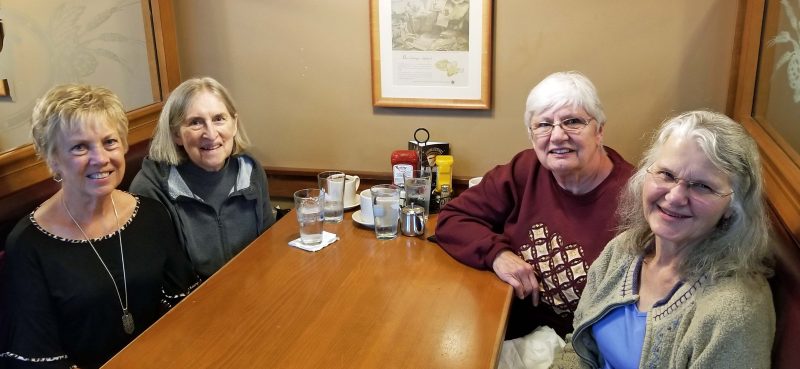
Our next destination was Madison for my roommate reunion. Only four of the six of us were able to come. Barb didn’t want to leave her husband alone after his recent surgery and Carol had to be in Illinois this weekend. We had lots of fun–again!–and have already set our date for next year: August 29.
Next stop: Grand Island, NE. Mutzie continues to improve since her fall and serious injuries last April. Physically, she is fine, and her cognitive skills keep improving noticeably as her brain continues to heal. She is better at recognizing faces than remembering names, and she easily participates in conversations.
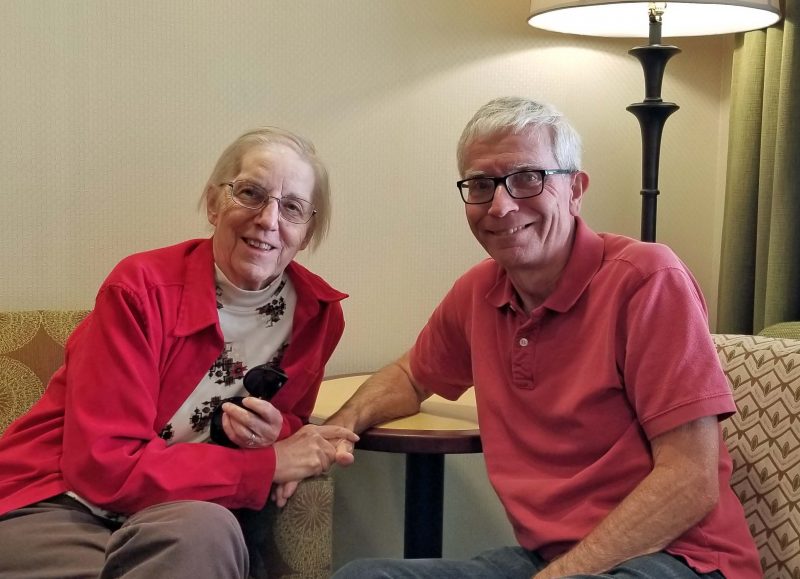
We took Mutzie out for a full day, including lunch, dinner, and some walking exercise outdoors and in the mall. When we asked if she’d like to go back to her rooms (she has a suite), she said, “Oh, no–let’s sit at your hotel. I see my room all the time.” So we did. I forgot to take a picture the night before when Doug joined us for dinner, so there’s only Ted, me, Lisa, and Mutzie in this photo.
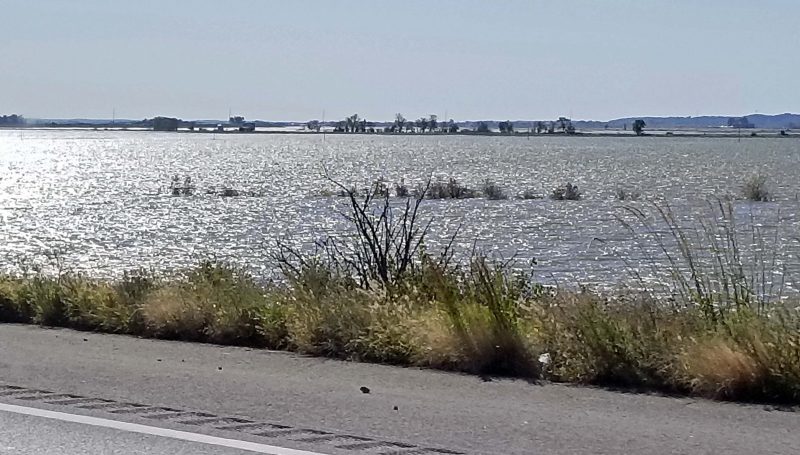
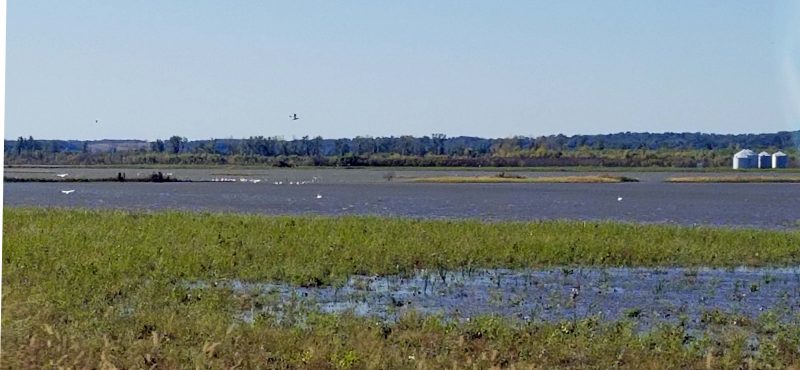
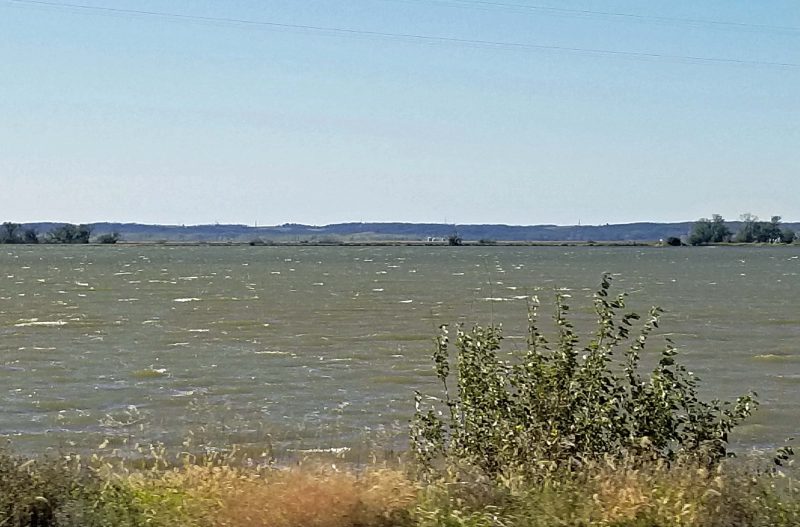
From Grand Island, we headed for Kirksville, MO where we planned to meet Kathy and Annette for dinner before driving home to St. Peters. When we drove home from Grand Island in June, Iowa and Nebraska had standing water everywhere from the over-abundant spring rains. It didn’t look much different this time, except that I-29 was open instead of under the extended Missouri River. These “inland lakes” still cover the farmland along I-29 in northwest Missouri.
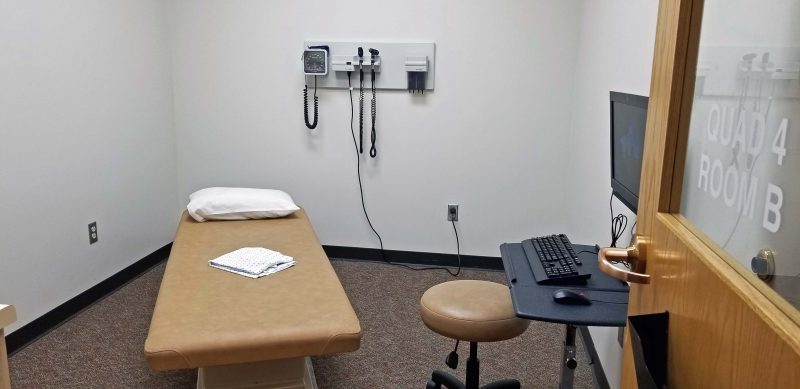
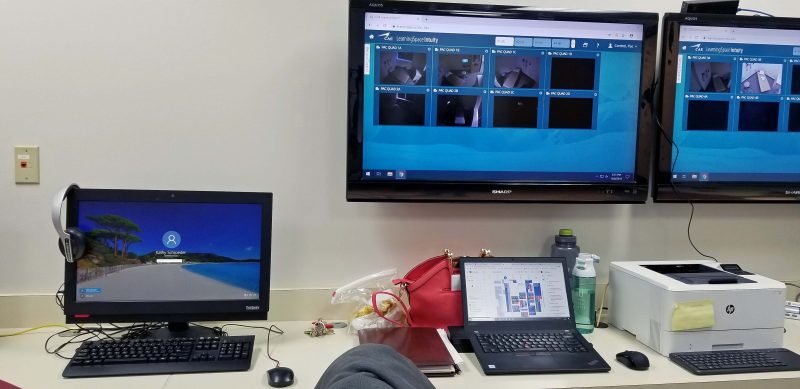
We arrived in Kirksville about an hour earlier than we’d planned, so Kathy and Annette were still at work. After driving so many hours, Ted and I were ready for some exercise and decided to take a walk. We’ve never walked to the A. T. Still University campus where Kathy works, so we headed that way. We had no idea which building Kathy works in, but just when we reached the point at which we’d decided to turn back, Kathy emerged from the building in front of us, ready to walk home. Instead, she gave us a tour of her workplace and introduced us to several co-workers who were still present. Now we can picture her setting when she talks about work and some of the people who work with her. Every one of the people we met raved to us about how much they like Kathy and what a great job she does with the Student Patient (SP) program. That’s just what proud parents love to hear.
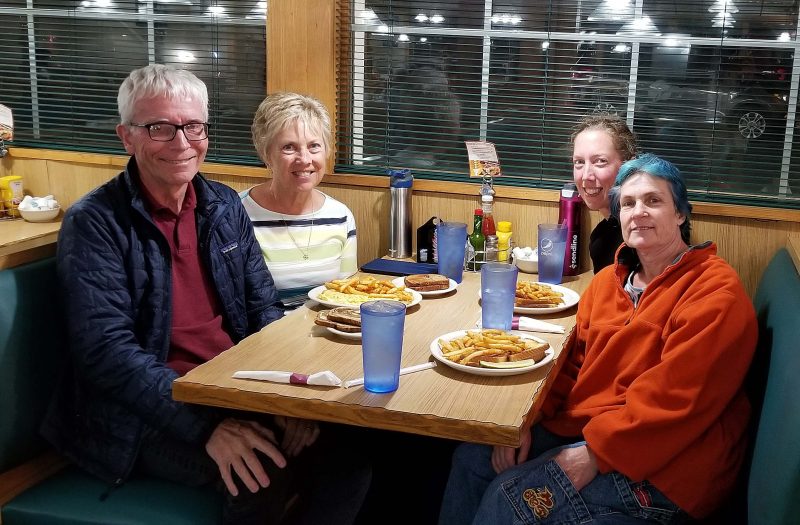
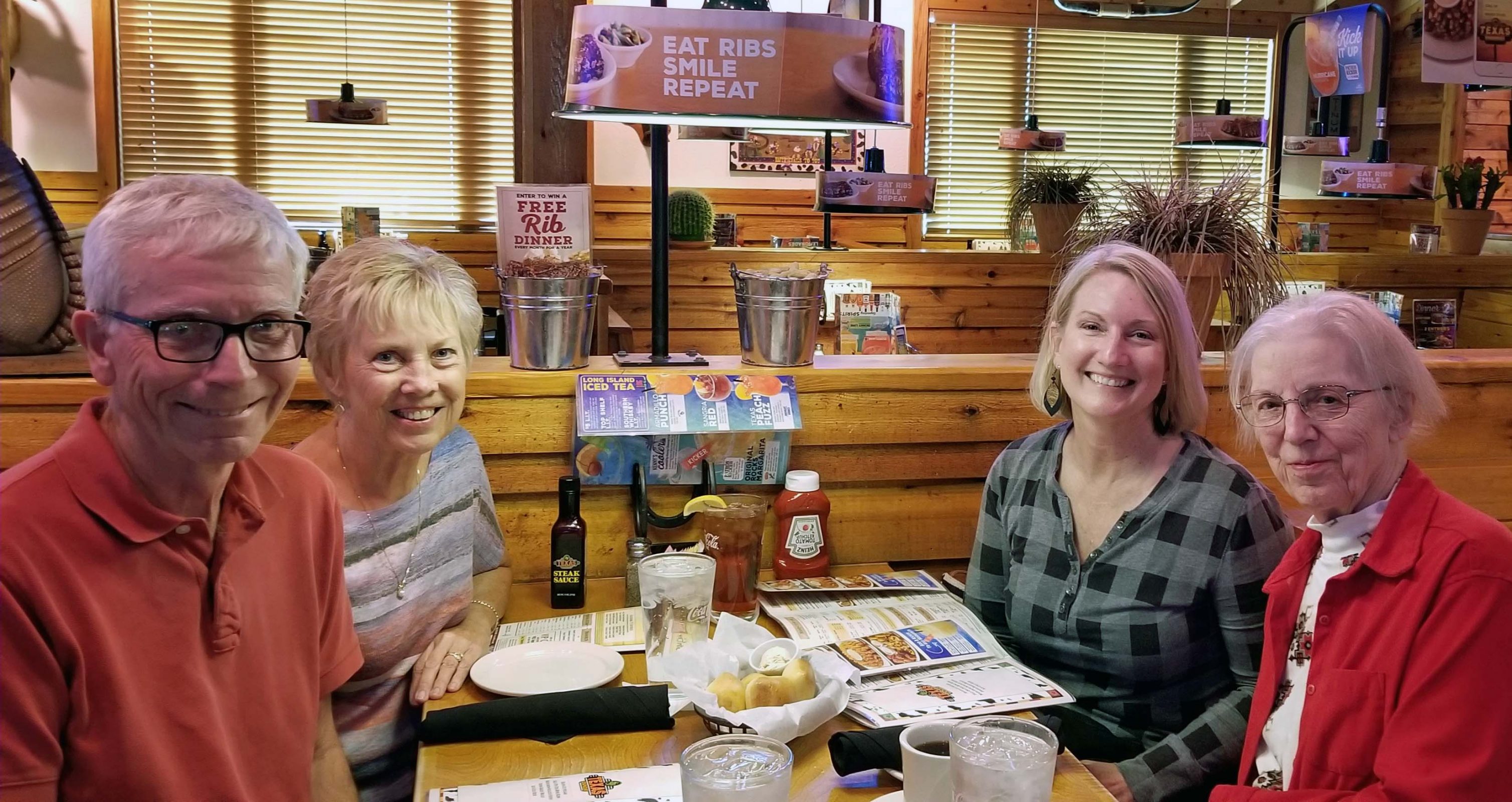
After dinner with Kathy and Annette, Ted and I drove home. We had a week of good times with friends and family members.
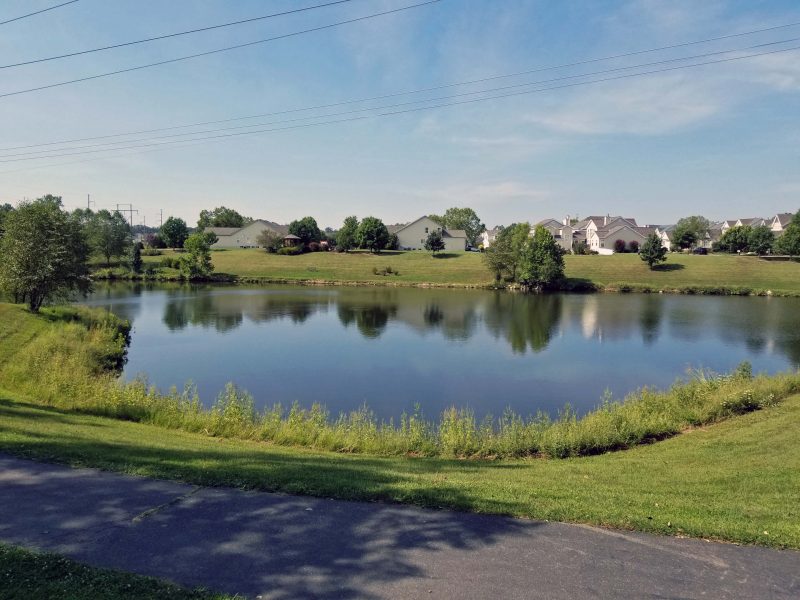
The concept of the Great Rivers Greenway project is to “raise awareness of the natural beauty found in the region’s many rivers and streams and to reconnect residents to the primary natural features…the Mississippi and Missouri rivers.” The completed GRG will include more than 600 miles of trails with more than 45 different greenways connecting existing and planned parks in St. Louis City, St. Louis County, and St. Charles County (where we live). Eventually, St. Clair and Madison Counties in Illinois will be included and the GRG will encompass the entire St. Louis metro area.
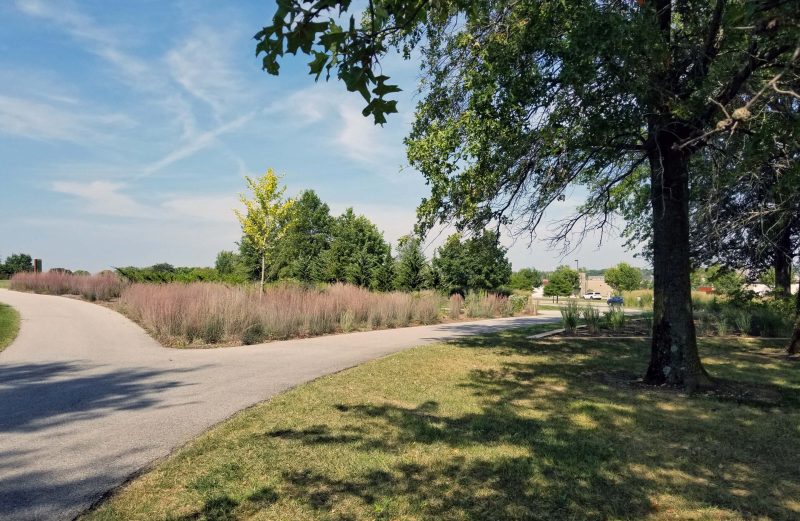
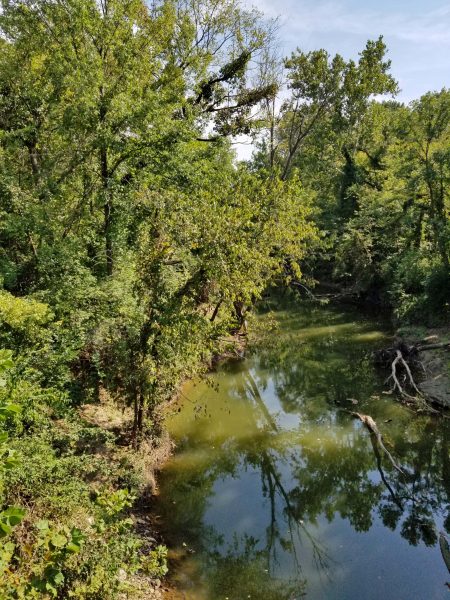
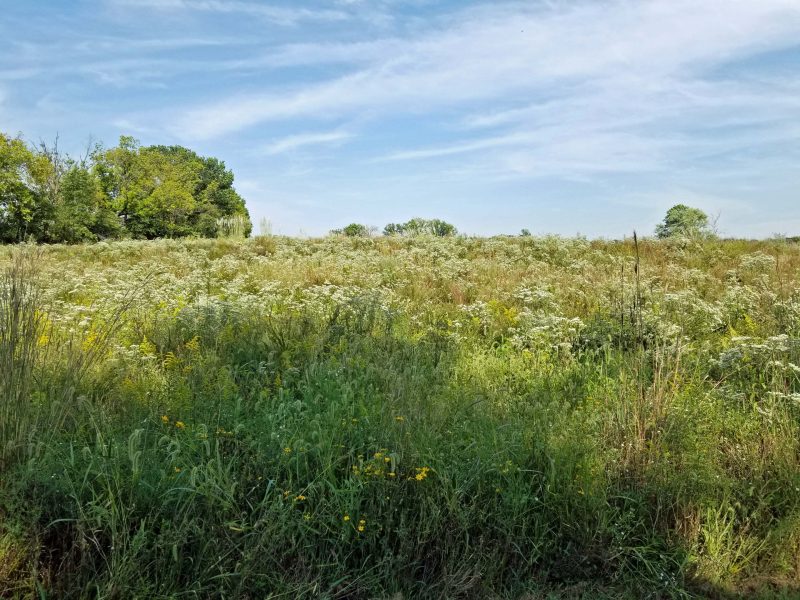
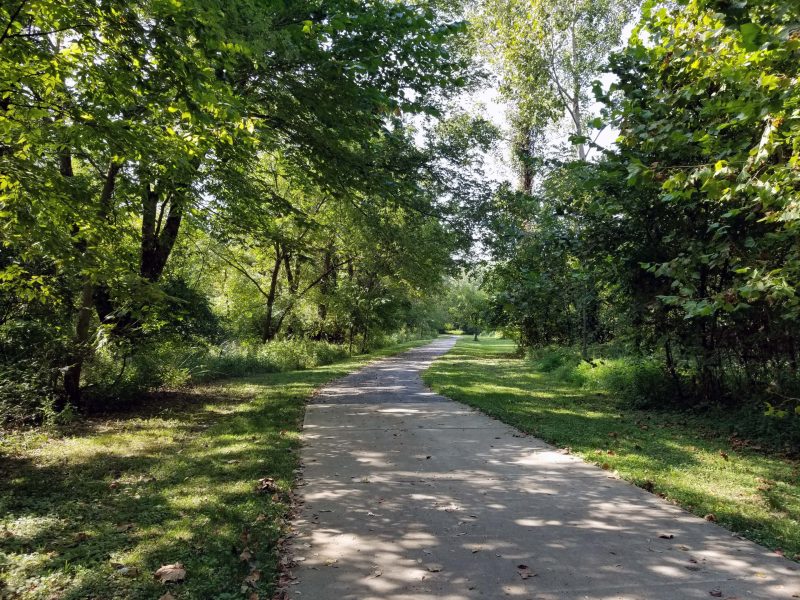
Last week, Ted and I biked the Dardenne Greenway that follows Dardenne Creek and connects to the Cottleville bike trails. Is it any wonder we’re enjoying the greenways? Think how beautiful these trails will look in a few weeks when the leaves change color.
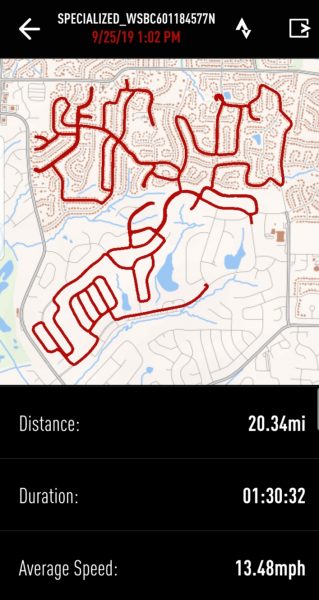
Ted’s and my e-bikes have a bluetooth connection to an app that has GPS and shows us a map of wherever we’re biking; can diagnose mechanical problems; and keeps a history of our rides. It even lets us “share” our rides with others. Here’s where we went today.

Think what two $20 bills could do!
A Michigan school district is trying something new (?) to increase the mental abilities of elementary school students. The district has created a “sensory path” in one of the hallways in the school building to give the students a “brain break” from their classroom work.
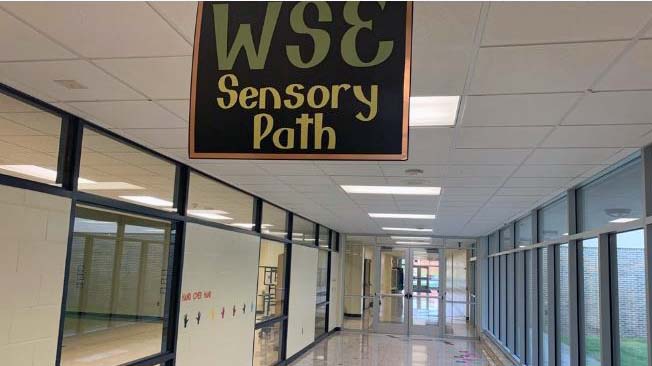
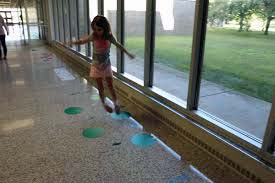
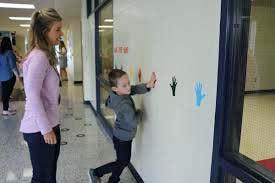
The sensory path was created by the school district’s occupational therapist and its speech-language pathologist to “help students get out of their seats and stay active during the school day.” Students can jump hopscotch boards, use their hands or feet to follow spots on the floor (aka “Twister”?), follow circles on the wall, or do wall push-ups along the sensory path. The sensory path is based on results of studies indicating that movement increases blood flow and heart rate, which increases mental ability. (That’s news?)
Back in the day when I was in elementary school and roller-skated about 300 feet uphill to school on nice days, the school day ran from about 9:00 a.m. until about 4:00 p.m. (It was a long time ago. I don’t remember the exact times.) There were about 50-60 students in the eight grades in the building, and we arrived 15-20 minutes before school started so we could play with our friends outside until the bell rang. We had a 30-minute morning recess and a 30-minute afternoon recess, during which we were required to go outdoors all year unless it was raining or extremely cold (on a scale of Wisconsin winter weather).
During our 60-minute lunch period, some kids went home for lunch (less than a 5-minute bike ride) and others ate their lunches in the classroom. We ate quickly, because we wanted to be included in the outdoor games that filled the rest of the lunch hour. The games were kid-organized, not teacher-directed, so they were what we wanted to do. By the time recess and lunch were over, we were more than ready to sit in our seats and rest while we studied. Our blood was flowing nicely, and our hearts were beating quickly enough to make us sweaty.
We didn’t have a sensory path in our school, but I’ll bet we had good brain stimulation and a lot more fun playing outside with our friends for two hours every day.

In my post about our day at Gornergrat, enjoying picture-perfect views of the Matterhorn, I included an error in my description of this photo.
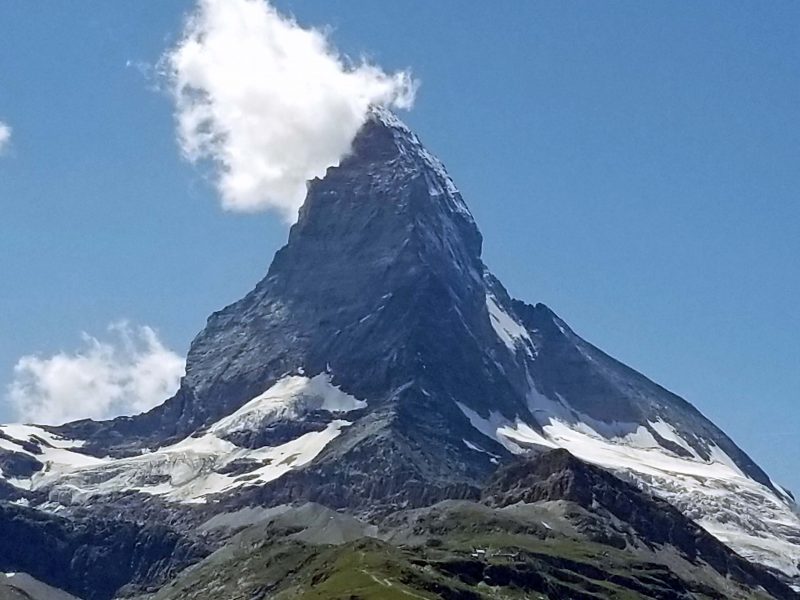
I mentioned that our lunch-time waitress told us there is a footpath in the snow on the right that leads to a climber’s hut behind the rocky ridge. I thought the dark line in the snow just below the exposed rock was the footpath. Thom, a mountain climber, told me that line is actually a bergschrund–the high point of a glacier where it separates from the rock above.
I admit, I was surprised that a footpath could be seen from such a distance, but I figured it must be a wide path, and I’d never heard of a bergschrund, which makes a lot more sense. According to our waitress, there is a footpath, but it’s not that visible dark line. Thanks, Thom. I like learning new things from my readers.
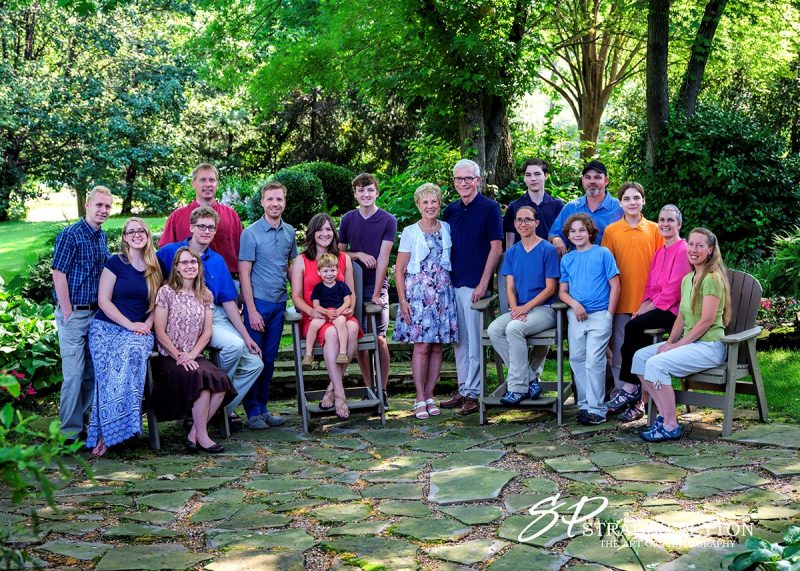
Over the years, Ted and I have had family pictures taken by Olan Mills, Sears, the church (for the directory), and me (for Christmas letters). After the kids grew up, moved away from home, and had families of their own, it was hard for all of us to be together at the same time. Neither Ted nor I can remember the last time all of our children, their spouses, and our grandchildren were together with us–if ever.
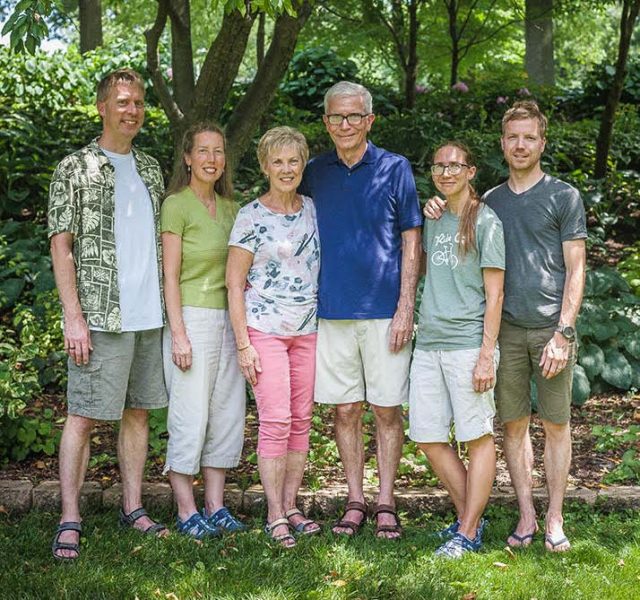
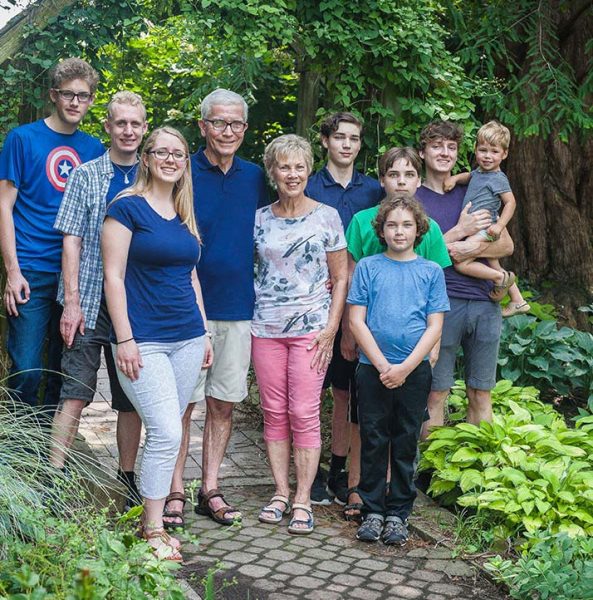
As we planned our 50th anniversary celebration, Ted and I decided that the only gift we wanted was to have our entire family together at least once in our lifetimes. We gave the kids three years’ notice and asked them to plan accordingly. They did, and it happened. To record the event, we scheduled a professional photo shoot. The finished portraits were delivered and hung yesterday.
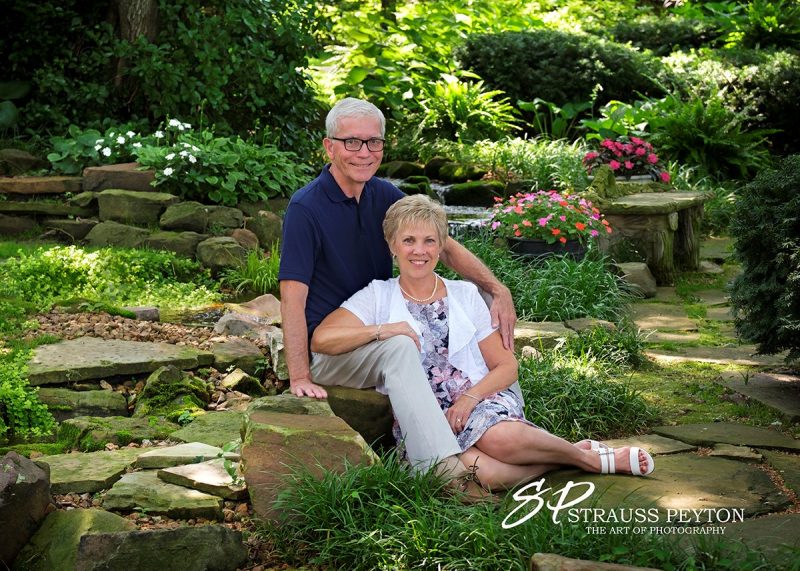
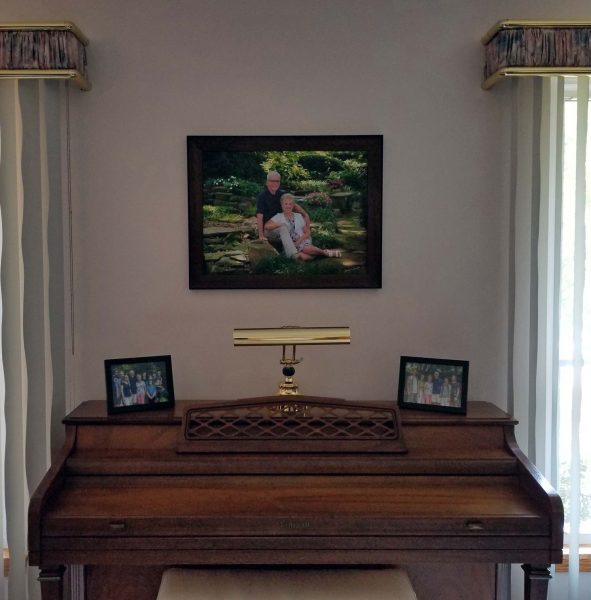
Thom and Katie agreed to take photos of Ted and me with our children and with our grandchildren. Here are the prints from Thom–also visible on the piano in the picture above.
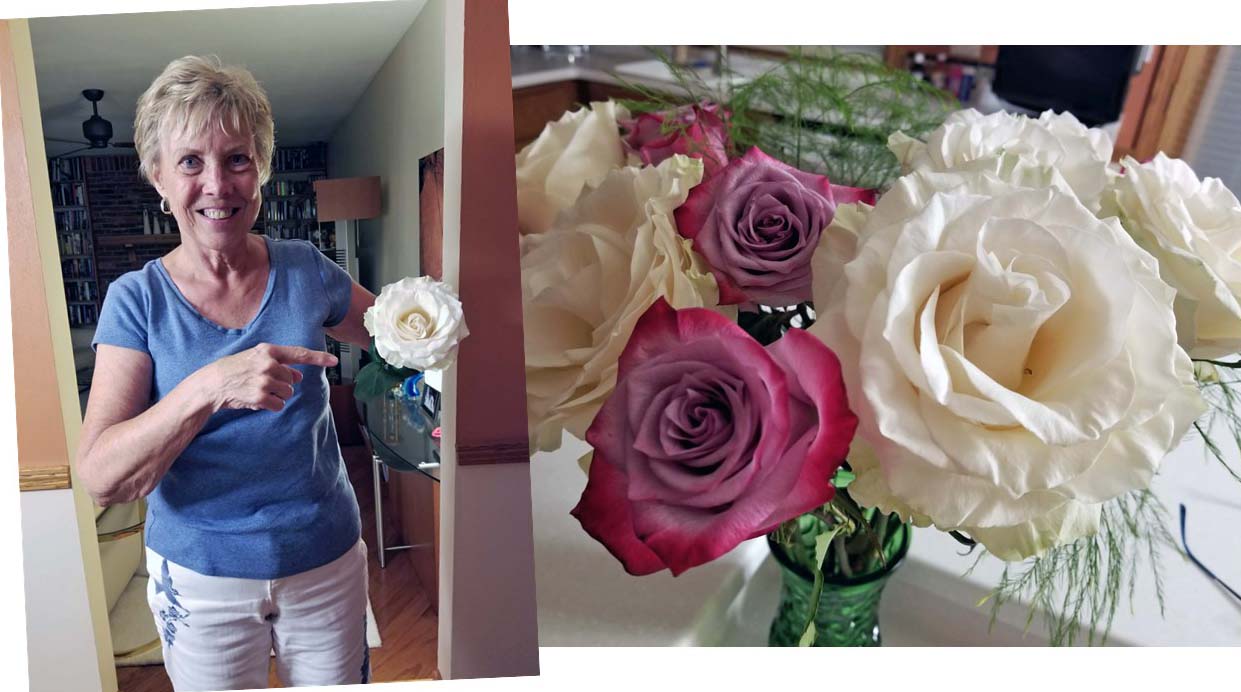
Ted bought me a bouquet of a dozen pink and white roses. The pink ones opened normally, but the white ones kept opening, and opening, and opening, . . . They were huge! Out of curiosity, I measured them with a ruler. The pink ones were a normal 2.5 inches, but the white ones were a little more than 5 inches in diameter. They are definitely the largest roses Ted has ever brought me. I guess his love for me is still growing.
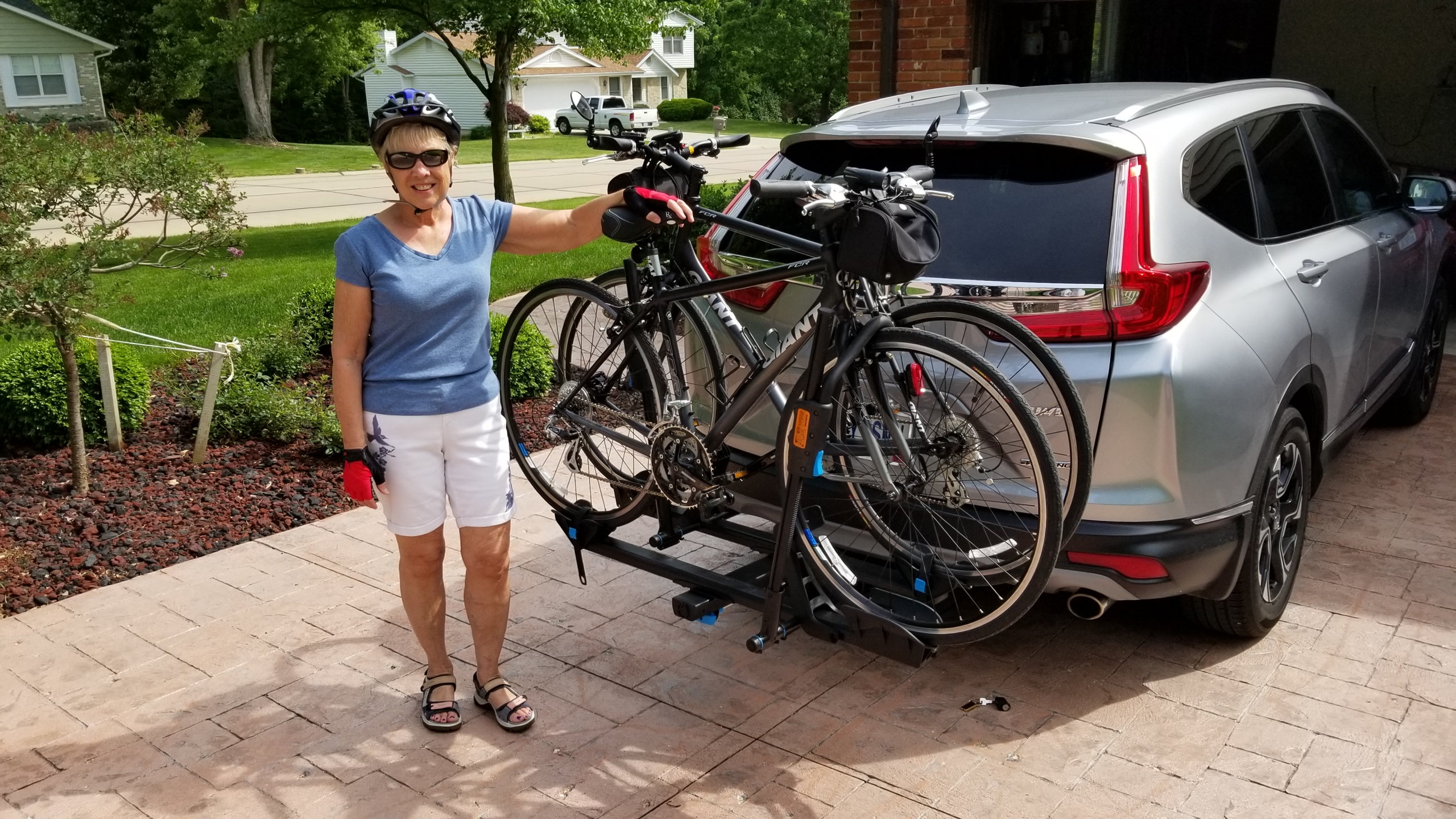
Last May, after deciding this is the year we’d get back to bicyling, we had our bikes tuned up, replaced worn-out parts, and bought a new bike carrier for the car. The bike shop guy told us he wanted to put us on e-bikes to try them out, but we insisted that we didn’t want them. We told him we ride for the exercise and are strong enough to do so. We were all excited about biking again, and we hit the road several times a week before leaving for our anniversary trip to Europe.
On the cruise portion of our trip, we signed up for a three-hour bike ride along the Moselle River in Germany. We expected regular bikes, but were put on e-bikes, so there was a bit of a learning curve.
We discovered that e-bikes are not like mopeds. If you don’t pedal, they don’t go, so we still had plenty of exercise on our excursion. The battery allows the e-bike rider to choose one of several levels of power to provide an uphill assist. There is no assist on a level road or downhill because the bike is moving easily and quickly, but the power assist makes it easier to climb uphill. Steep hills feel like less steep hills. The bikes were so much fun to ride, we decided that’s what we wanted as our 50th anniversary gift.
We shopped for e-bikes as soon as we recovered from jet lag and felt mentally capable of making a financial decision. After test riding four different brands, we made our choice. Ted’s choice was in stock; mine had to be ordered. Then mine arrived with shipping damage and had to be re-ordered. About ten days later, we were ready to go.
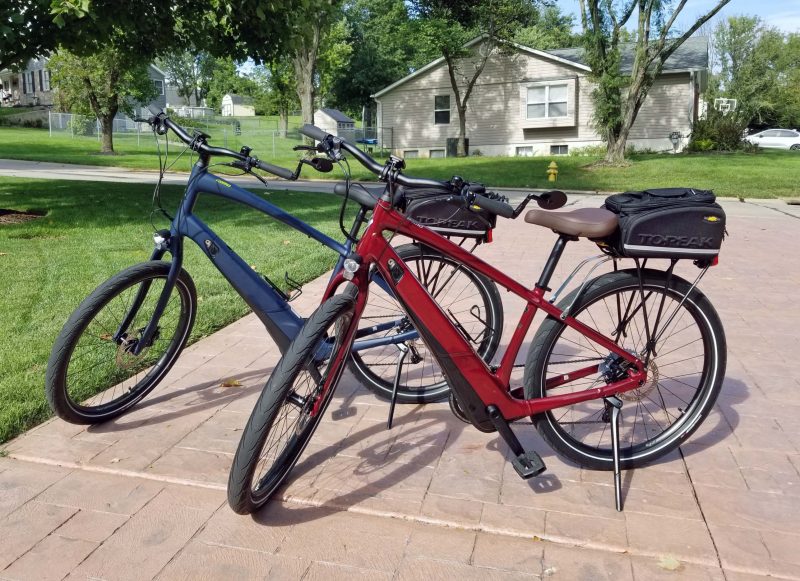
We’re enjoying the e-bikes so much, we’ve been riding 10-15 miles four or five days a week. Our area is hilly, and we used to take the hills into consideration when we planned our routes. Now, we don’t even think about them. The battery assist gets us up even the steep hills, and I still haven’t used anything below fifth gear, so we could climb higher if necessary.
With no uphill worries, biking is like having new toys to play with. We’ve been trying out greenways and riding through all the subdivisions around us. After each ride, I can’t wait to go out again!
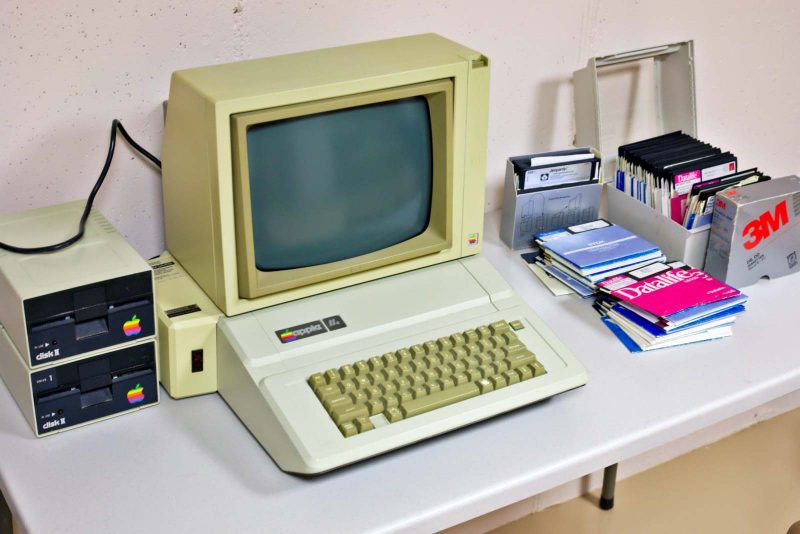
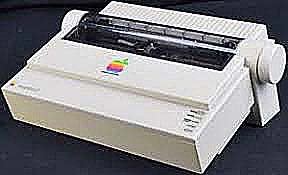
In 1982, Ted and I bought an Apple IIe computer for the family. It cost us $2,000 for the monitor, the processor, and a disk drive. We added an Apple ImageWriter color printer for $500 and an 80-column card to display more of that green text on the monitor. The ImageWriter (and all personal printers at that time) required tractor-feed paper. That’s actually a feature I occasionally miss. We used to print banners on tractor feed paper and you can’t do that on the individual sheets of paper personal printers use now. The processor had a 56K data storage capacity and used 5¼-inch floppy (literally) disks. Compare that to today’s PC and printer prices, storage capacity, and flash drives.
To use the Apple IIe, we had to insert a separate program disk for each program we wanted to use. To save a file, we had to remove the program disk and insert a blank disk. This became cumbersome (even in the early days of personal computing, we expected fast), so we bought a second disk drive.
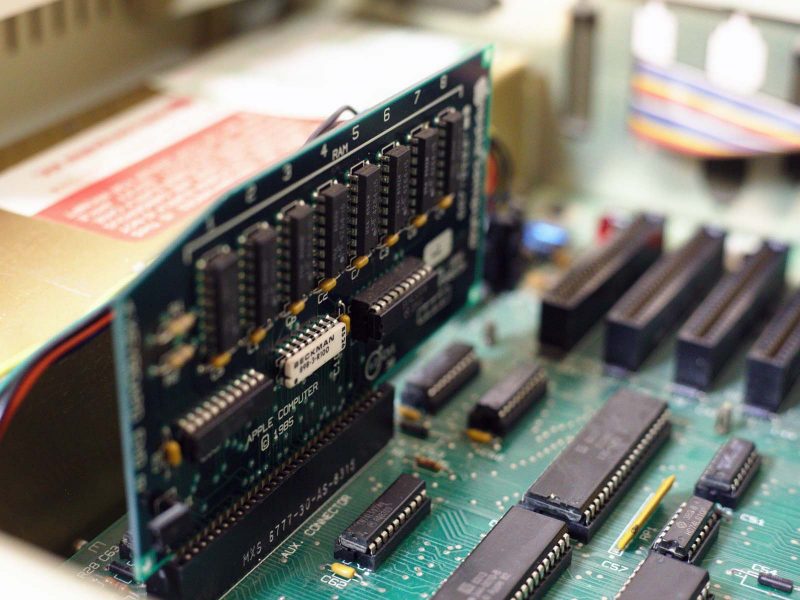
That 56K data capacity made it necessary for me to save my 20-page graduate papers on three disks, because 10 pages of text was nearly 56K of data. I usually saved the files for the text of my papers on two disks, and I saved the title page, table of contents, and bibliography on a third one. For my final copy, I had to manipulate the page numbers in the three files and I had to make sure the second text file began with the word immediately following the last word in the first text file so the paper would read correctly. After printing the three files, I had to arrange the pages in order. Whew! That was tricky, but copy, cut, and paste was a lot better than typing and re-typing on a typewriter.
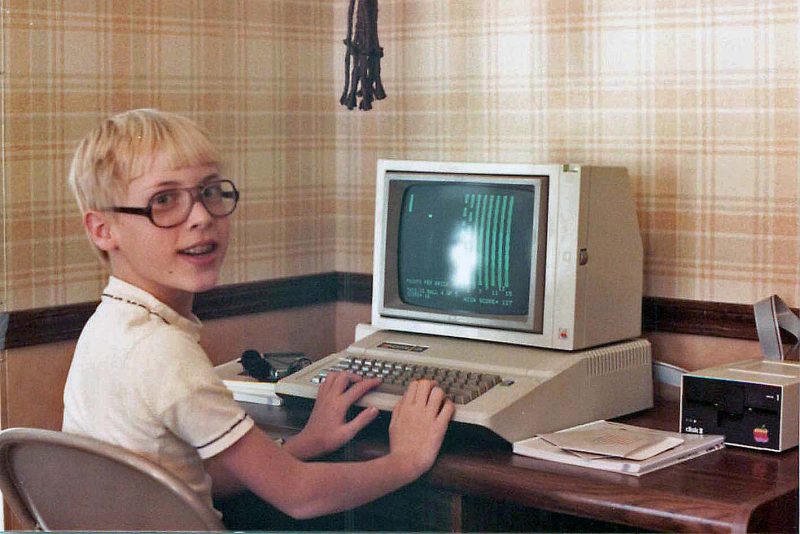
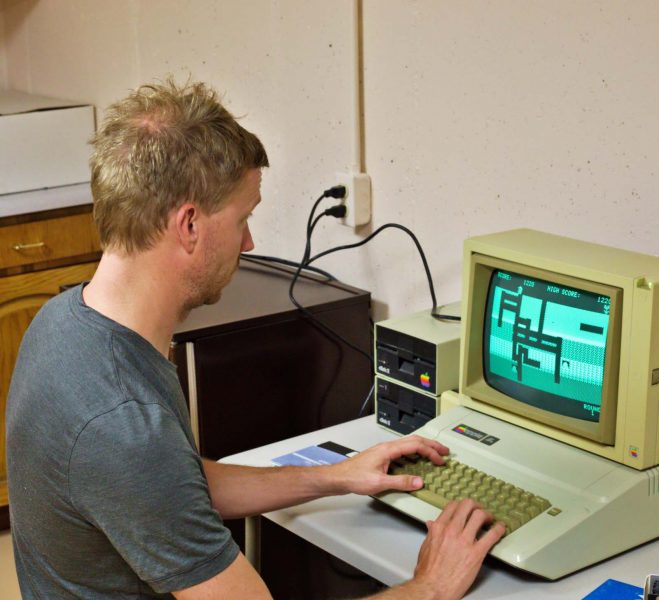
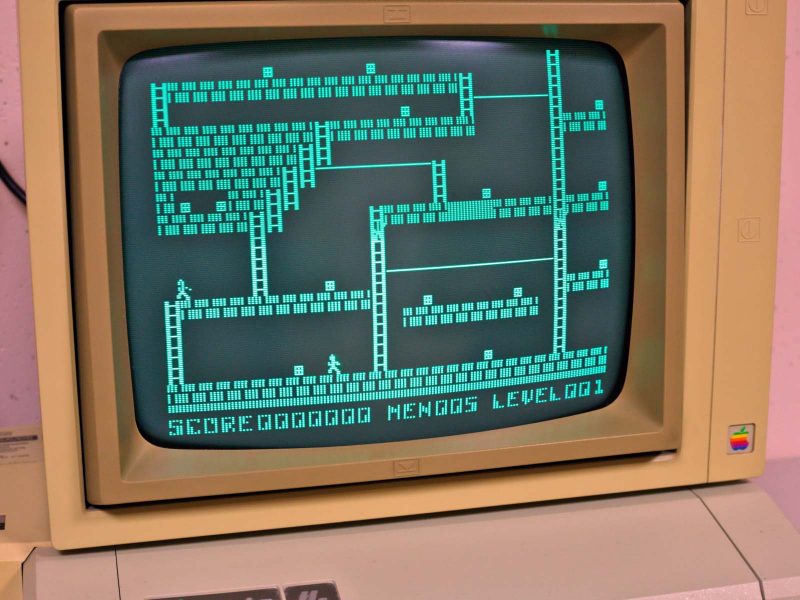
When hard disk drives became available, we upgraded from the Apple IIe, but we kept it with all the original parts and manuals in a box in the basement. I thought that, at some time in the future, it might be fun to set it up again to bring back good memories when the kids came to visit. We finally did this when the family was here for our 50th anniversary weekend. Ted and I set out the pieces, and Jeff and Thom got everything connected properly. Then they tried playing some of their favorite games: Dig Dug, Lode Runner, and Apple Panic. They were primitive compared to today’s games, but we all enjoyed playing them in the 1980s.
We offered the Apple IIe to the kids, but none of them wanted it. Ted and I were not interested in selling it online and we didn’t know anyone else who might want it, so we took it to Best Buy to recycle it. When we carried it in, we were stopped twice by people who said “Is that an Apple IIe?” and “You could probably sell that for a couple thousand dollars.” (Maybe, maybe not. Probably not.) We offered it to an employee who admired it, but he said that once it’s in the store, they can’t take it home. I offered to carry it back to the parking lot and give it to him there, but he said he’d probably lose his job if Best Buy management found out he kept anything that had been brought in for recycling.
Here’s our last view of our 37-year-old first PC–complete with recycling labels.
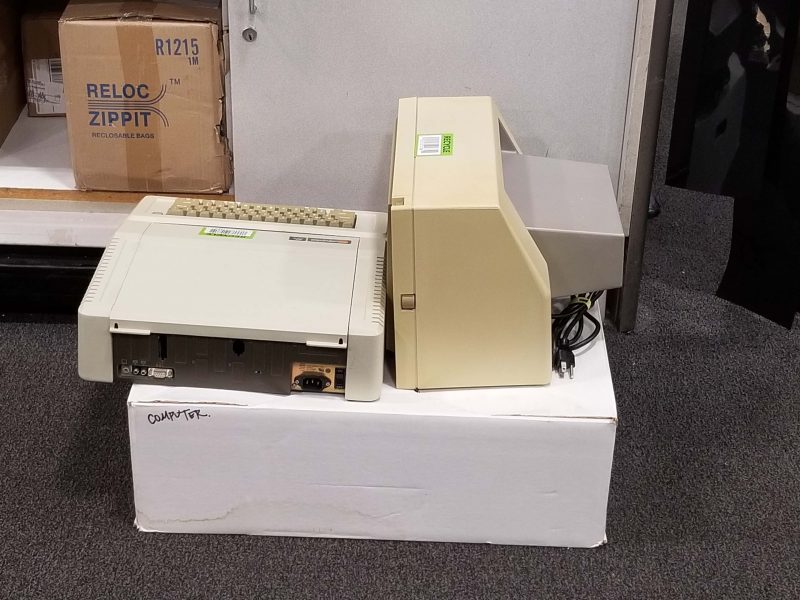
Ed. note: Jeff took more pictures of the Apple IIe than I did, so I lifted some of the photos above from his blog post. Thank you, Jeff.
This weekend, Ted and I flew to Utah for the wedding of our first grandchild. We were honored when Alex told us he was engaged and asked what our availability was to come to his wedding because he wanted us to be there. We’re happy we could attend the event and meet Kaitlyn. The reception had a Medieval theme, and guests were invited to attend in period clothing.
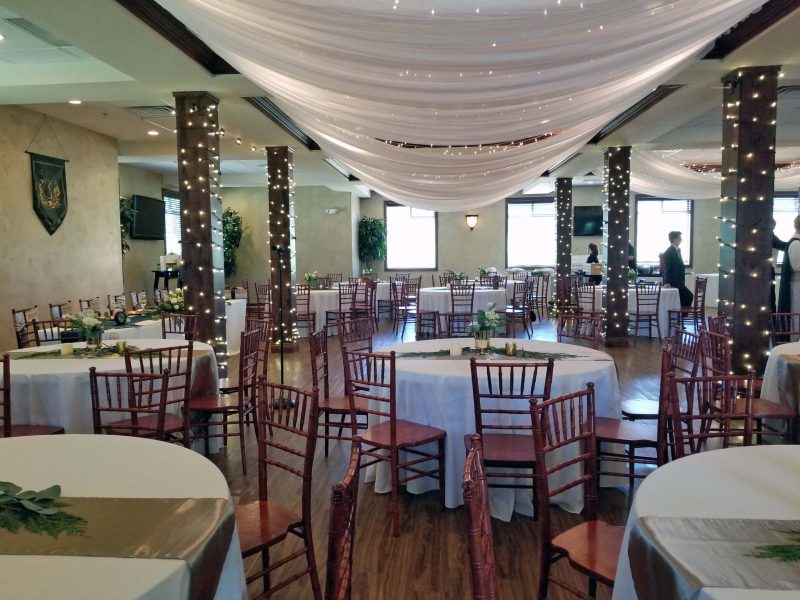
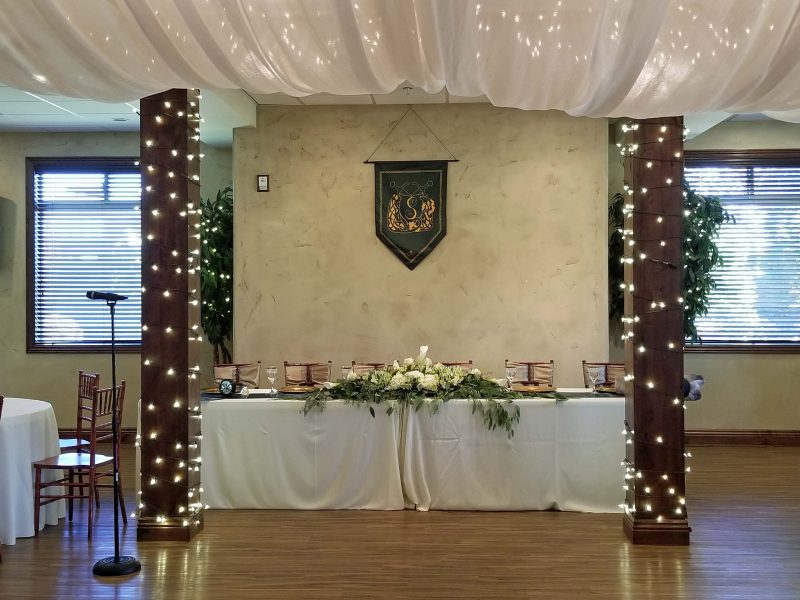
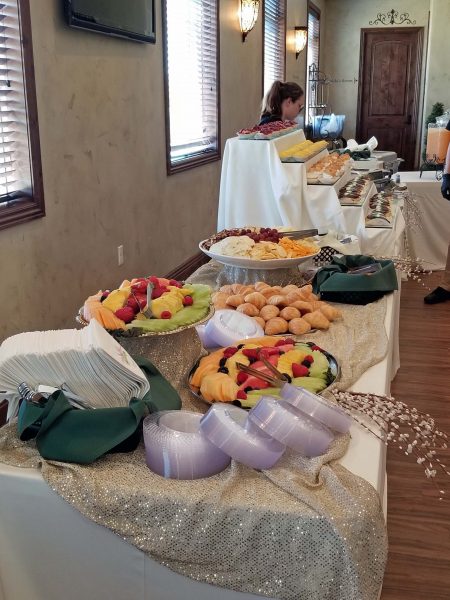
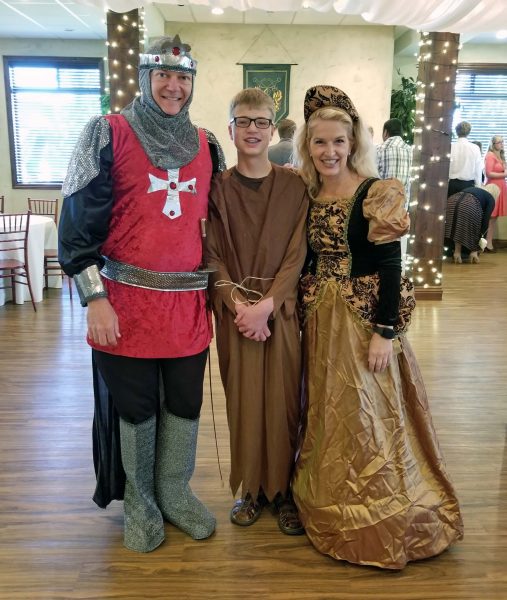
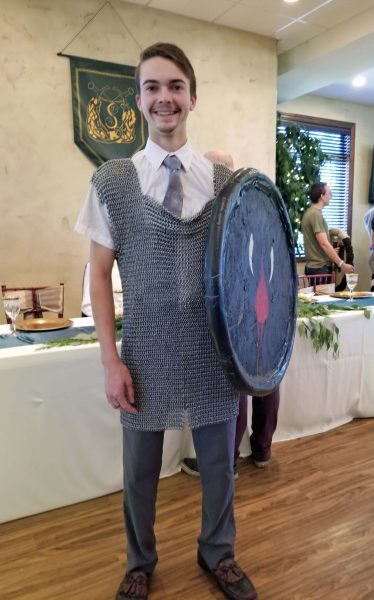
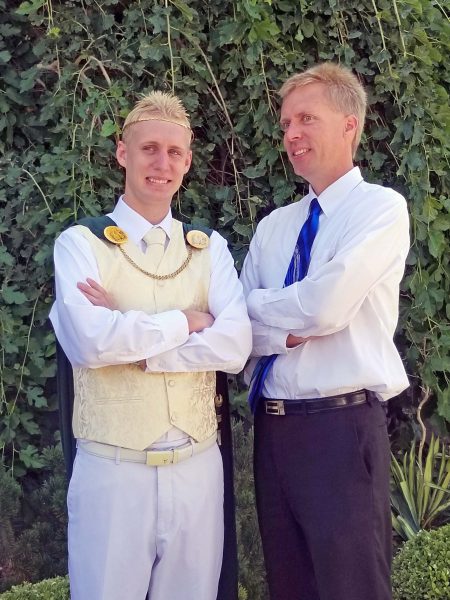
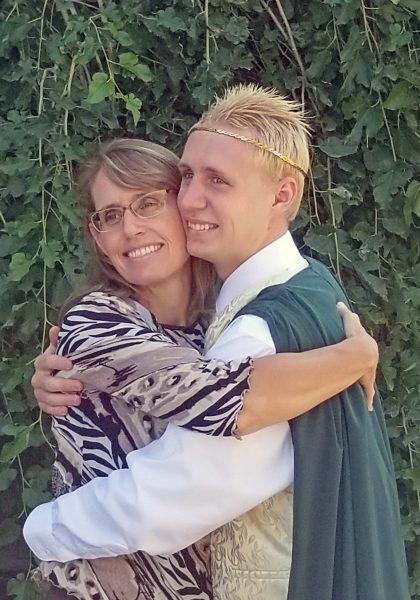
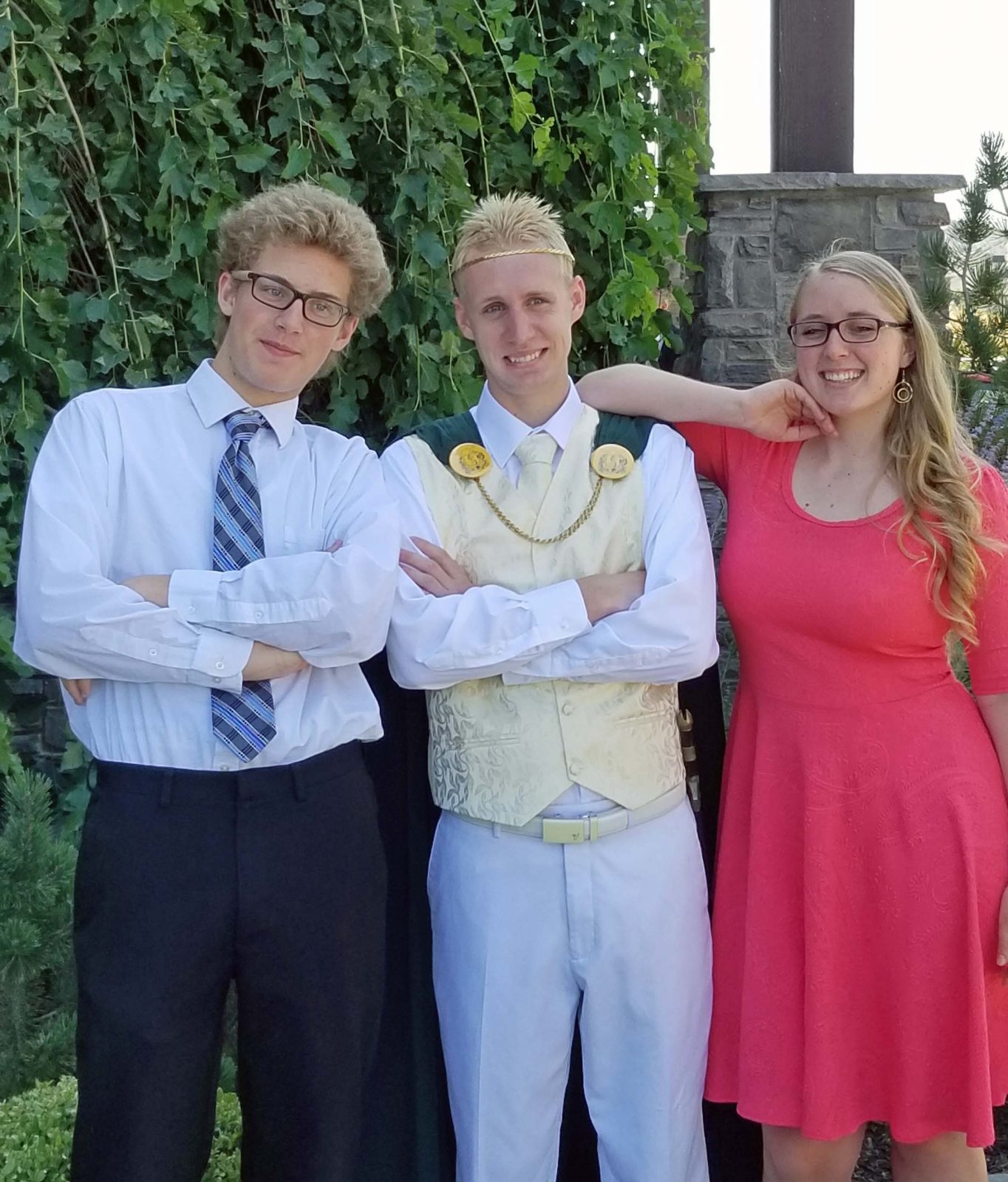
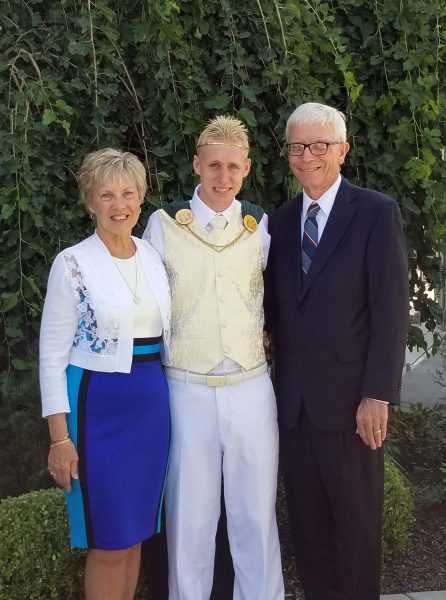
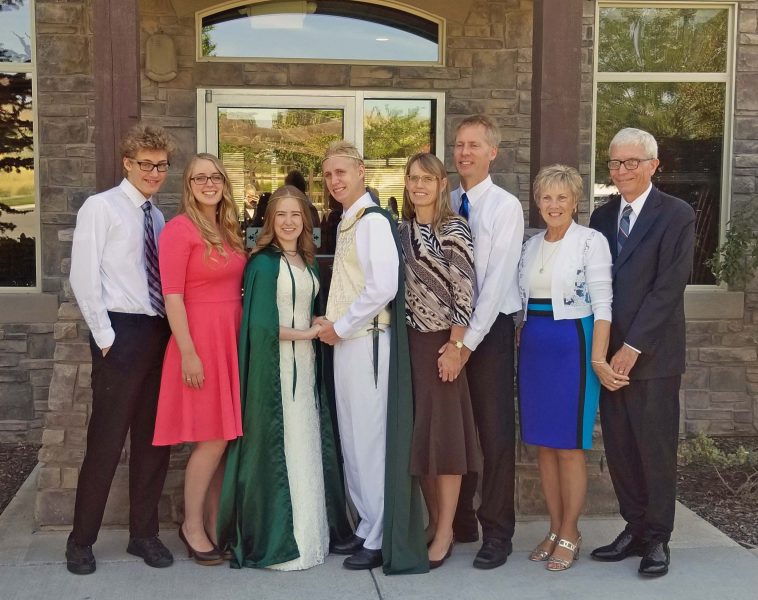
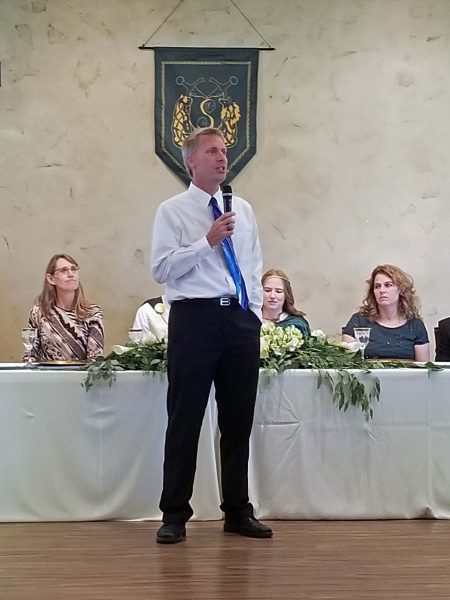
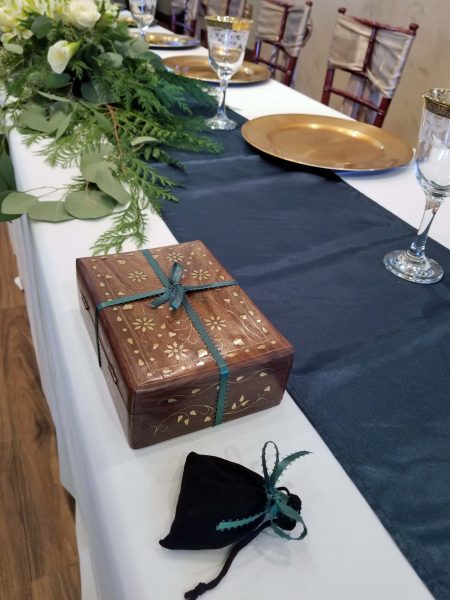
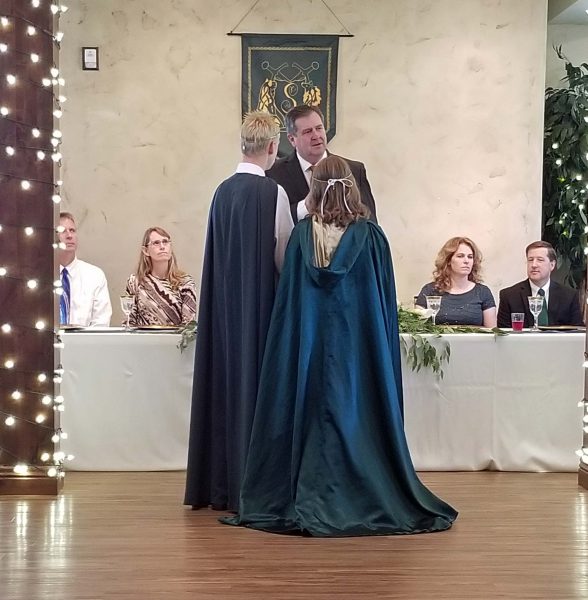
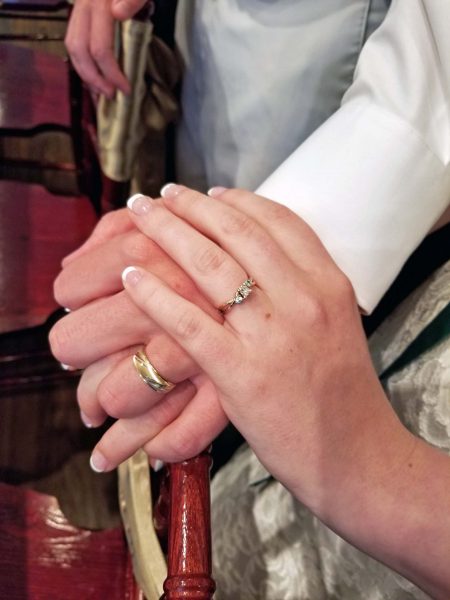
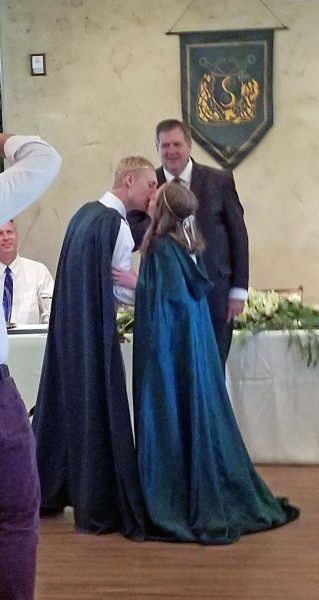
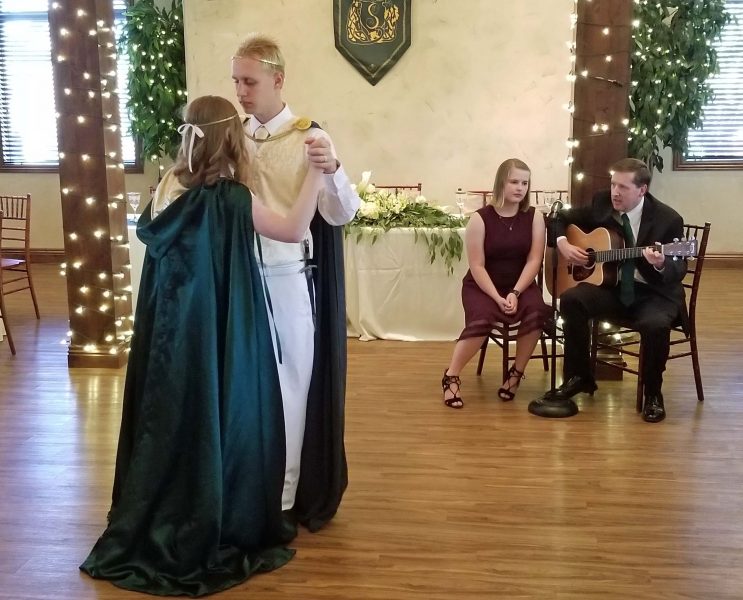
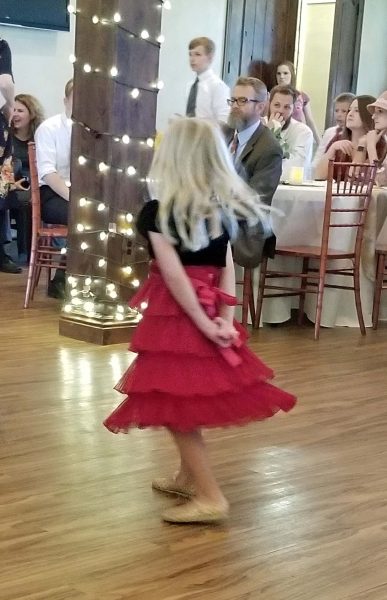
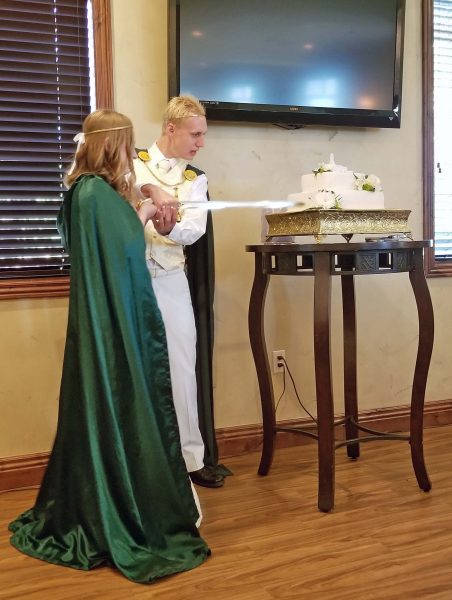
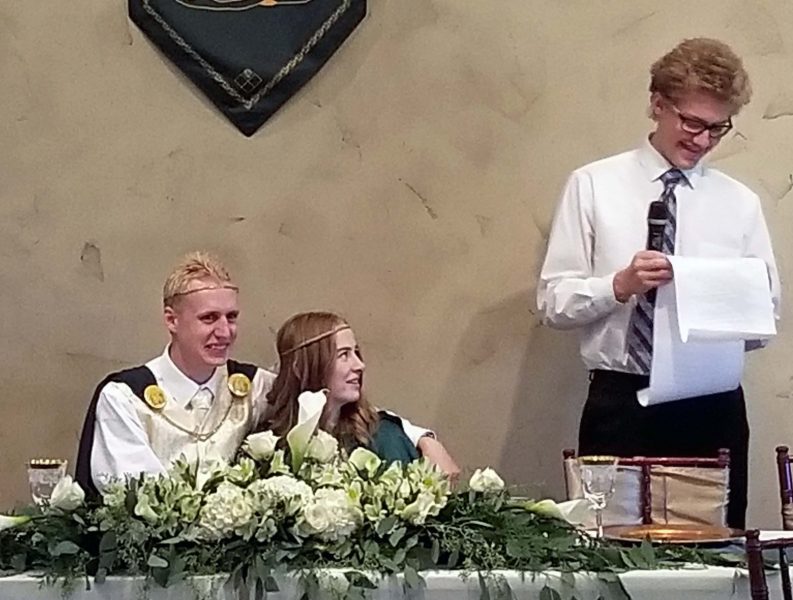
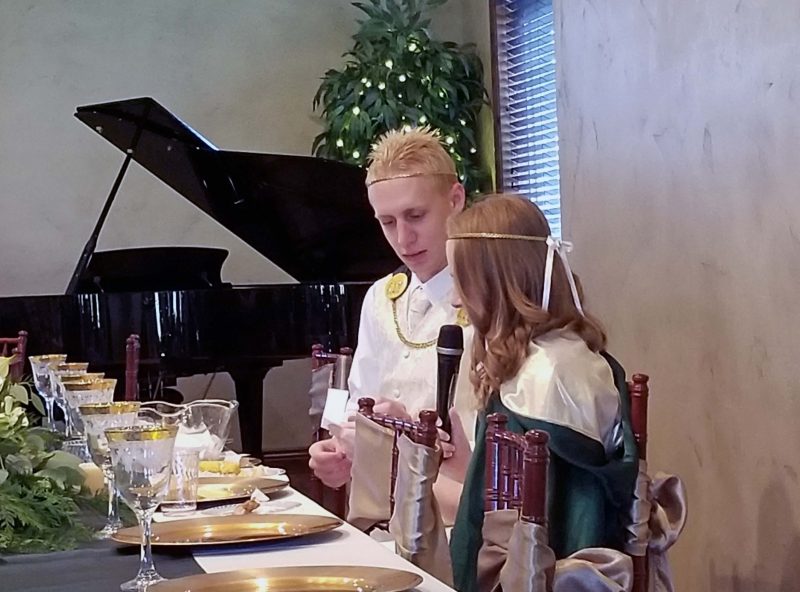
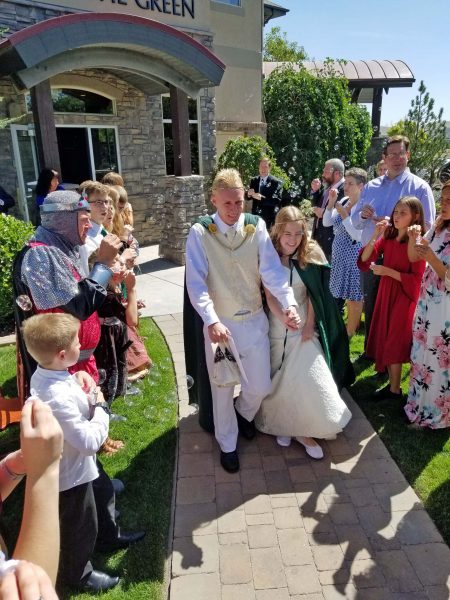
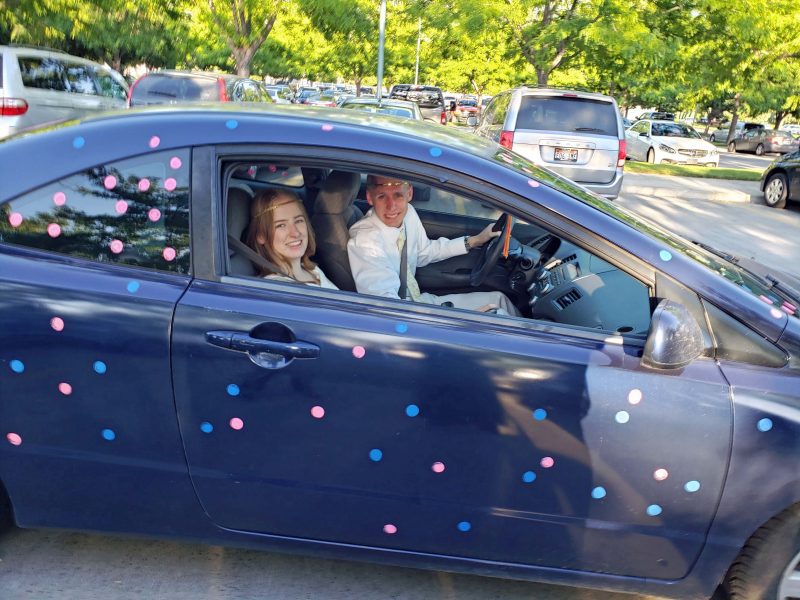
Best wishes for your future together, Alex and Kaitlyn.
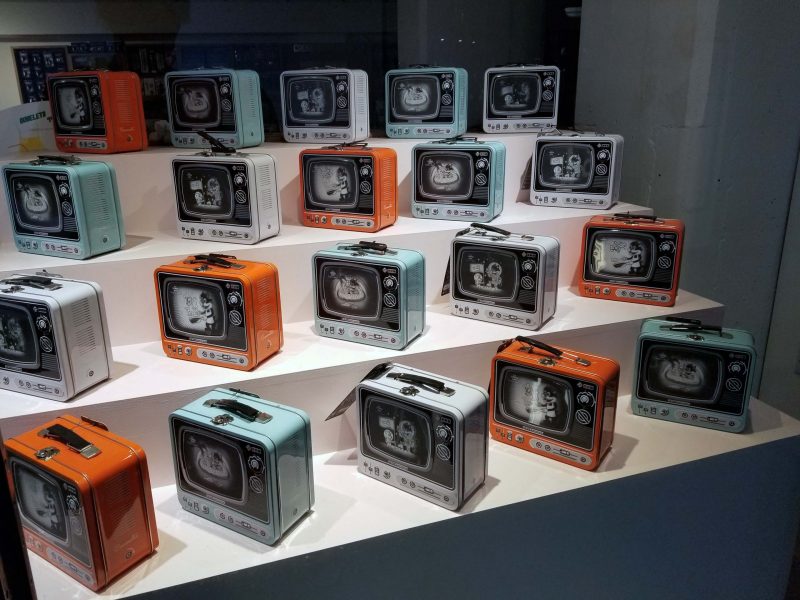
Ted and I had a great time on our 50th anniversary European trip. I decided to put together a little collection of interesting and amusing things we observed while we traveled for a month.
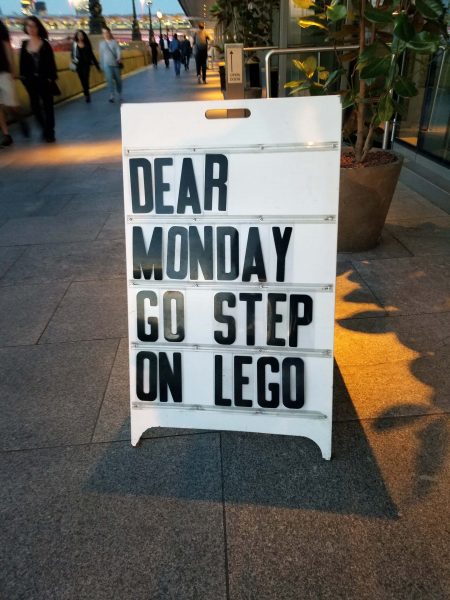
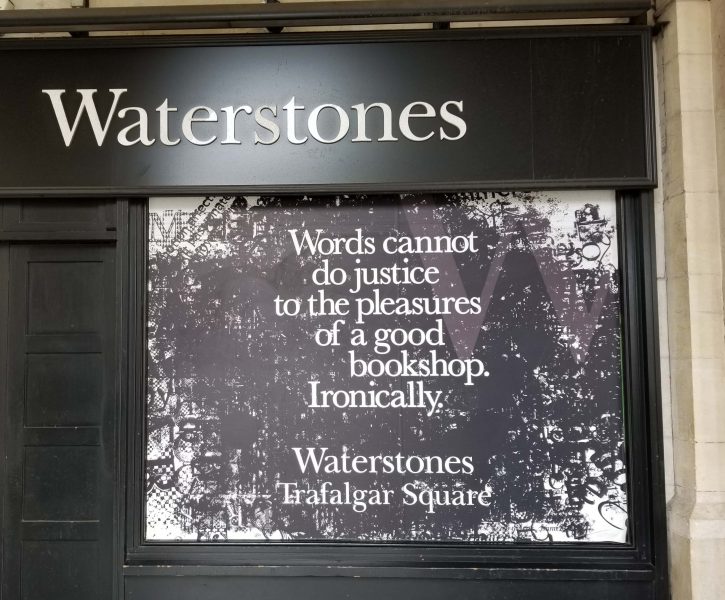
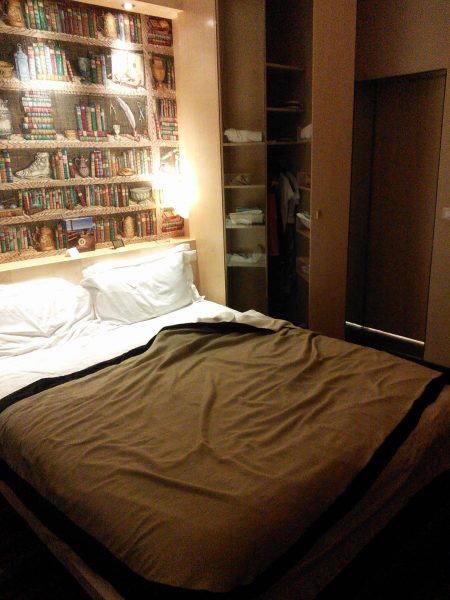
Do you know what a Shakespeare stop is? Hint: To pee or not to pee, . . .
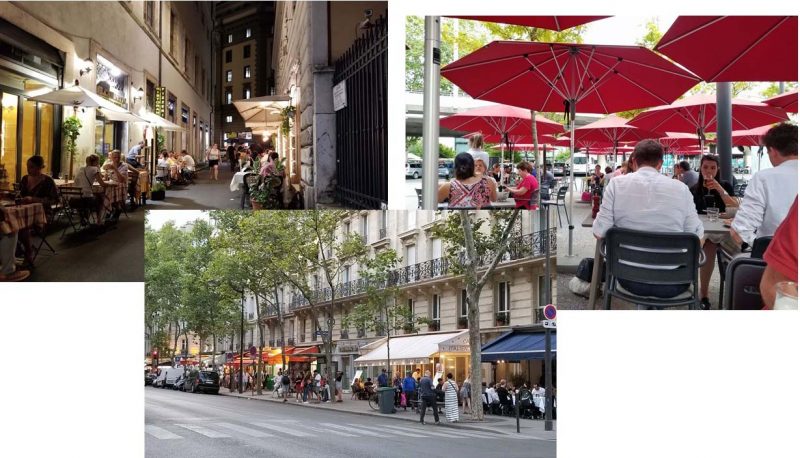
What’s the most popular tourist destination in France? Wrong. It’s Disneyland Paris.
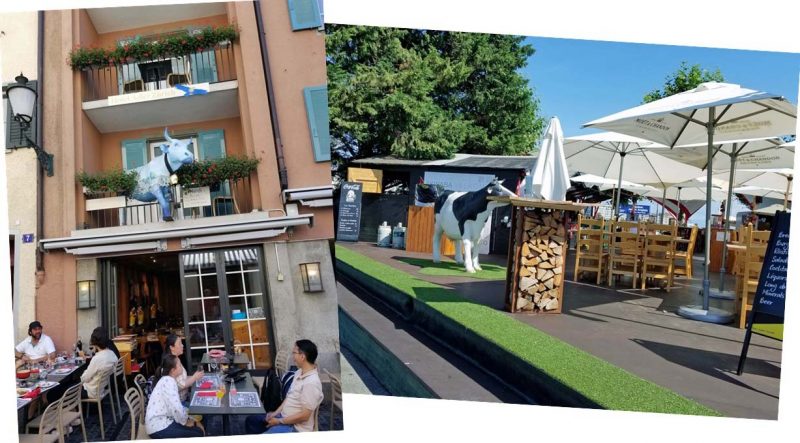
In Geneva, there is a restaurant called Au Carnivore. It’s for meat lovers. Really.
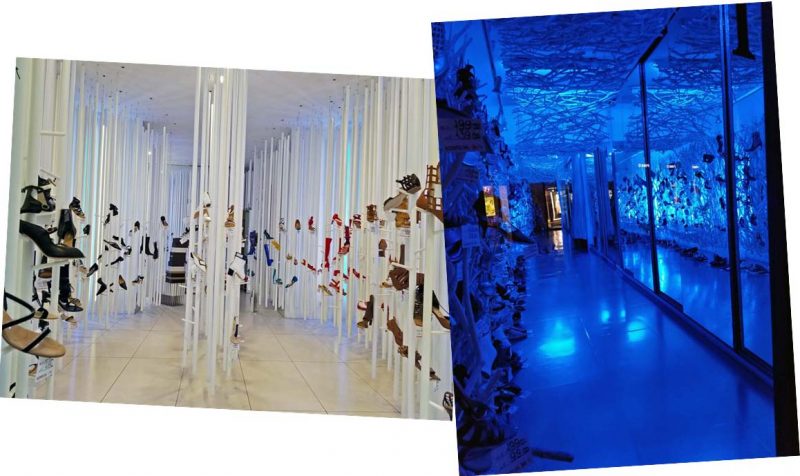
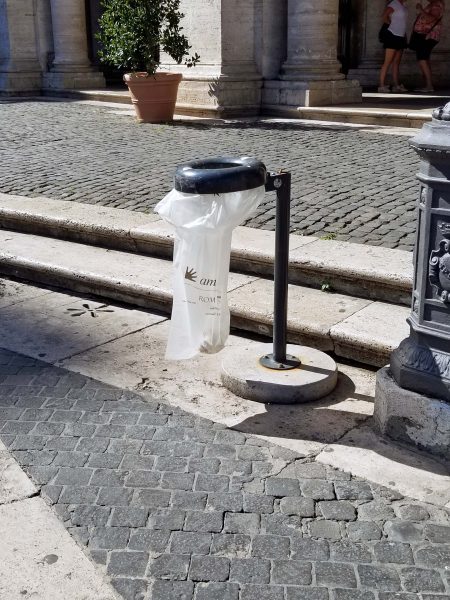
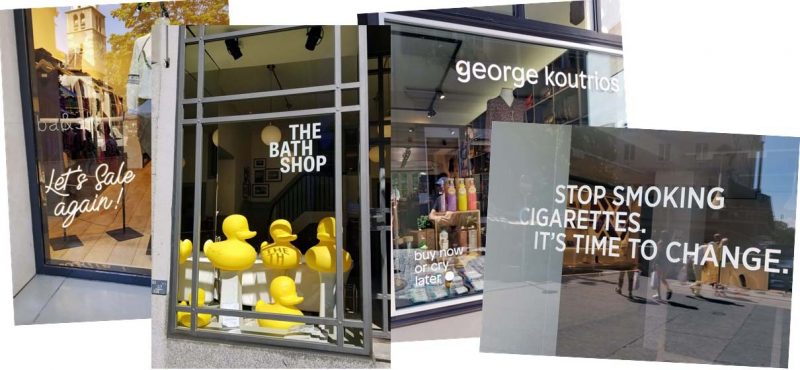
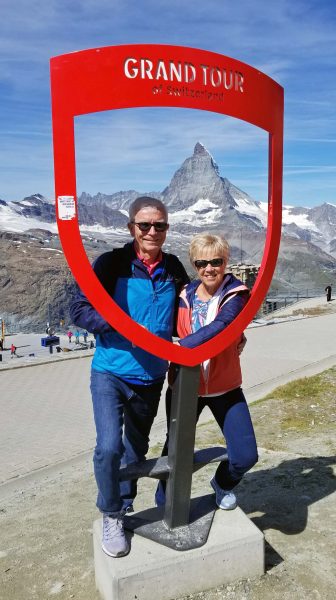
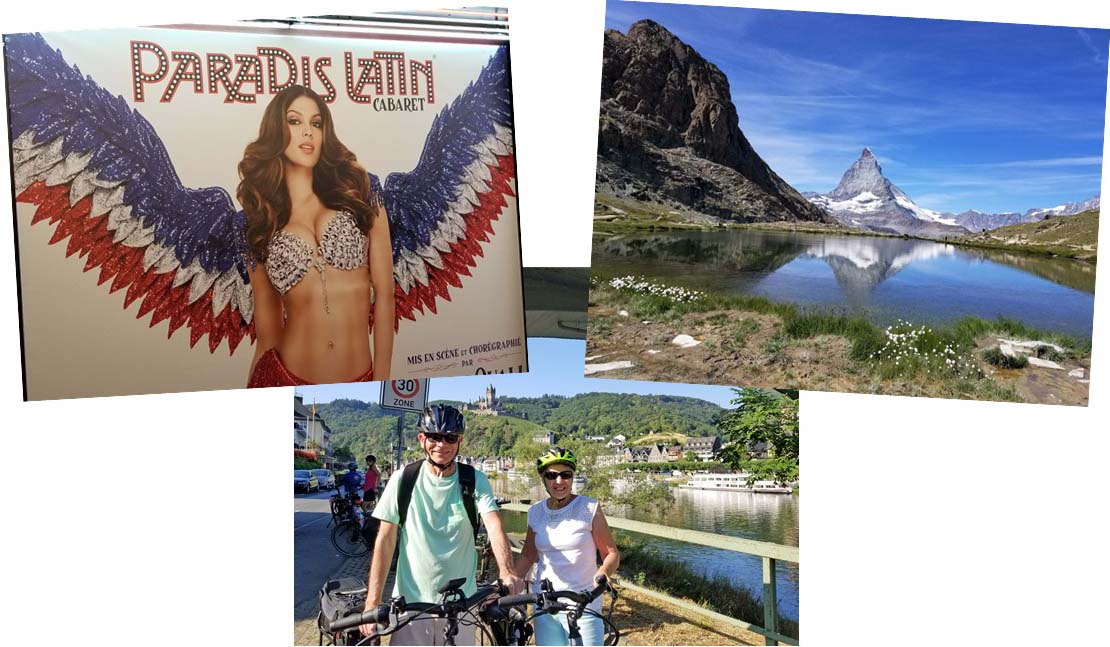
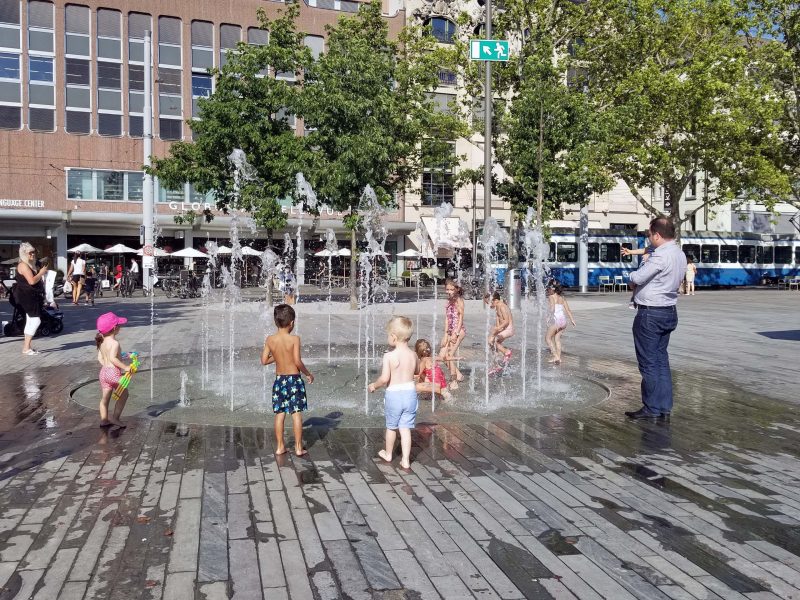
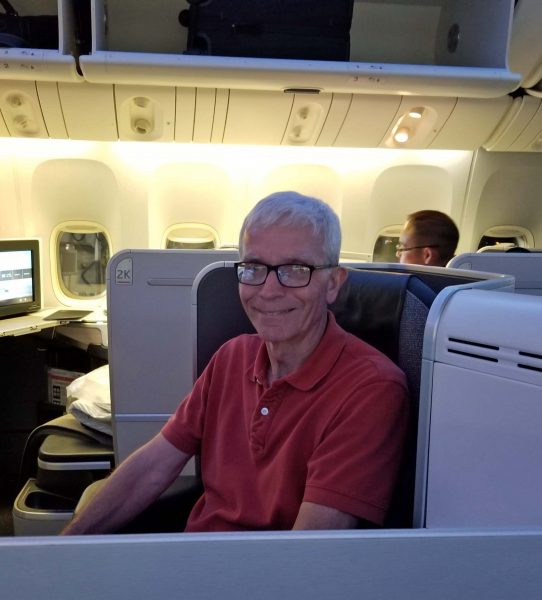
We flew from home to London in business class on Air Canada and had such a nice experience, we were actually looking forward to the long flight back to St. Louis, instead of dreading it. Aaahhh, to be so naive. What did we know?
Our trip home started yesterday when our alarm went off at 6:00 a.m. Rome time for our shuttle pick-up to the airport. Our flight was scheduled to depart at 10:50 a.m. with a 4:00 p.m. connecting flight from Newark to St. Louis that would get us home by 6:00 p.m. St. Louis time. After we arrived at the airport, we were told that our plane was coming from Newark and had been delayed due to thunderstorms, so our flight would be delayed at least three hours. That made it a close call for our connecting flight, but it turned out to be a moot issue because we left three hours and forty minutes late. As we were waiting to leave, we talked with some other passengers. Two of them had spent two days trying to leave Rome on United because their flight had been cancelled. The earliest flight they could get was this one–with another delay.
Ok, we got on the plane, took flight, and landed in Newark without incident. We had business class tickets for the flight home as well, but we quickly learned that United’s business class is not much better than coach except we had more leg room and might have had better food. (Our food wasn’t great, but I don’t know what they served in coach.) Not to mention that United’s business class seats are arranged in groups of facing seats, so half of the business class passengers fly backward–including us.
Because we were in business class, Ted and I were the third and fourth people to get off the plane. We hustled to the United customer service counter to re-schedule our flight to St. Louis, and were next in line for an agent. During the flight delay, several of us had been looking for possible connecting flights, but since we didn’t know when we’d be leaving, we couldn’t schedule anything. The next possible flight for us to take was at 10:00 p.m. and indicated there was one seat left. Luckily for us, we made our flight arrangements through our cruise company (Viking) and they were keeping tabs on us. When it was our turn to speak with an agent, she said, “It looks like a company named Viking already reserved seats for you on our 10:00 p.m. flight,” and she printed our boarding passes. Thank you, Viking!
Unfortunately, United wasn’t finished tormenting us. We had repeated delays for our flight home. First, there were thunderstorms in Newark, so the airport was closed. All planes on the tarmac were de-boarded so passengers could shelter in the terminal, and that threw every following flight off schedule–at least for United.
Another announced delay informed us that the crew flying us from Newark to St. Louis was late. When the crew finally arrived, we learned that the pilot had flown too many hours and United needed to find another pilot. (Didn’t the pilot or anyone else check how many hours he’d be flying today?) While we were waiting for a pilot, United announced six flight cancellations. Thank goodness, our flight wasn’t one of them. We had time to get something to eat and, while we did, we saw the United customer service line after the cancellation announcements. The continuing delay announcements became so ridiculous, Ted and I laughed when we heard them. I think we were giddy with exhaustion by then.
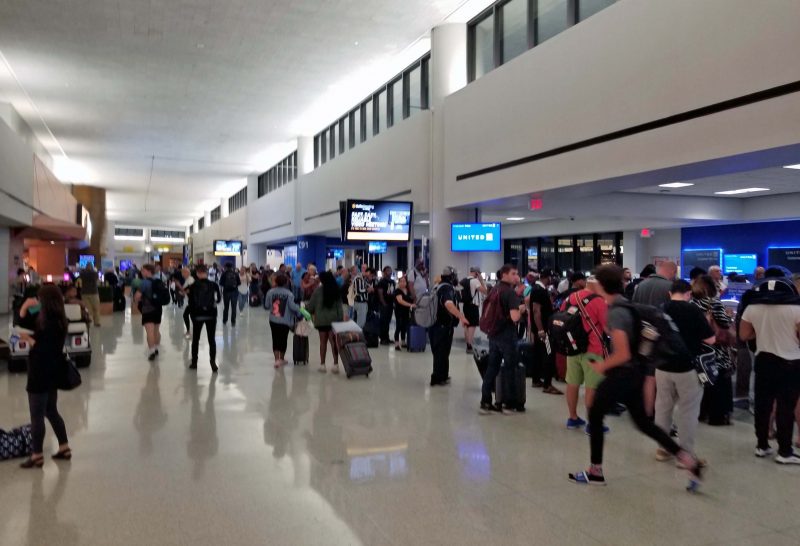
Around midnight, we were finally told we could board the plane, but we still couldn’t take off, and this was the dumbest excuse of all: Our plane couldn’t be pushed back from the gate because the planes on each side were so close, we’d hit their wingtips. Good grief! Airports have painted lines on the tarmac for the pilots to steer their craft to the gates. Didn’t anyone measure the distances between the painted lines???!!!
We left the gate–thankfully, without hitting another plane–at 12:42 a.m. and arrived in St. Louis at 3:00 a.m. (10:00 a.m. the following day, Rome time), after nine hours of delays for two flights. Ted and I were so exhausted when we got home that we showered (we’d been awake for 28 hours) and fell into bed. We slept 30 hours during our first two days at home. After that, we went shopping for e-bikes, just as we’d planned.
Never, never fly United. I contacted Viking, thanked them for looking out for us, and advised them to schedule their passengers on other airlines.
Ted and I had a private tour of the Coliseum. It was just the two of us and an outstanding guide who really knew her Roman history. The tour included Palatine Hill, the Roman Forum, and the Coliseum. Our guide said we needed to begin our tour with Palatine Hill, which is beside the Coliseum, because Rome’s history starts on Palatine Hill.
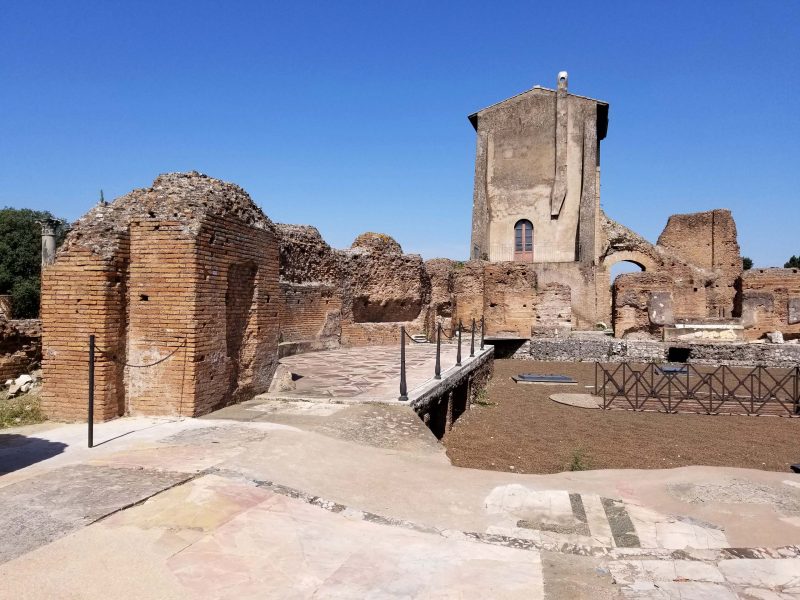
The seven hills of what is now Rome stood above the Tiber River. People built on the hills because the lower land was a swamp. Nero decided to build the largest palace in the world on Palatine Hill. Would you believe the Palace included central heat and air conditioning back in 68 A.D.? Fire warmed the Palace floors in winter and an elaborate water system sent water throughout the Palace to fountains and pools to cool it in the summer. The system sent waste water into the Tiber River.
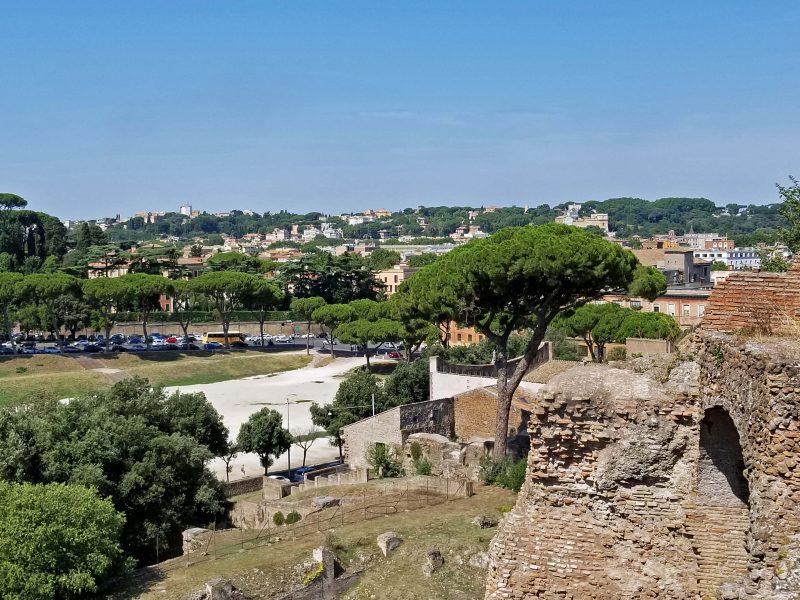
The following photos show only parts of the Palace, but the ruins indicate how large it was.
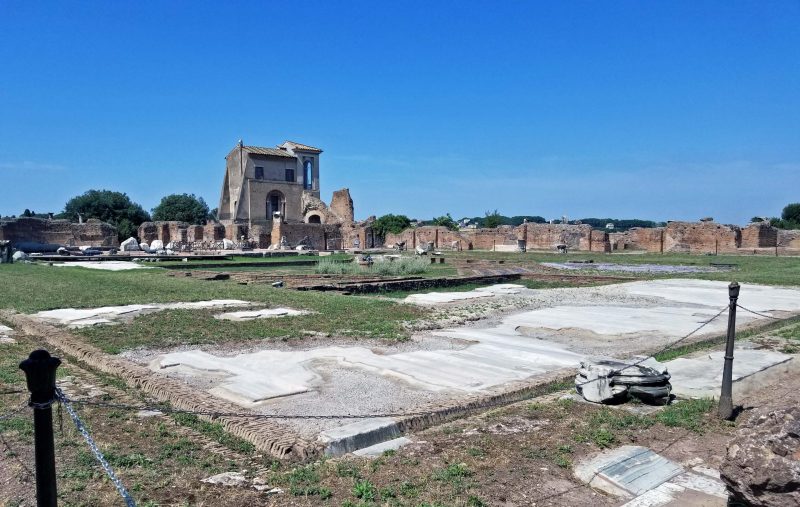
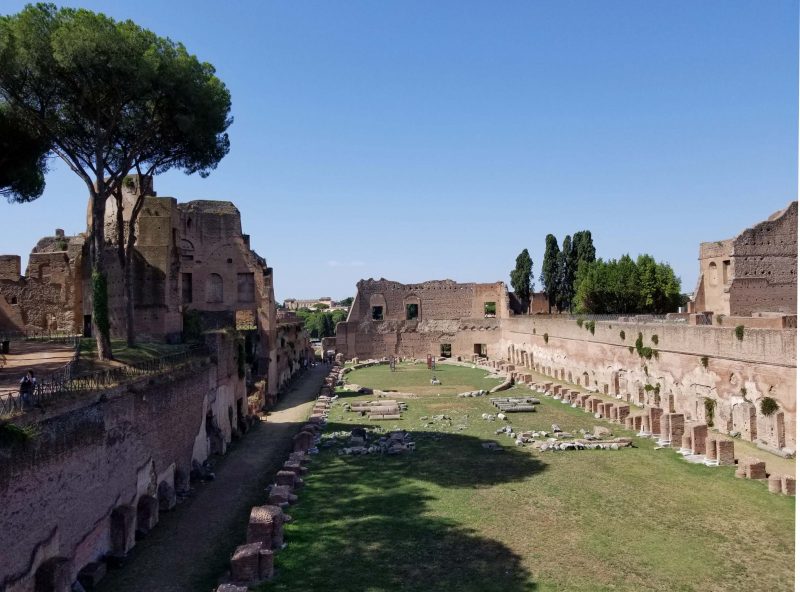
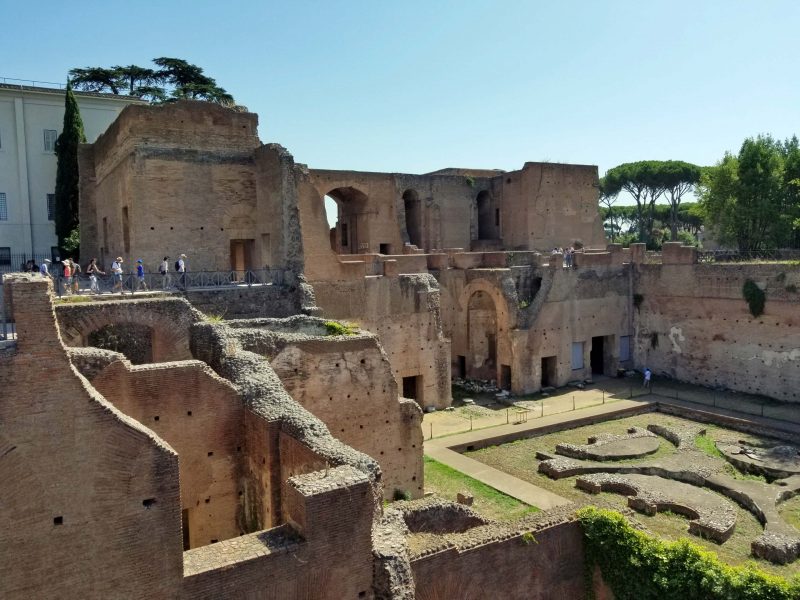
Some of the Palace floors were double. Heat from fires was directed into the space between the double floor to heat the stone. Radiant heat from the stone floors then warmed the palace rooms. Sometimes, the stone floors became so hot that they warped (second photo).
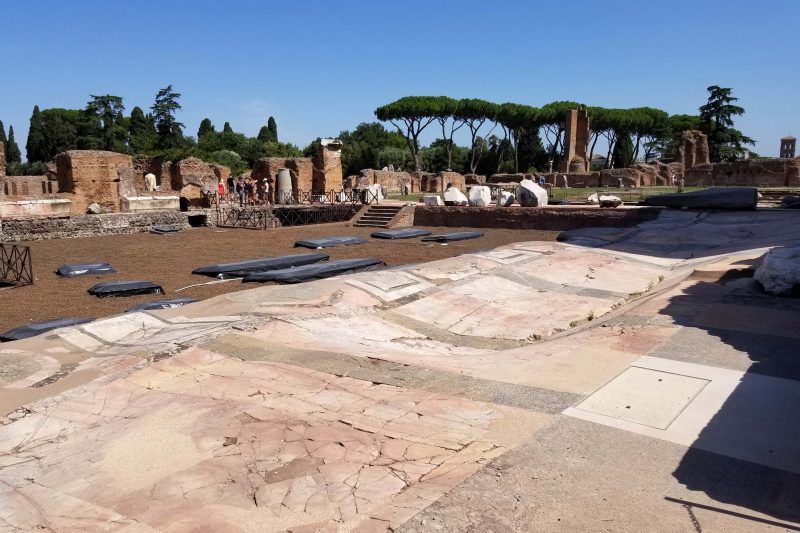
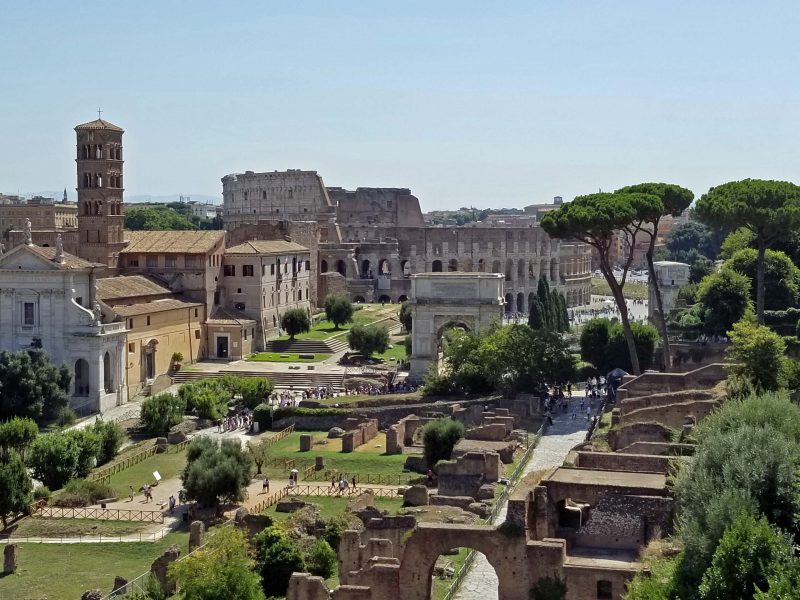
Note: The top-heavy trees in the photo above are called umbrella pines. They can be seen everywhere in the city. The trees grow so wide and heavy that they fall over unless they are pruned, giving them an umbrella shape.
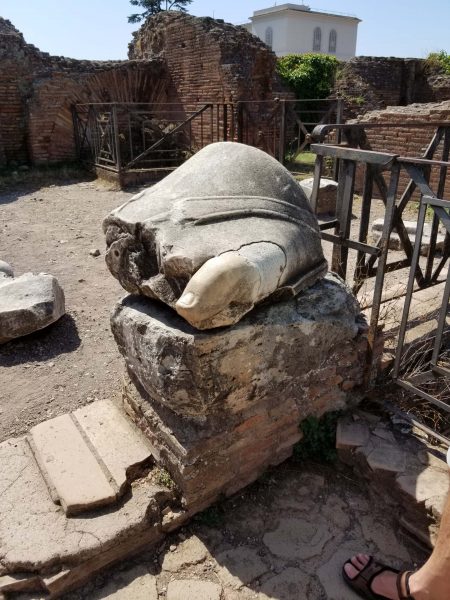
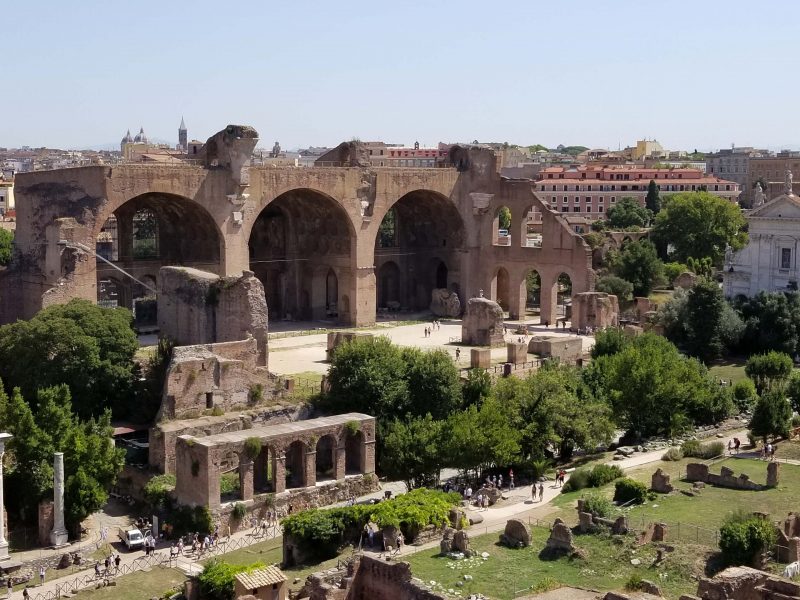
The Palace, the Roman Forum, and the Coliseum are all on Palatine Hill. I took the following pictures from the hilltop near the Palace.
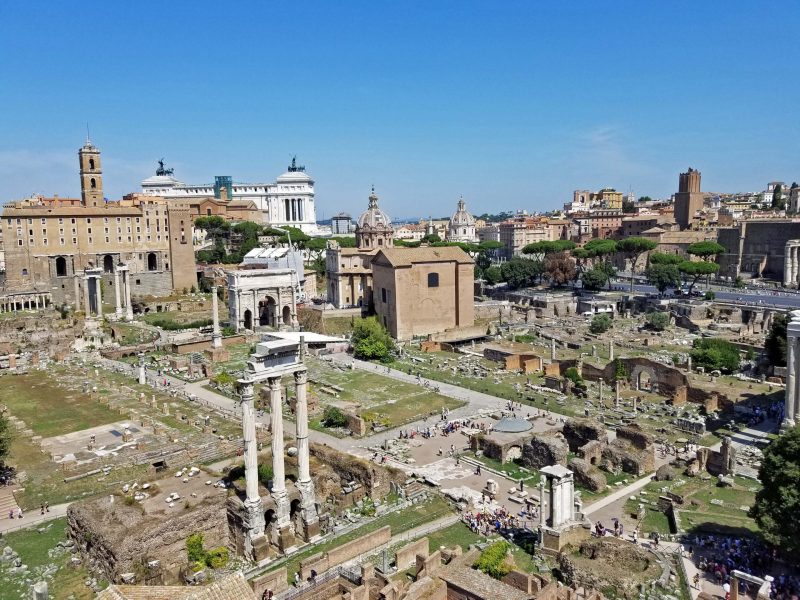
The House of the Vestal Virgins was home to the priestesses of the goddess Vesta. Six priestesses between the ages of 6-10 were chosen to serve for 30 years. During that time, they had to remain chaste. Punishments for infractions of their rules were severe, including lashing, pouring molten lead down their throats, and burying them alive. (Certainly an incentive to obey the rules!) After their service, they were allowed to marry, but usually didn’t because it was considered bad luck to do so after being consecrated to Vesta. When the Roman Empire fell, many blamed it on the conversion to Christianity and forsaking the old gods.
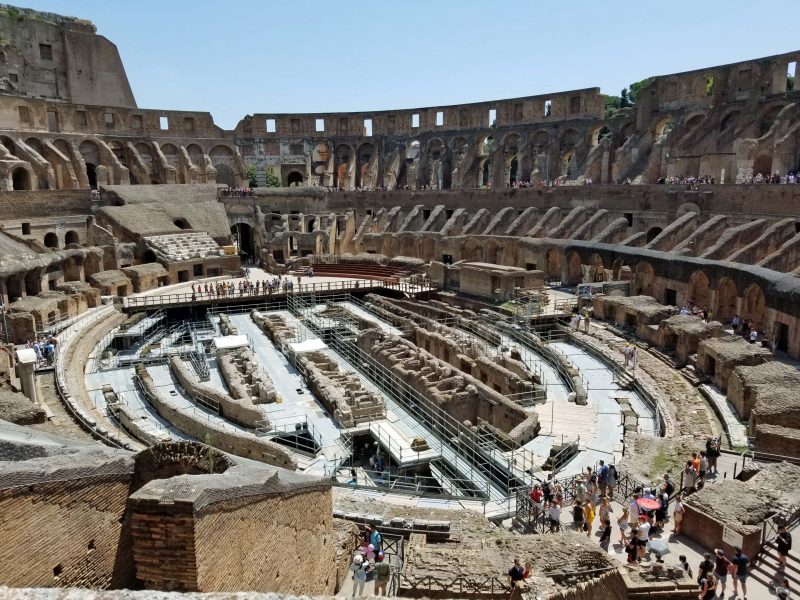
The Coliseum was built for entertaining palace guests. There is as much of the Coliseum below ground as above. The foundations are 40 feet deep and 10 feet wide to support the weight of the building. There was a point at which the government could no longer afford the upkeep for the Coliseum, so it was shut down around 500 A.D. and used for simple housing–no more than a room with walls, a ceiling, and a door. During this time, Rome’s population decreased from 1,000,000 to 25,000.
There were two stages for performing in the Coliseum, so two performances could occur simultaneously. Four tunnels provided access to the Coliseum from different points. One tunnel connected the palace to the Coliseum for the Emperor’s convenience. The Coliseum had 24 elevators, operated by over 200 slaves turning wheels to operate pulleys. The entrances were numbered, just like today’s stadiums, and some of the gate numbers were still visible. Our guide pointed out entrance IIII. At that time, IIII was the Roman numeral for 4. It is now written as IV.
Part of the Coliseum has been restored, and work is progressing on other parts. Some of the restored central arena is now used for concerts. (Steven Tyler performed in the Coliseum in 2017.)
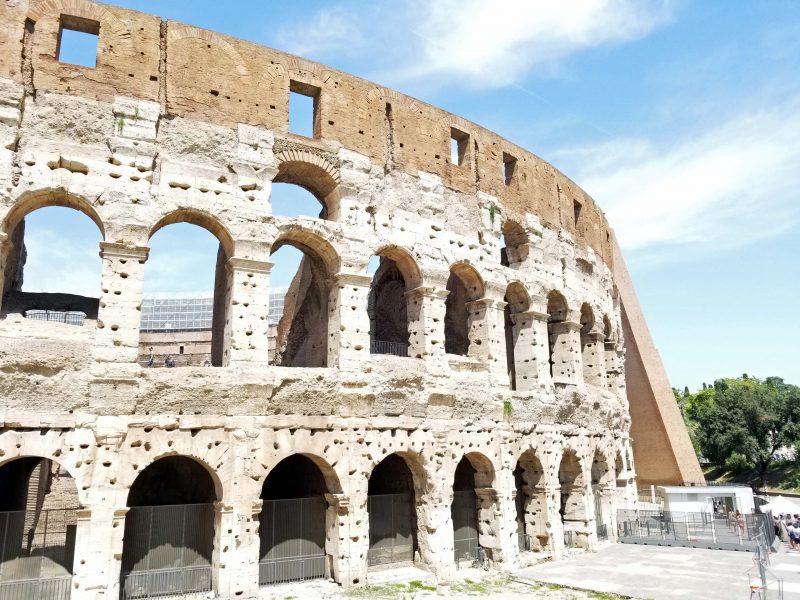
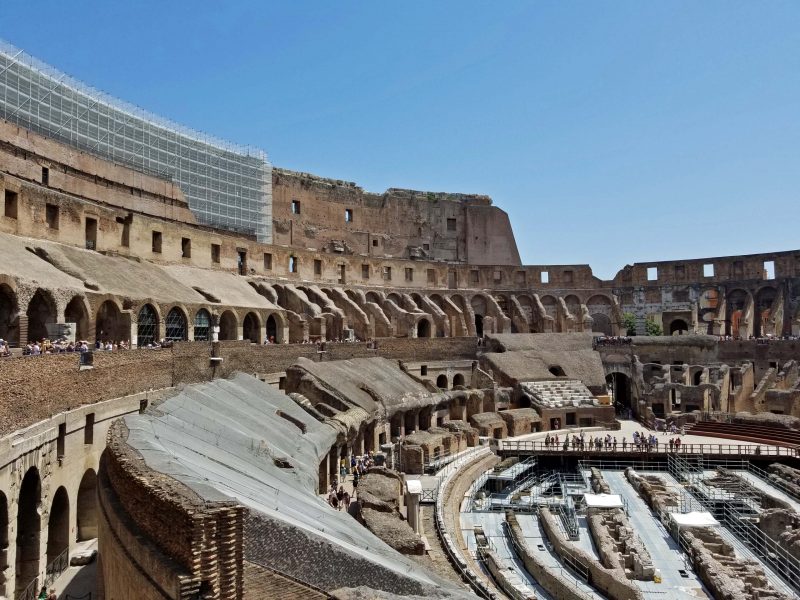
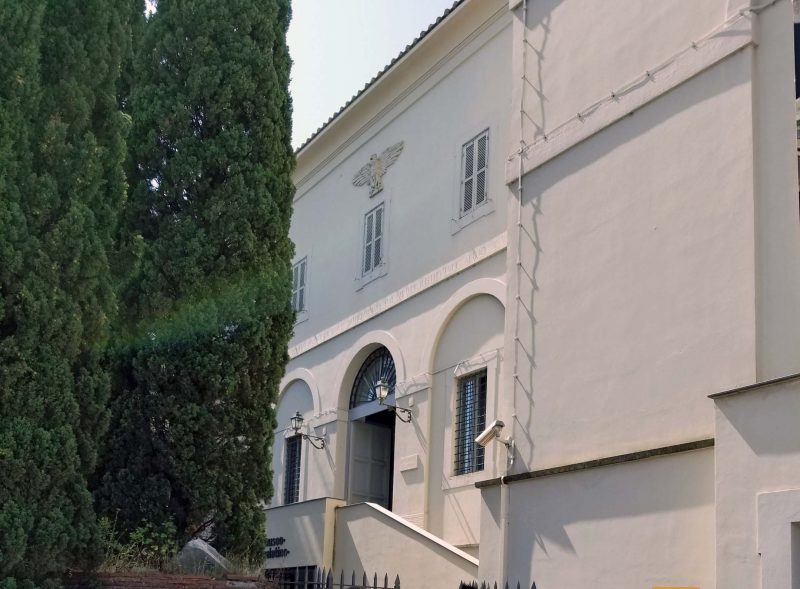
Mussolini tore down much of the Forum, the Palace, and the Coliseum because he wanted to build a road for his military parades. He then built a palace for himself on Palatine Hill. People disparagingly called it “the square Coliseum.”
There is a saying that “all roads lead to Rome,” but our guide said it should be the other way around: “All roads begin in Rome.” Rome was considered to be the center of civilization, and there is a marker on Palatine Hill to indicate the center of Rome (cf the first paragraph, above). Markers were placed on Roman roads throughout the entire Roman Empire to indicate the distance from the marker to the center of Rome. Many of those roads still exist, including the Appian Way, ancient Rome’s most important military and economic artery.
Mythbusters: (1) Ben Hur’s chariot race did not take place in the Coliseum. The races were held in the Circus Maximus in the valley between Palatine Hill and Aventine Hill, an area that could seat 250,000 people. (2) Gladiators did not fight to the death. It was expensive to train and outfit gladiators, so they were not supposed to kill each other. Their contests were more like today’s wrestling.
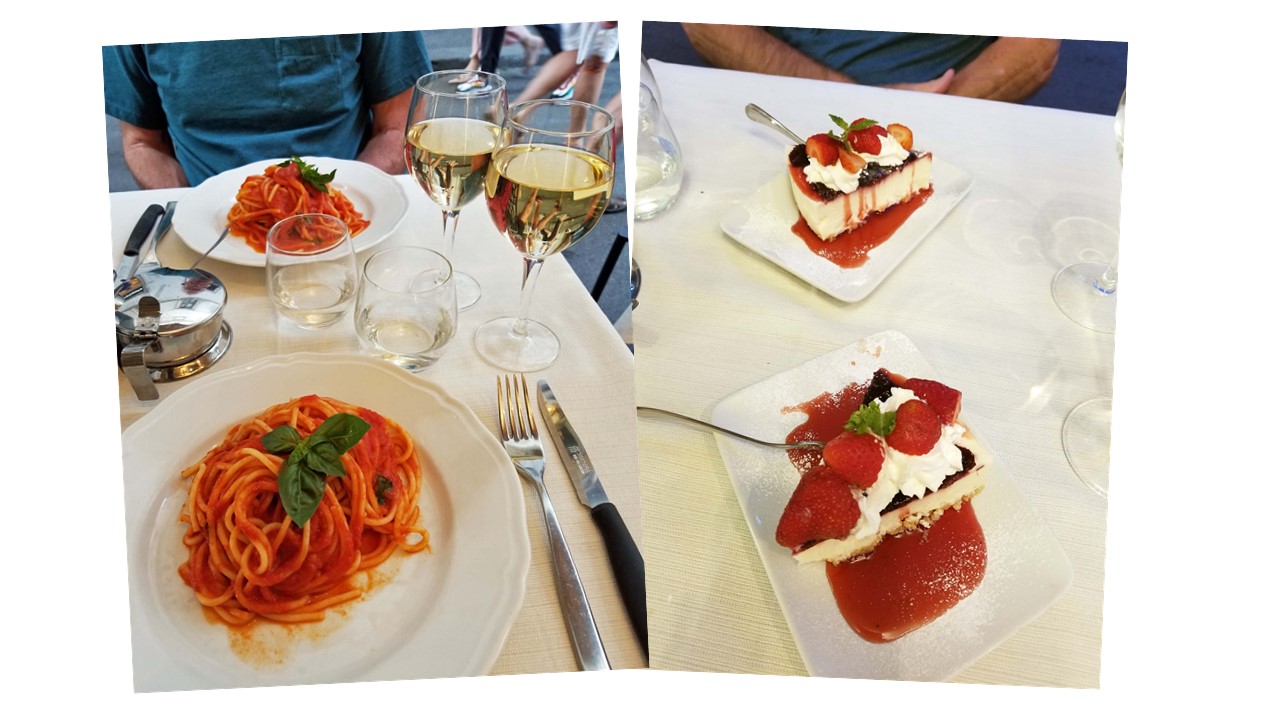
Tonight: Another classic Italian meal–spaghetti. We topped it off with the best cheesecake we’ve ever had. It made Cheesecake Factory look like a beginner.
Ted’s and my Vatican Tour was actually three tours in one: the Vatican Museums, the Sistine Chapel, and St. Peter’s Basilica. That’s too much to cover in a single blog post, so here are parts two and three.
Sistine Chapel
The second part of our tour was the Sistine Chapel, and I’m sad to say that I was disappointed in it. There was a minor religious service in progress when we (and many other tourists) entered the chapel and we were cautioned by our tour guide to remain silent and respectful. The spoiler of the situation was the security guards in the chapel who were constantly shouting “Get over to the right,” “Keep moving,” and other instructions to the visitors. They showed no respect for the service or the setting at all and, in fact, detracted greatly from it.
Although the guards did their best to ruin a respectful atmosphere, I couldn’t help but marvel at the paintings in the chapel. The biggest surprise? Like the Mona Lisa, it was smaller than I had expected it to be. It’s a chapel, not a cathedral, but still–I thought the painting panels on the ceiling would be larger. People say “It took Michelangelo four years to paint the ceiling” as though less time would have been preferable. In spite of it’s surprisingly (to me) small size, I’m amazed he could finish the job in only four years. The walls of the chapel tell the stories of the Bible, from Genesis to Revelations–the Old Testament on one side and the New Testament on the other. No photography was allowed, but I found some photos online to include here.
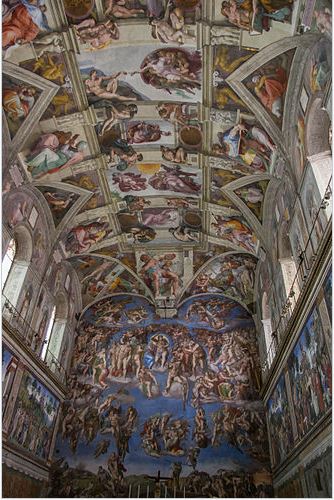
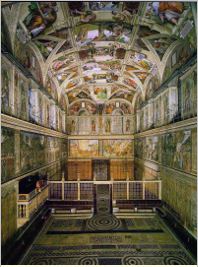
Michelangelo’s contributions to the chapel paintings are the ceiling and the altar wall. The ceiling is divided into scenes from the Book of Genesis, including The Creation of the World, The Expulsion of Adam and Eve, and The Story of Noah. Of course, the center panel, The Creation of Adam, is the most well-known, with the hands of God and Adam. Take a moment to marvel at how Michelangelo found such a perfect way to depict the event of Creation–an event that still cannot be adequately described.
Twenty-five years after completing the chapel ceiling, Michelangelo was commissioned to paint the altar wall. Titled The Last Judgment, it is a depiction of the Second Coming of Christ and the final judgment by God of all humanity. The souls of humans rise and descend to their fates as judged by Jesus Christ, who is surrounded by prominent saints. Altogether there are over 300 figures in the painting. (Ed. note: The Sistine Chapel walls overtly depict Christian doctrine and humanity’s need for salvation as offered by God through Jesus, but some experts, including a Vatican art historian, have also noted “concealed” and “forbidden” subject matter in the paintings.)
St. Peter’s Basilica
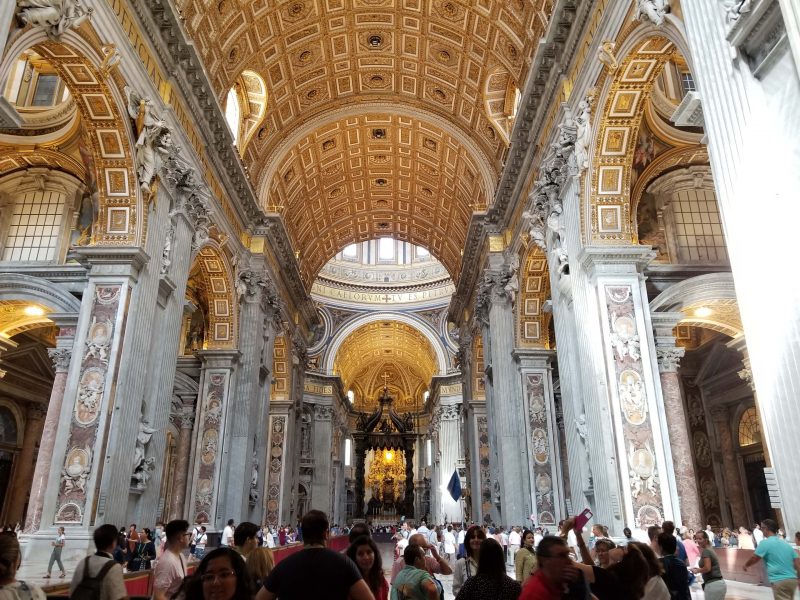
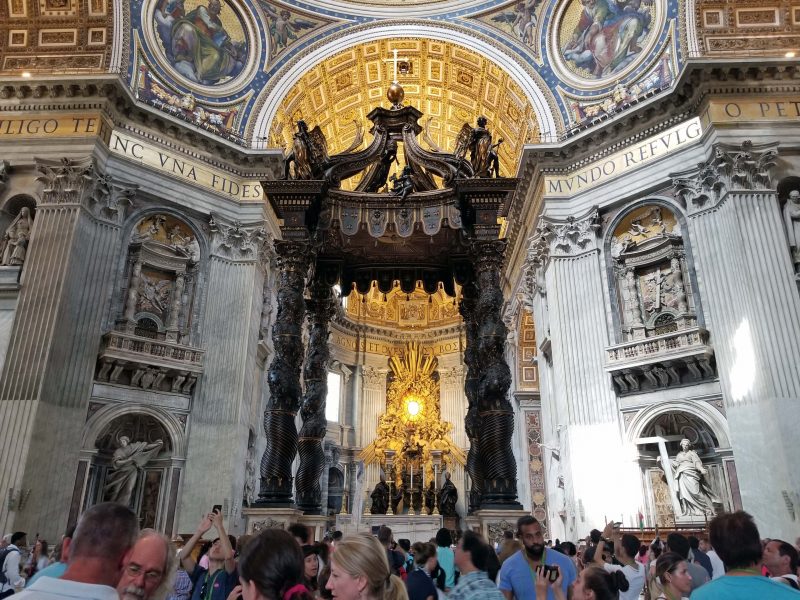
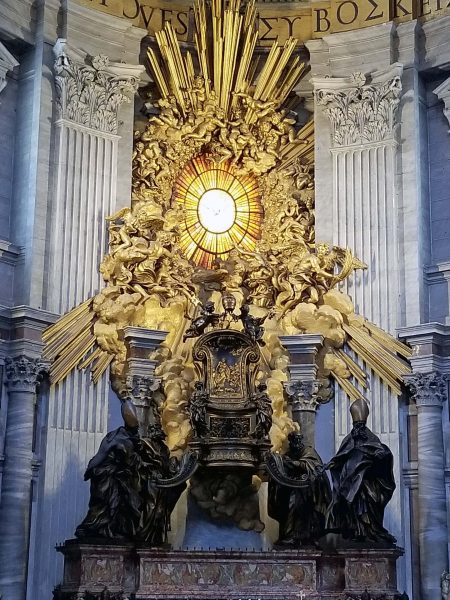
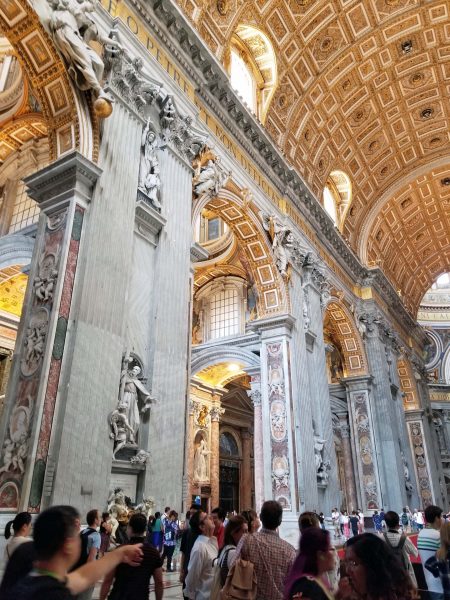
St. Peter’s Basilica was the last part of our tour. It is the most renowned work of Renaissance architecture and the largest Catholic church in the world. It covers almost six acres and took 219 years to build. Beneath the Basilica, 201 popes are buried. In Rome, no building may stand higher than St. Peter’s. Its size is intended to show that God is the greatest and St. Peter is his most important apostle. Only the Pope conducts services in St. Peters.
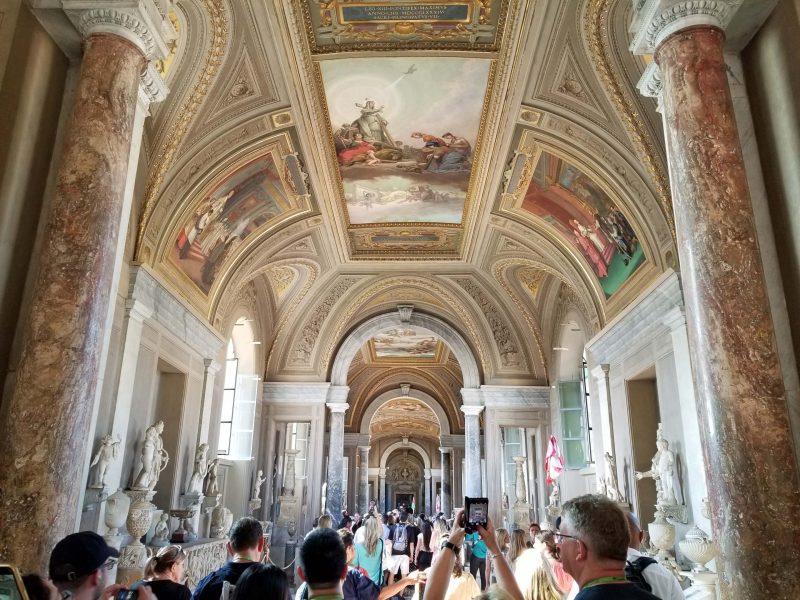
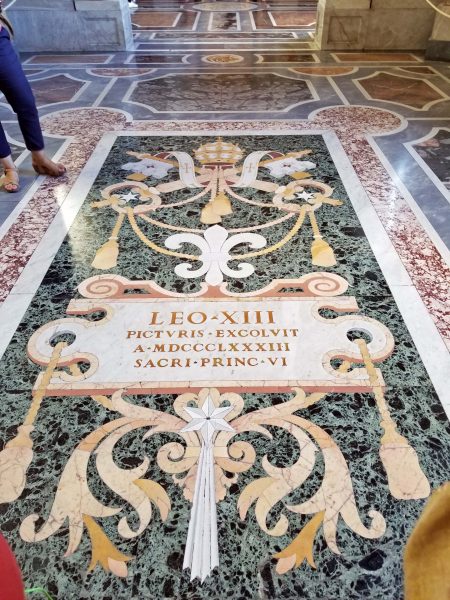
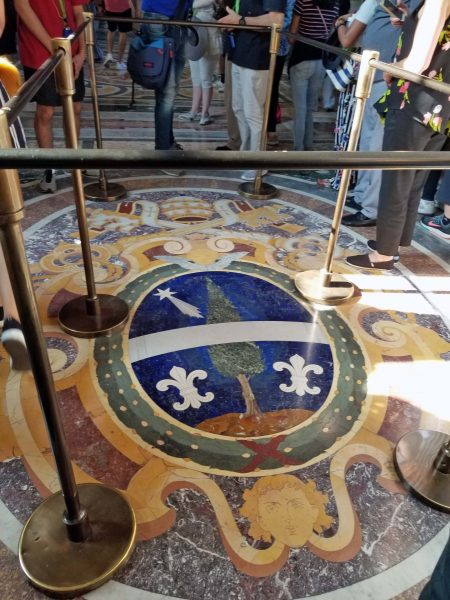
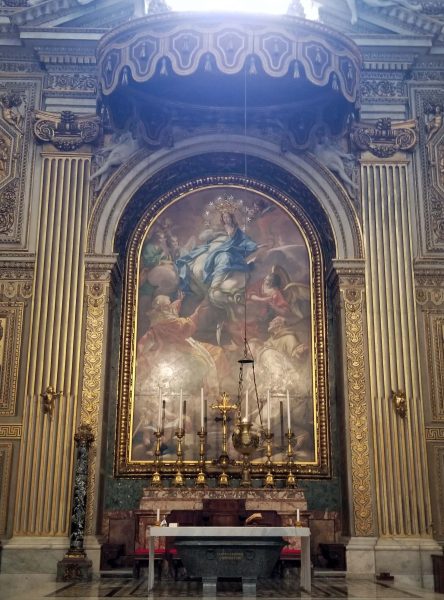
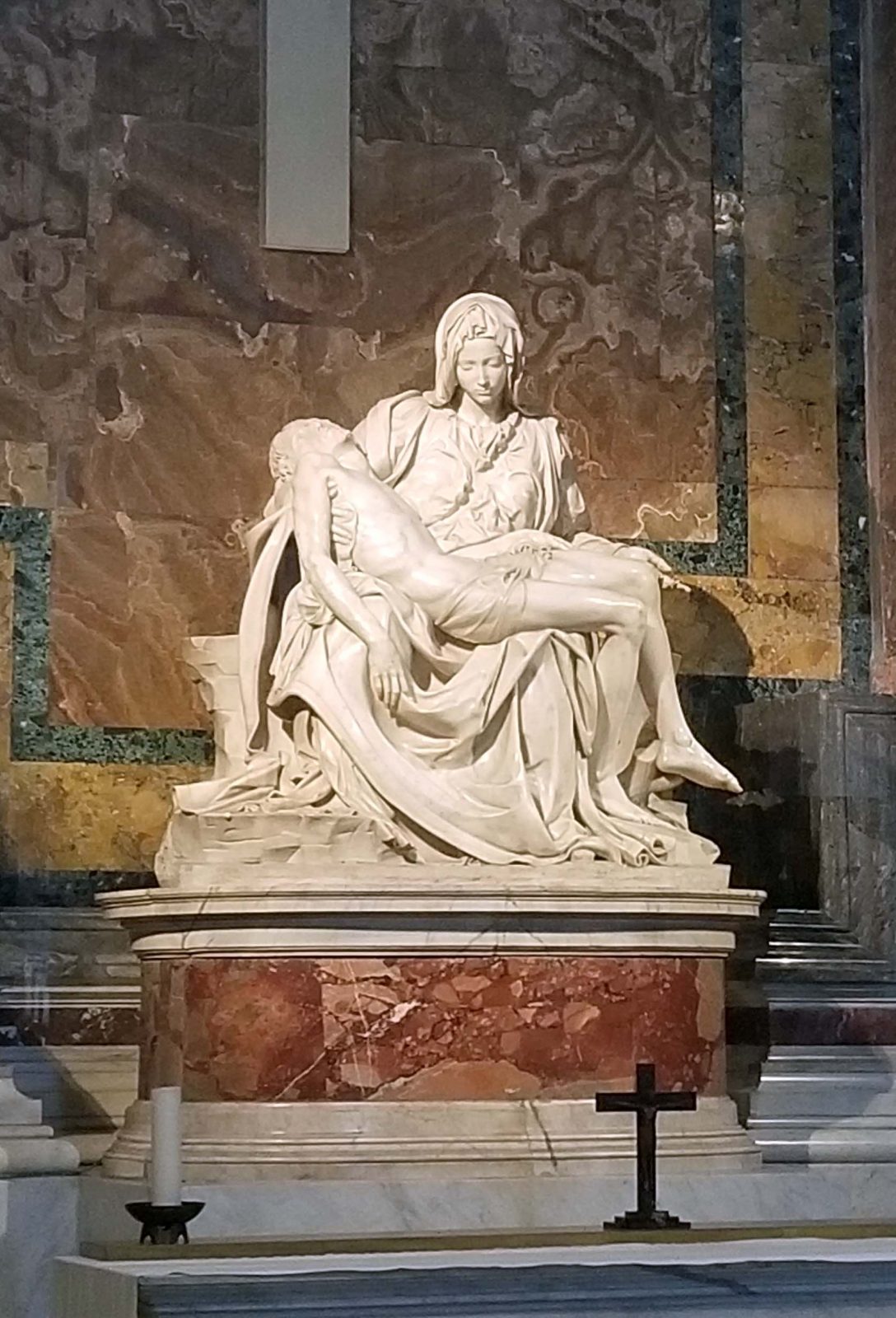
Michelangelo’s Pieta is carved from a single piece of marble and was commissioned for a cardinal’s funeral. It was first housed in a mausoleum near St. Peter’s Basilica, but was moved to its current location in the Basilica in the 18th century. Michelangelo sculpted this piece at the age of 24, and many people didn’t believe it was his work. When he overheard someone attribute the Pieta to another artist, he sneaked into the mausoleum and carved his name into Mary’s sash. He later regretted his vanity and vowed to never sign another piece of his art. This sculpture of Mary holding her dead son, Jesus, was the most moving thing I saw on our entire trip. It brings tears to my eyes, even when I look at my picture of it.
After today’s tour of the Vatican, I have four words of wisdom to share: Skip the line tickets. The Vatican has 20,000-30,000 visitors each day. Unbelievable! Our skip the line tickets allowed our tour guide to take us immediately into the Vatican for our tour. In addition to saving time, this kept us cooler because we didn’t have to wait in line outside. The Vatican is crowded with visitors, it is not air-conditioned, and Rome is hot in the summer–especially during a heat wave like Ted and I are experiencing on this trip.
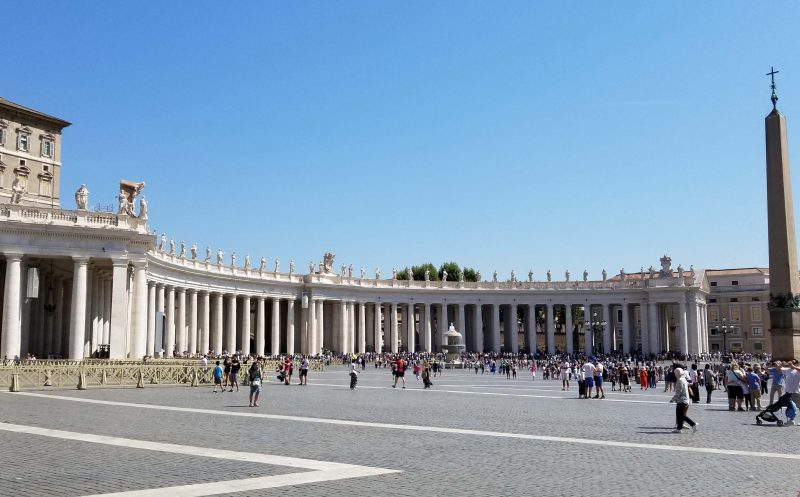
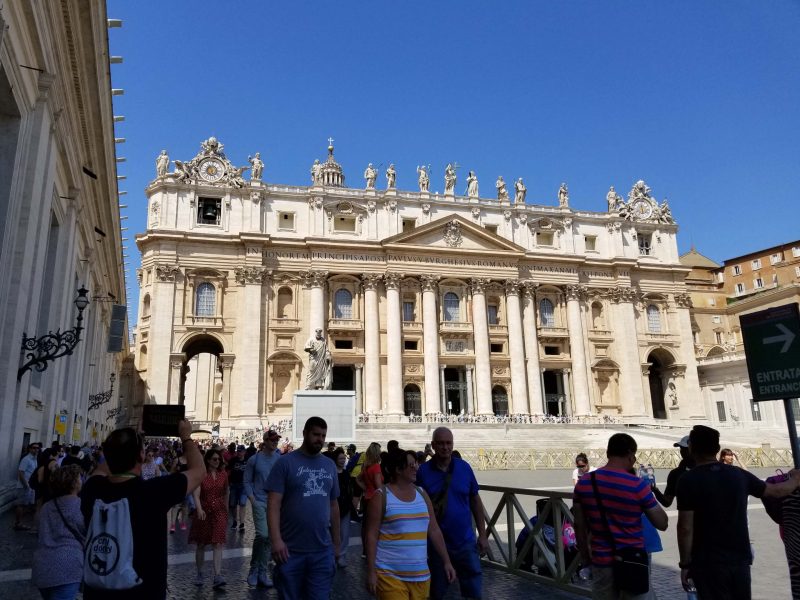
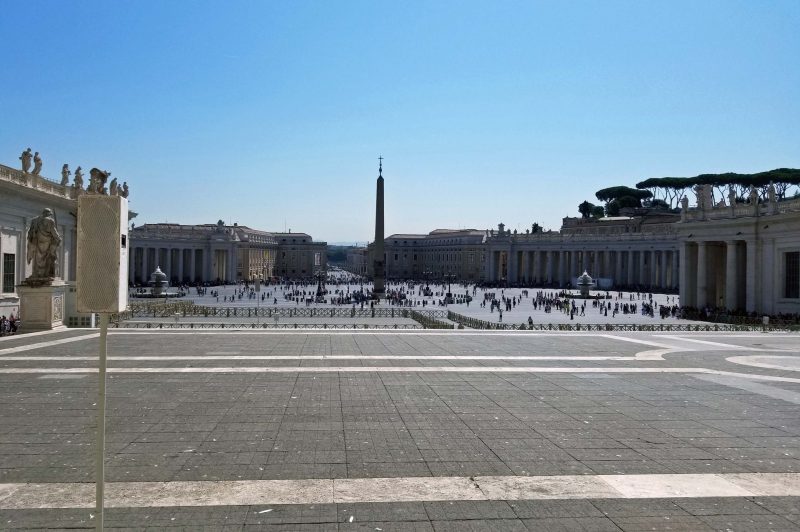
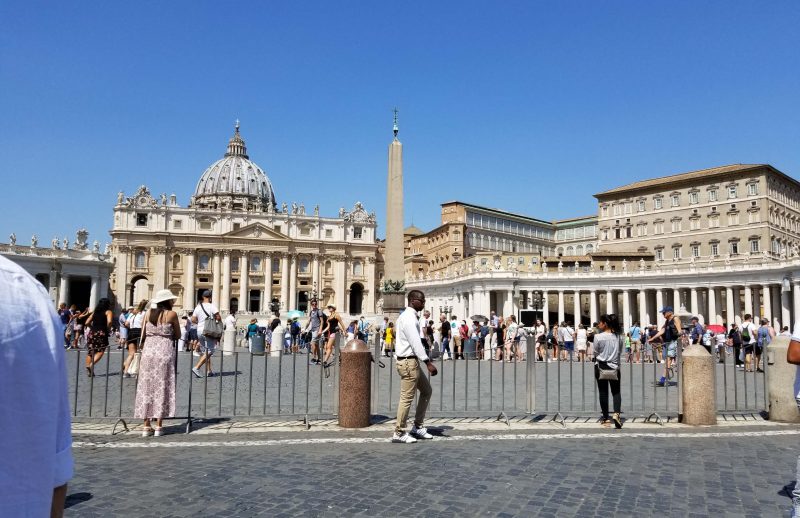
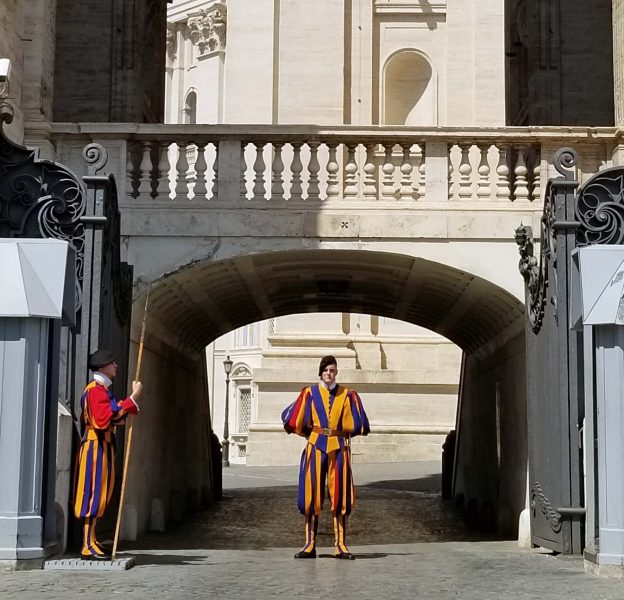
The Swiss Guard is an honor guard that protects the Pope. Since the failed assassination of Pope John II in 1981, a much stronger emphasis has been placed on the Guard’s non-ceremonial roles. They now complete advanced training in unarmed combat and small arms. Members of the Guard must be unmarried Swiss Catholic males between the ages of 19-30, and must have completed Basic Training with the Swiss Armed Forces.
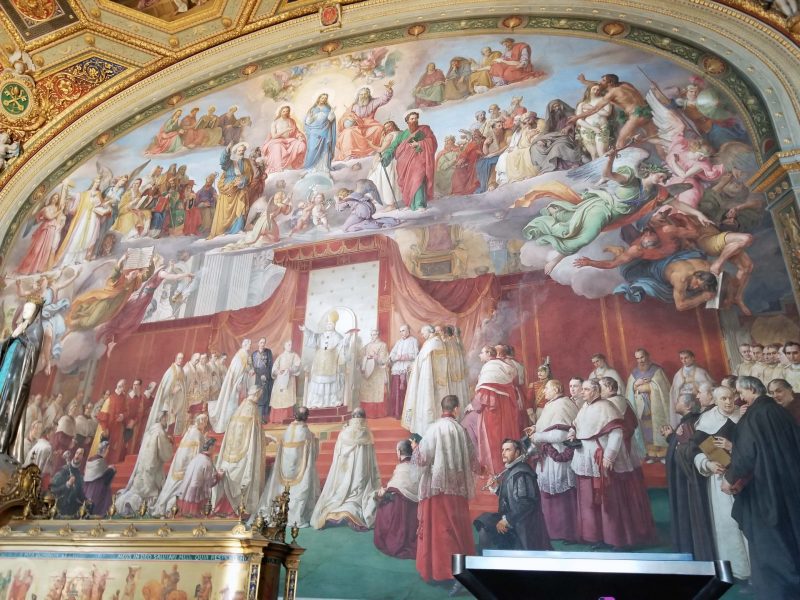
The Vatican museums contain one of the most important art collections in the world. The collection includes roughly 70,000 works of art, with 20,000 pieces on display. The four Raphael Rooms comprise a suite of reception rooms in the palace (the public part of the Vatican), and are famous for their frescoes that were painted by Raphael and students in his workshop.
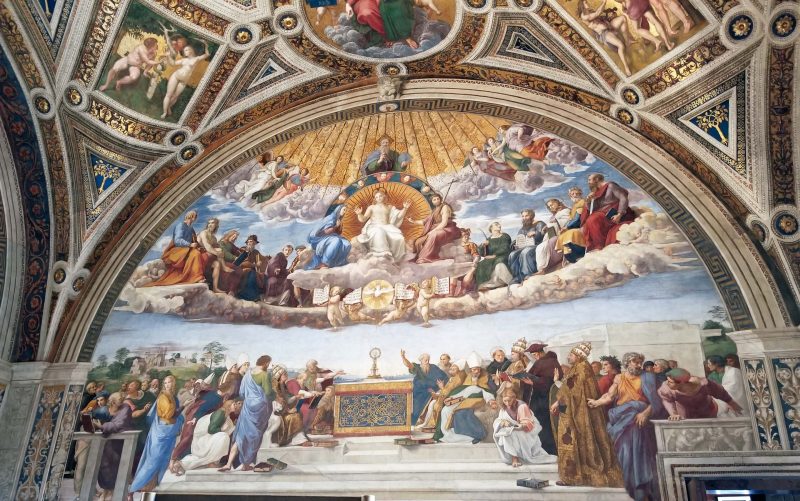
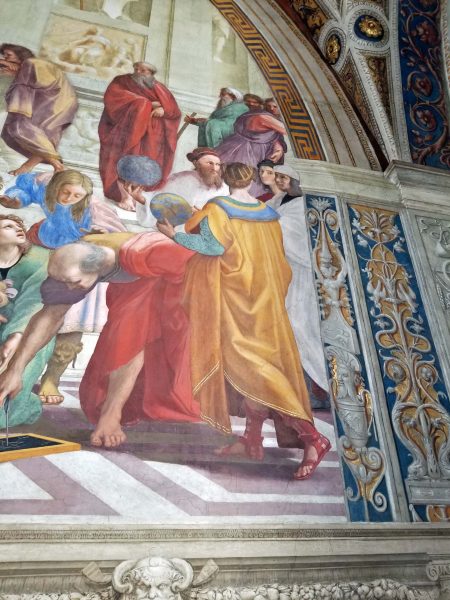
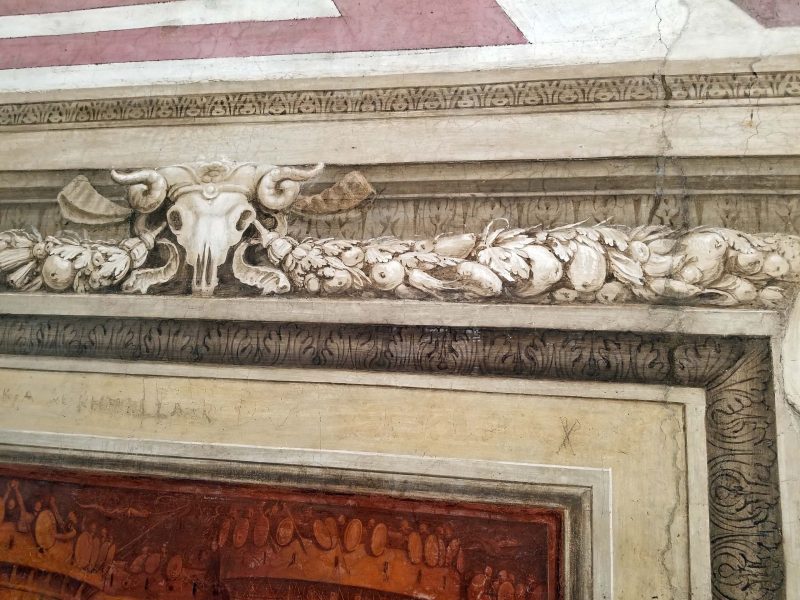
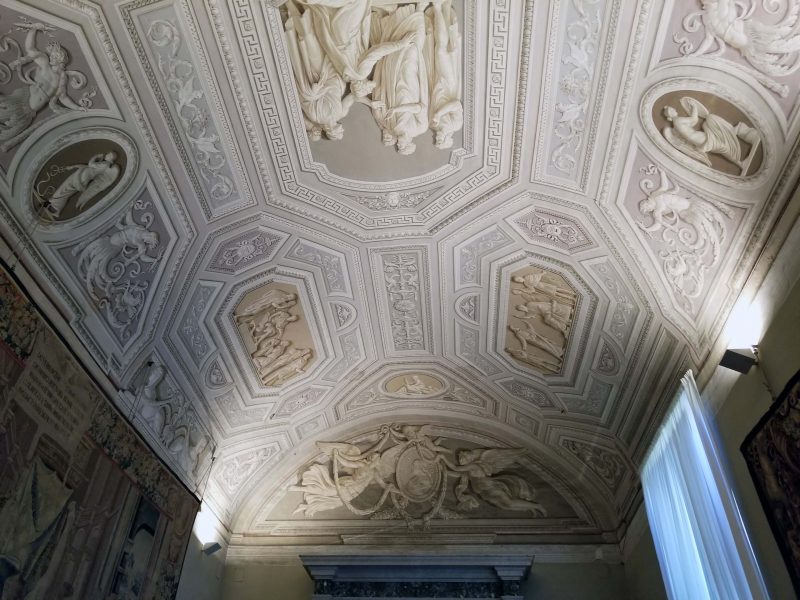
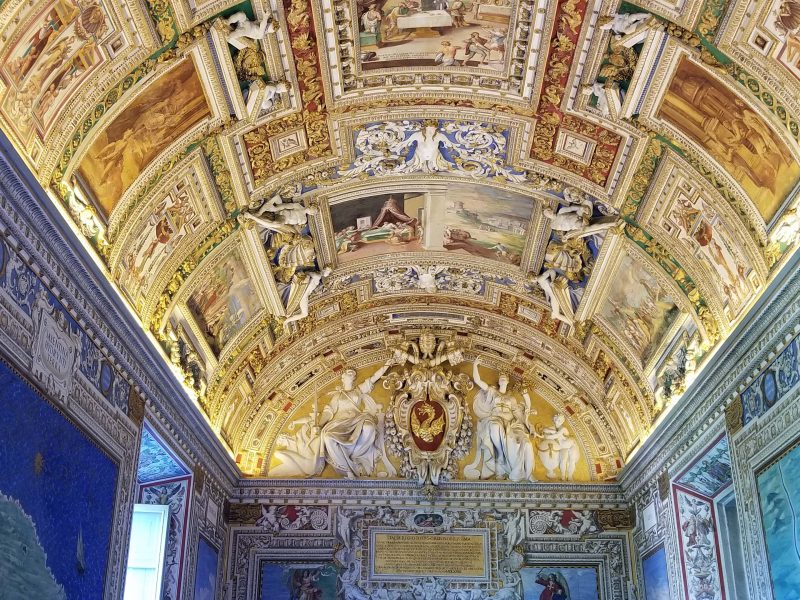
The Gallery of Tapestries and Geological Maps is a highlight of the Vatican museums. There is a series of tapestries on one wall depicting stories of Christ’s life, beginning with his birth and ending with his resurrection. Maps of all the known continents were on display, as well as some of specific countries and regions.
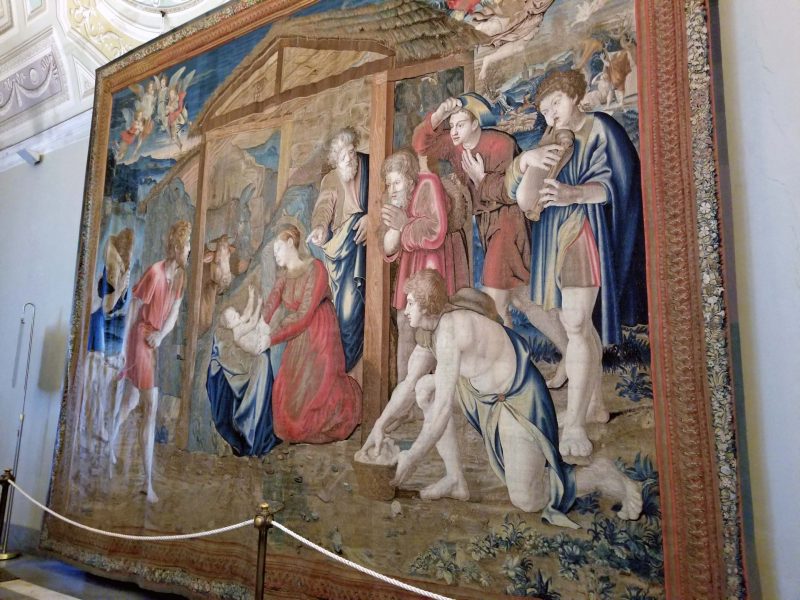
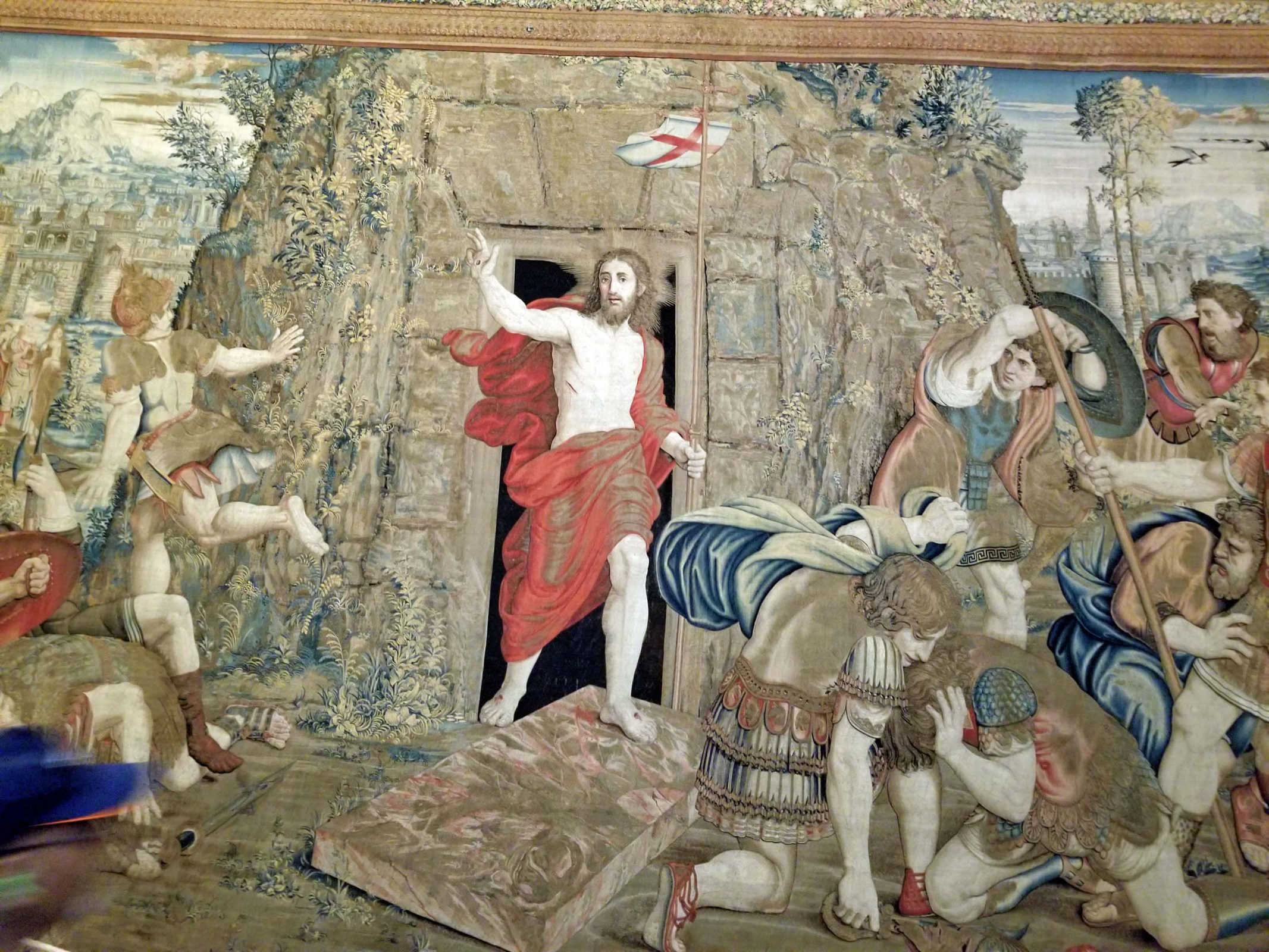
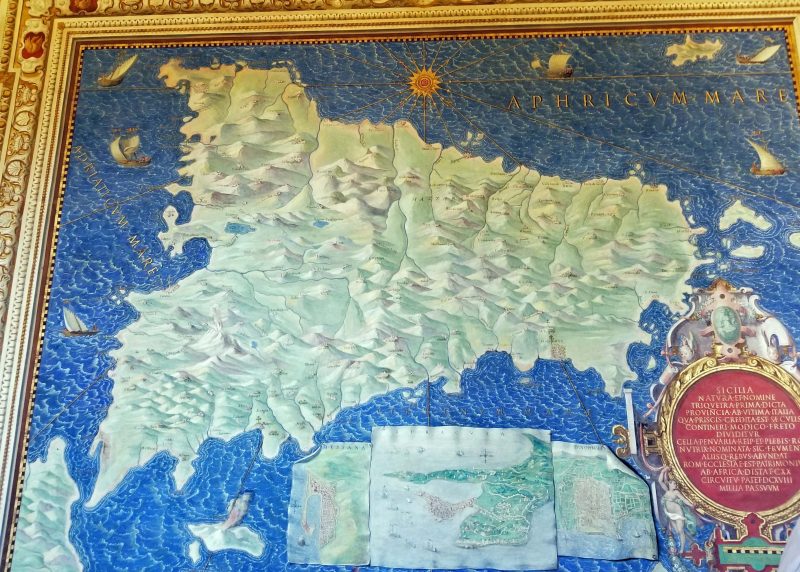
Our Vatican Tour isn’t over, but there’s too much to include in a single blog post. There’s more coming.
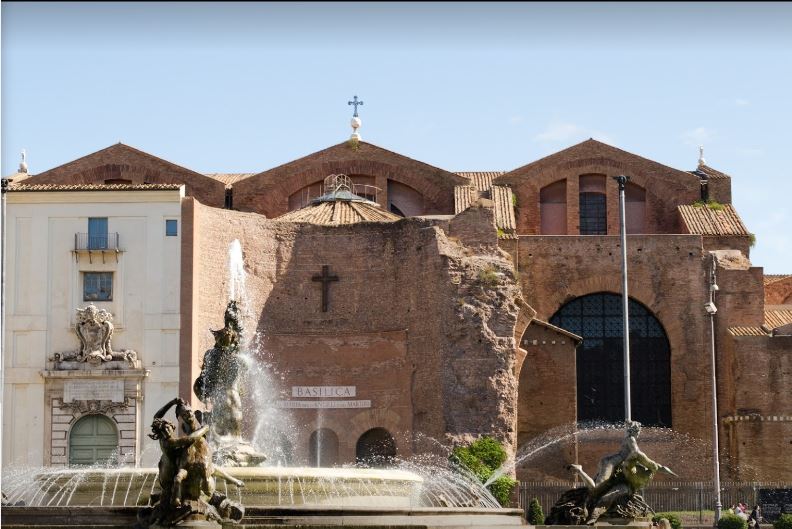
Before leaving home, Ted and I scheduled a city tour of Rome. Since this is our first visit to Rome, we thought it would be a good idea to get an overview of the city before we started trekking around on our own. The tour included the Spanish Steps and the Trevi Fountain, which we saw yesterday, as well as the Pantheon, the original capitol building, and the Basilica of St. Mary of the Angels and the Martyrs.
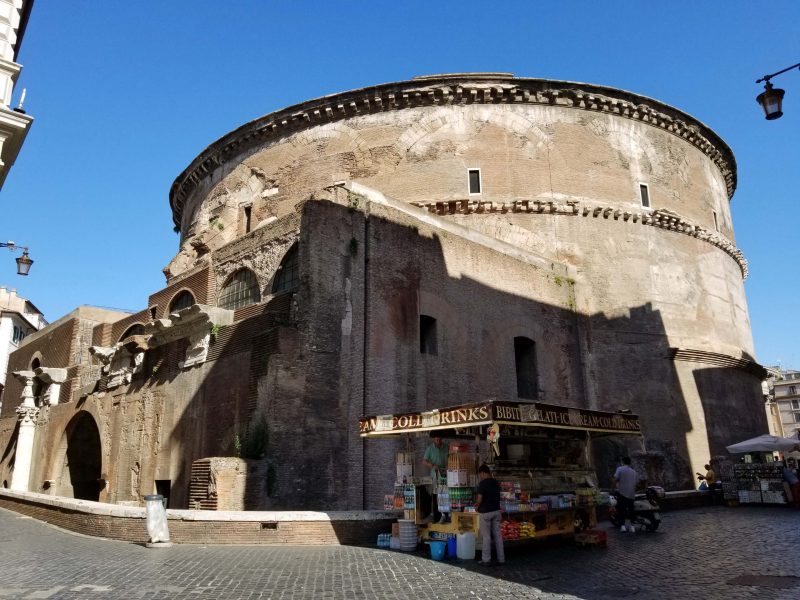
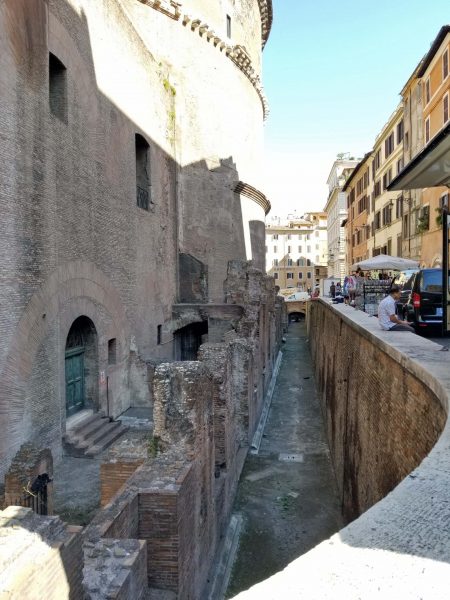
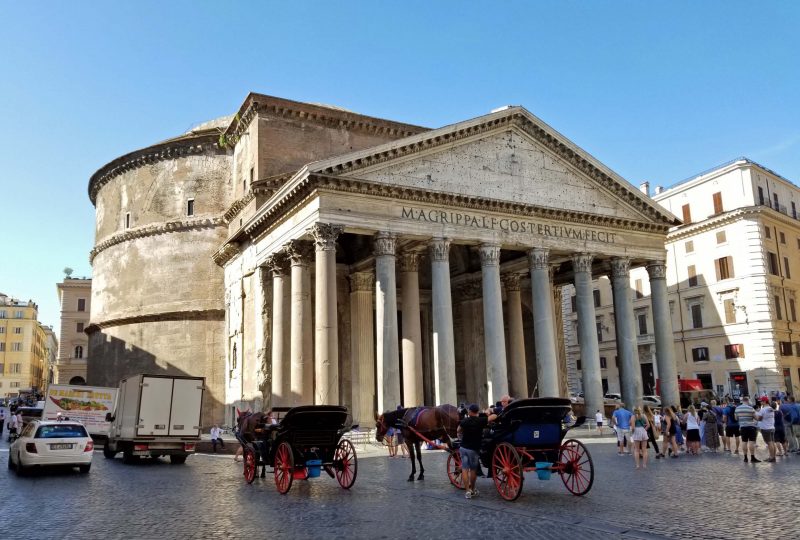
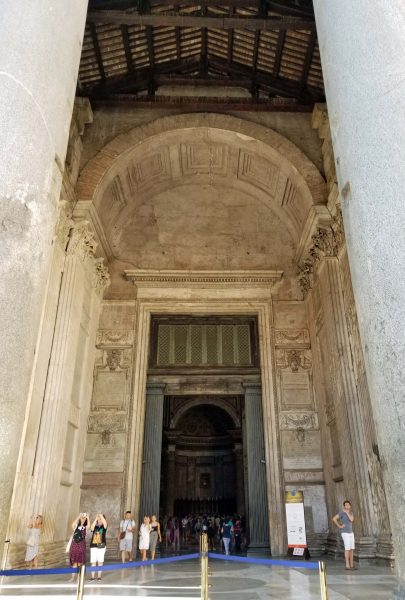
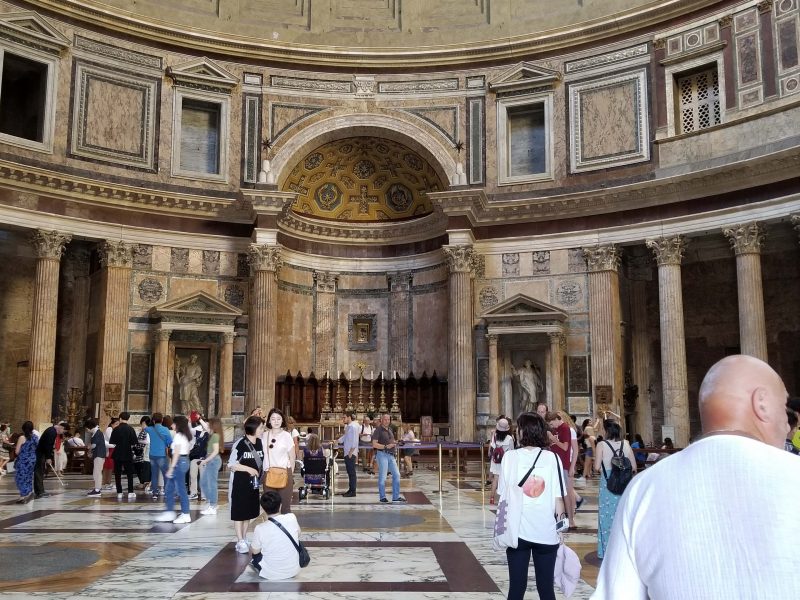
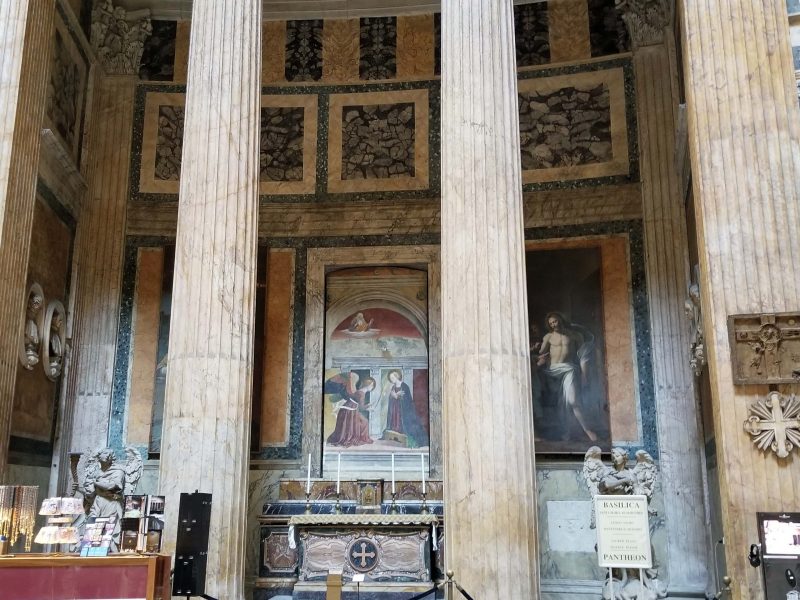
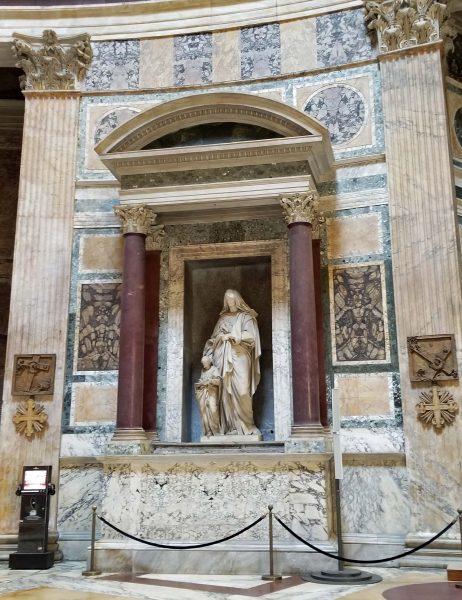
The Pantheon is the only ancient Roman building that has remained nearly intact through the centuries. It has the largest unreinforced concrete dome in the world. A circular opening in the dome known as the oculus (about 30 feet across) has several purposes. (1) It is the only source of light in the Pantheon; (2) it lightens the weight of the dome to avoid collapse; (3) it allows worshipers to contemplate the heavens (probably during boring sermons); and (4) it helps cool the building during the hot Roman summers by allowing rising heat to escape. There is speculation that the oculus also served as a sundial. Because the oculus is an open hole, when it rains, it also rains in the Pantheon. To deal with this, the floor is slightly convex so the water flows away from the center into an effective drainage system.
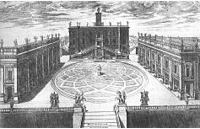
Our next stop was the capitol square. The original Capitol building and the square were designed by Michelangelo, who also created the paintings and sculptures in the buildings and the plaza. It’s hard to picture him as a contemporary architect/artist who was in demand, rather than as an extremely gifted historic genius.
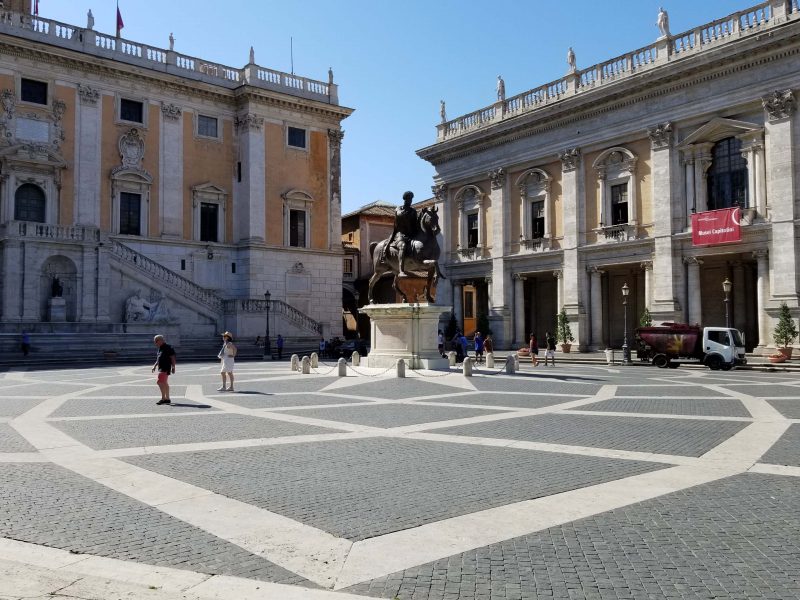
I found an online copy of Michelangelo’s plan for the Capitoline Hill complex that shows the spiraling pavement design and the entire square.
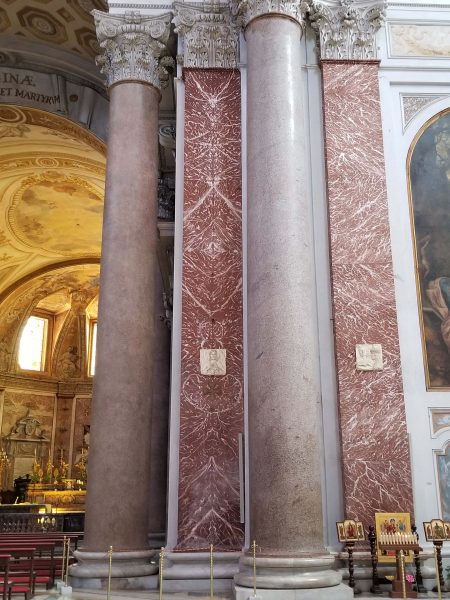
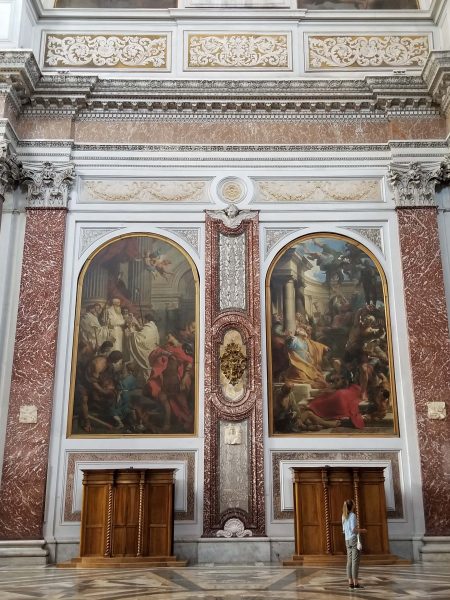
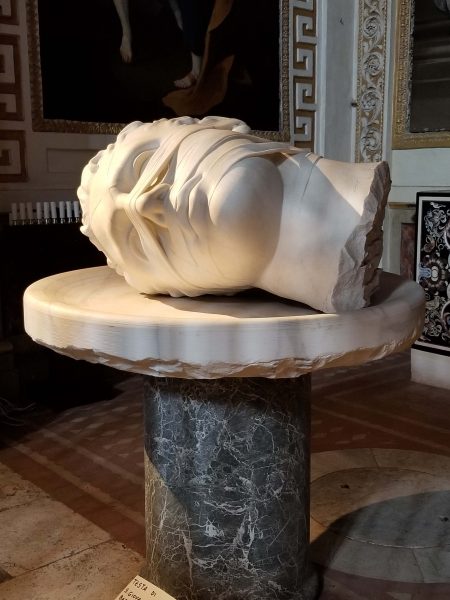
Our guide described our final stop as an unexpected treat. The church of St. Mary of the Angels and the Martyrs doesn’t look like much from the outside, but it was designed by Michelangelo, and that makes all the difference.
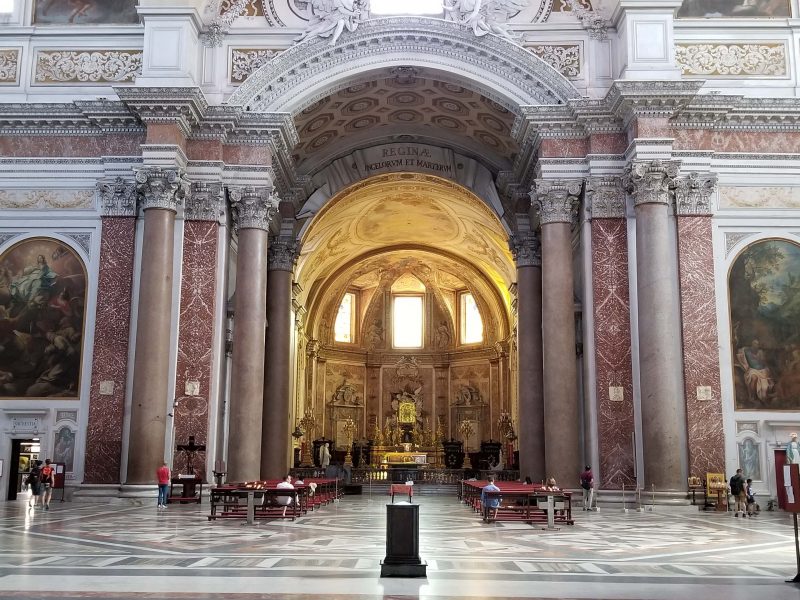
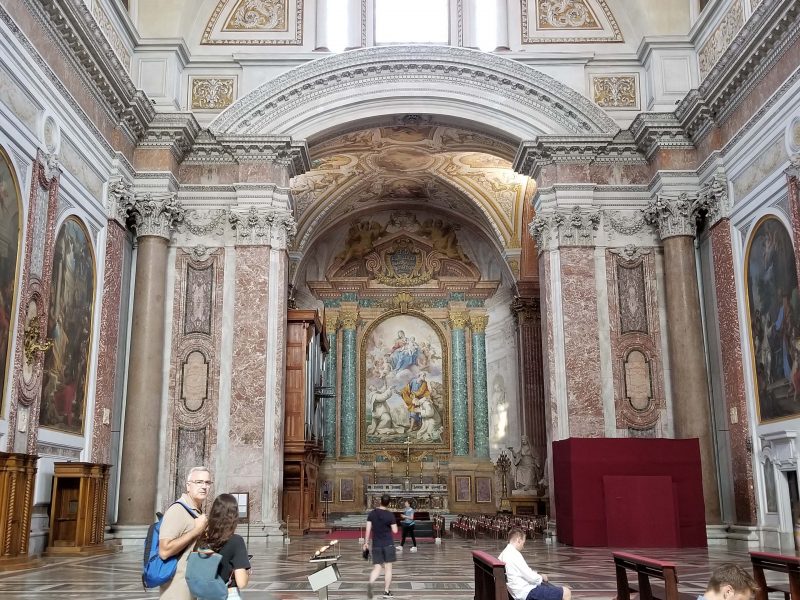
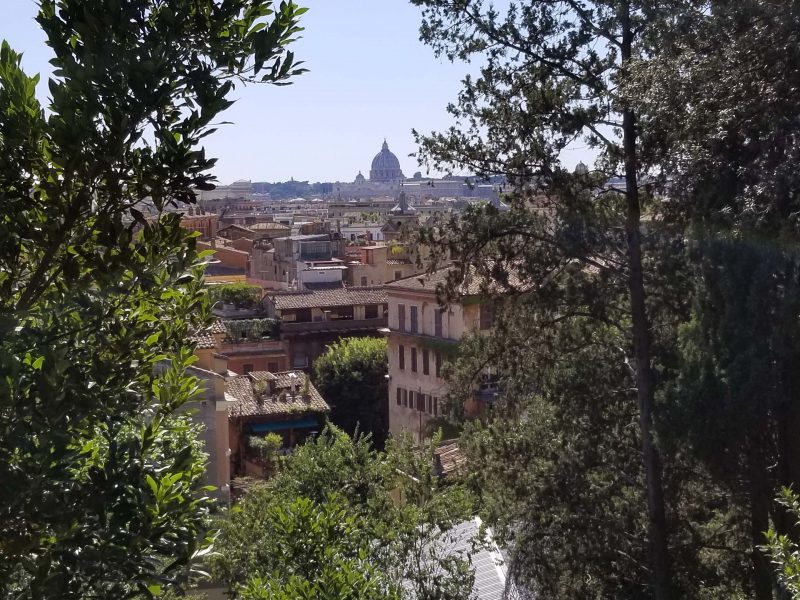
It’s really hot in Rome, so Ted and I walked to the Medici Palace (also near our hotel) and sat in a shady park across the street from it for awhile. We had a very nice overview of the city and St. Peter’s Basilica.
Dinner tonight was another Italian classic: pizza!

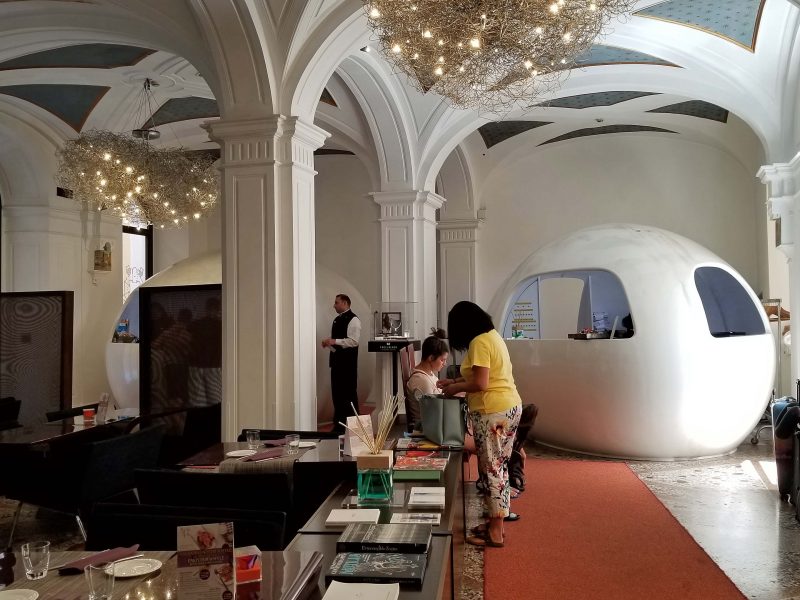
The hotel Ted and I stayed in during our visit to Rome was . . . different. It was called The Art. The first odd thing we noticed were the pods in the lobby (one is behind the pillar) that served as a check-in desk and a concierge desk. (A long time ago, in a galaxy far, far away, . . .) Check out the lobby chandeliers too.
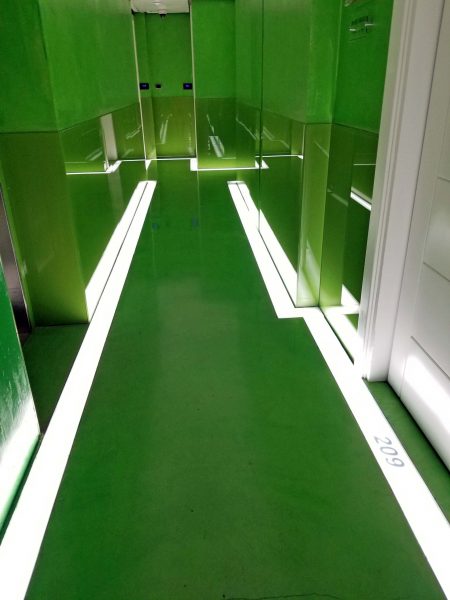
We couldn’t help noticing the next unusual feature. It was eye-boggling when the elevator door opened. Having the room numbers printed on the floor instead of on or beside the door was not the major eye-popper.
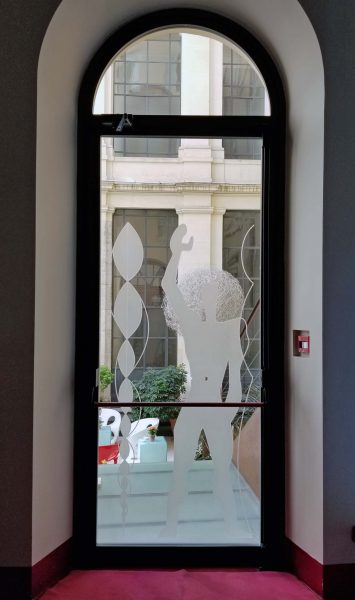
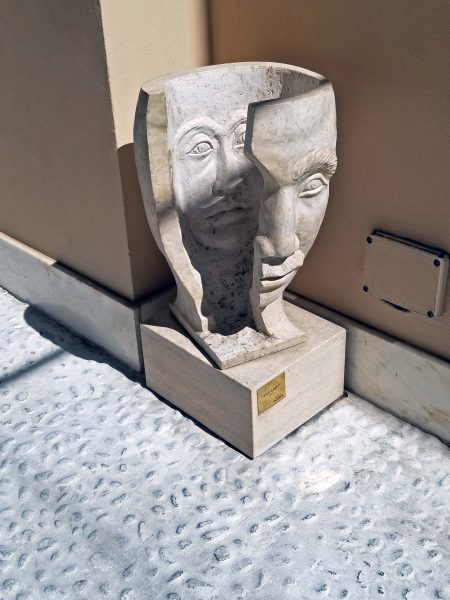
Then there was the artwork scattered throughout The Art. I included pictures of a few items below. Very ultra-modern. The hotel is located in an area of art shops and museums. If I knew more about art, I’d probably know the name of the art style. Readers, help me if you can.
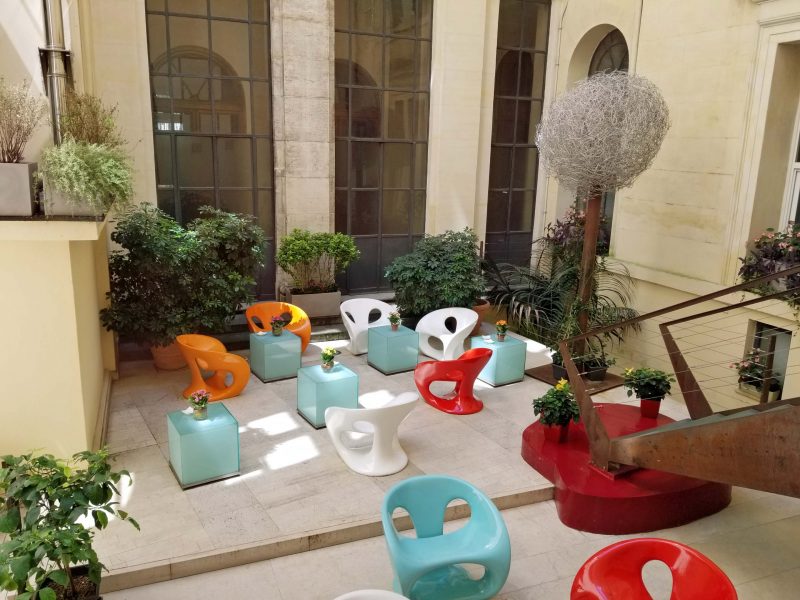
The decor was a surprise (especially the bright green hallway!), but the hotel was nice. At breakfast one morning, we heard a grandmother ask her grandson if he liked this hotel or their last one better. He didn’t hesitate. He said the other one was good, but this one is better because they have waffles and bacon for breakfast. Food. That’s what’s important to a ten-year-old in a hotel, right?
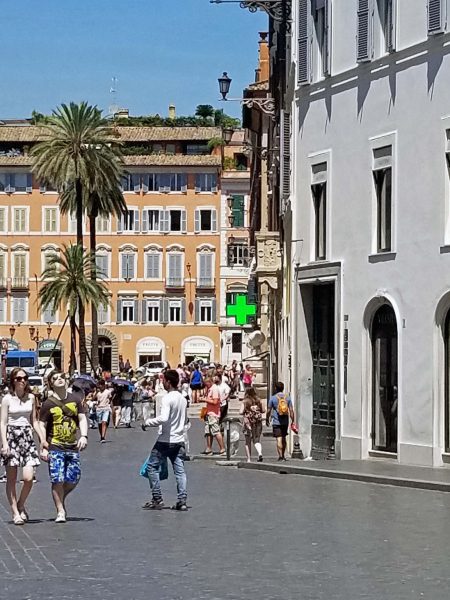
Today, Ted and I flew from Geneva to Rome and checked into our hotel in the mid-afternoon. We immediately went back outside to do some sightseeing. As soon as we walked out of the hotel, we thought, “We’re in Italy!” because it definitely looked Italian.
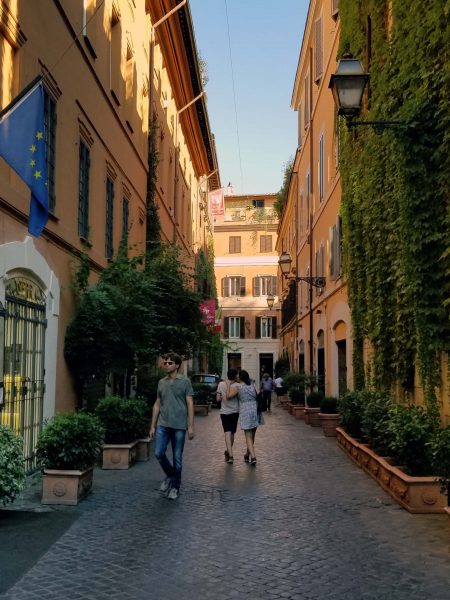
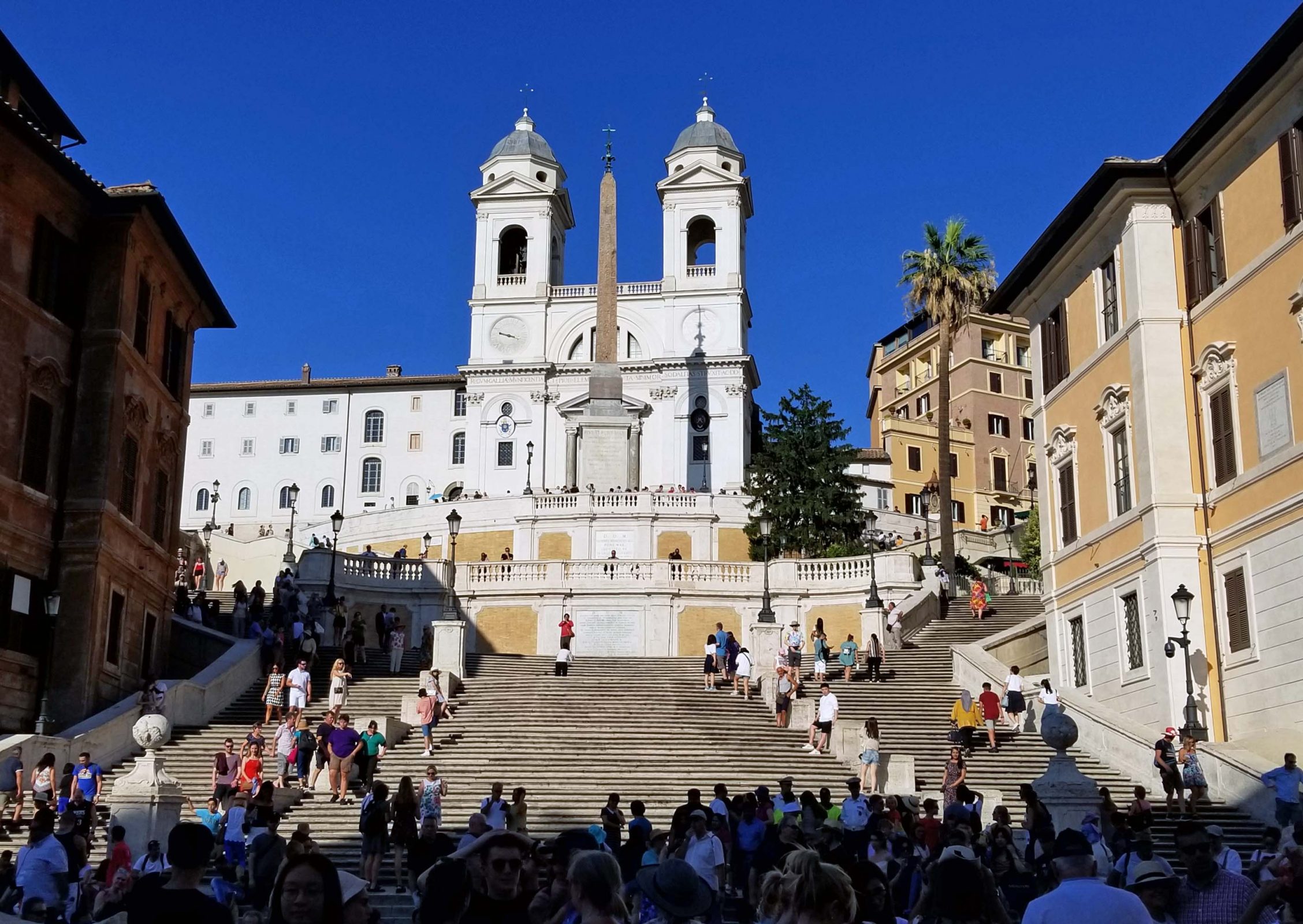
Our hotel was about a five-minute walk from the Spanish Steps, so we headed in that direction. Of course, we climbed the 132 steps to the top. The steps are grouped in 12s to represent the Apostles, but that would only be 11 x 12. Does Judas not count? Do the groups of 12 represent how many Apostles there were, but one set is left out because Judas betrayed Christ? Or doesn’t the grouping mean anything? I don’t know; we just enjoyed the experience and the view.
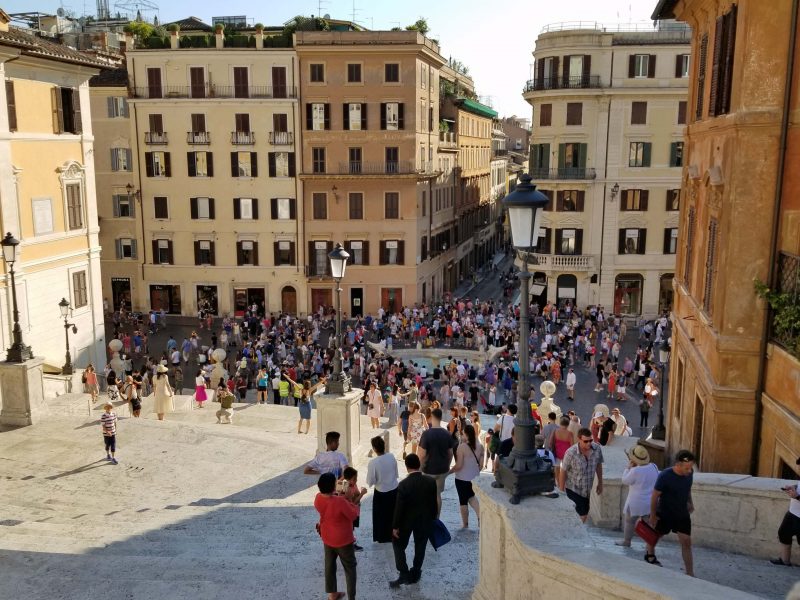
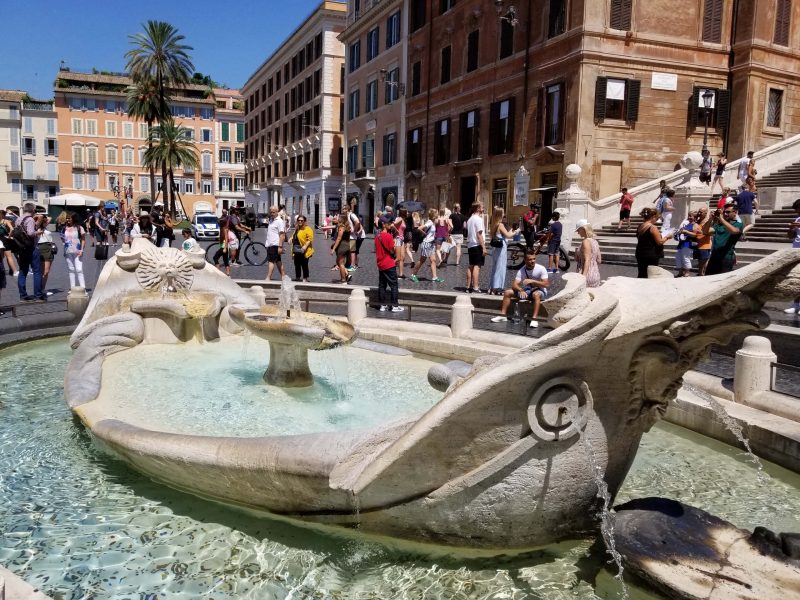
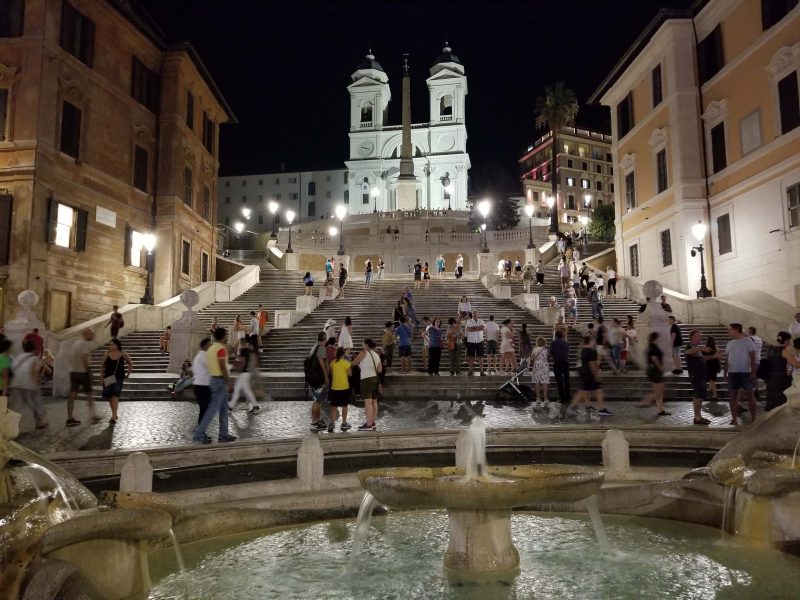
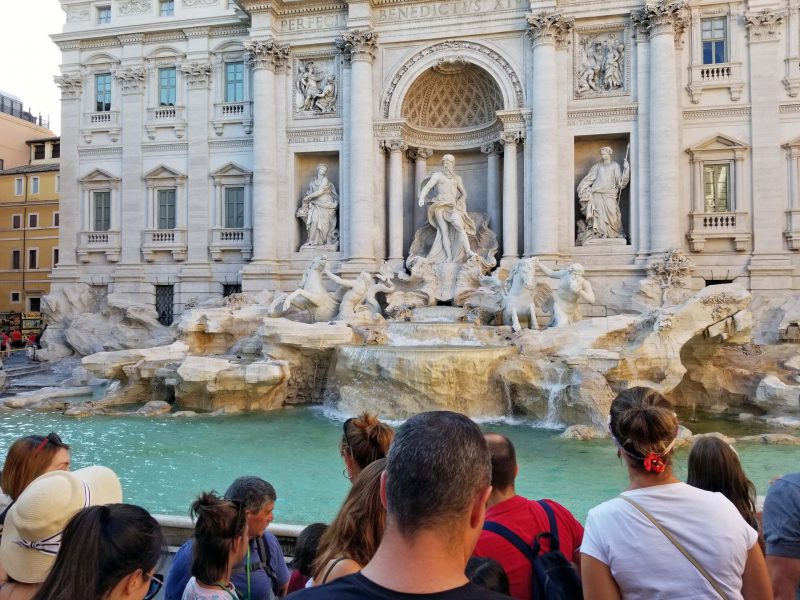
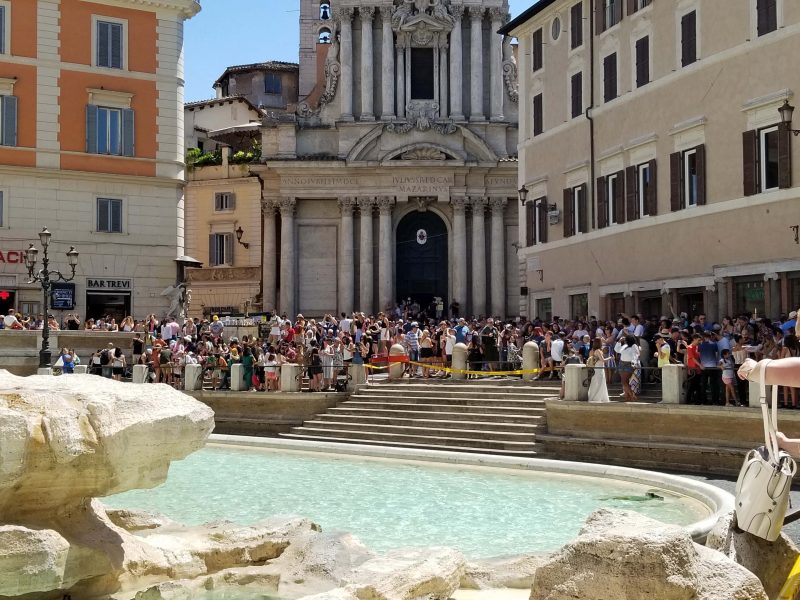
The Trevi Fountain was only another half-mile, so we continued onward. We thought the Spanish Steps had a large crowd, but we hadn’t seen anything until we got to the Trevi Fountain. We had to wiggle and squeeze our way to (near) the front to see the water in the fountain and to take some pictures.
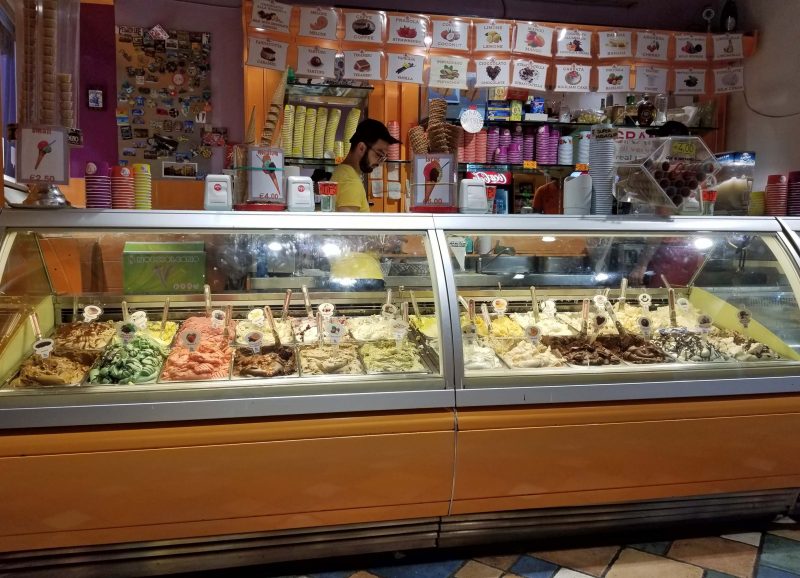
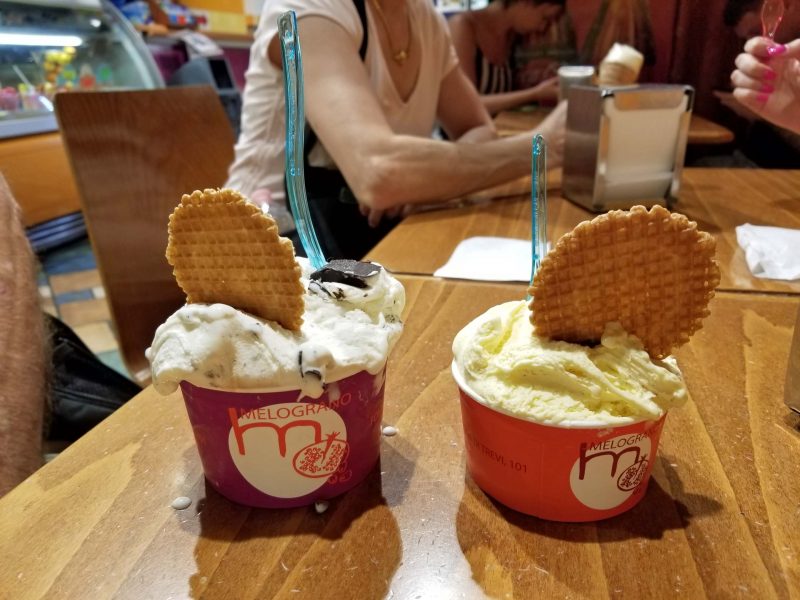
We saw a lot of good-looking gelato as we walked around and had to buy some. It’s Italian gelato–a must-have in Italy.
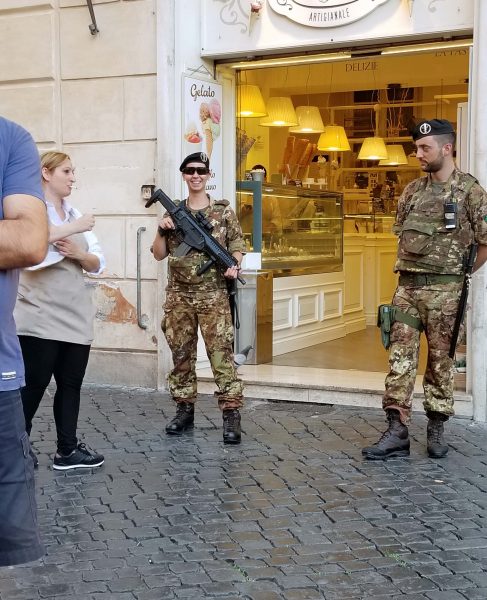
There were a lot of military camo jeep-type vehicles as well as military and local police with assault rifles everywhere we went. I asked about it and was told it’s just the kind of post-9/11 security that’s now needed wherever large crowds gather.
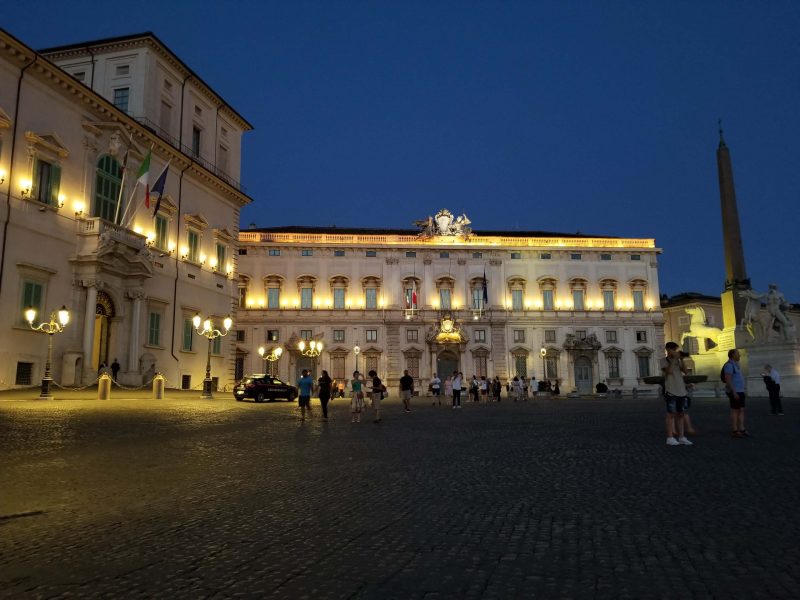
We ate dinner at an Italian restaurant recommended by the hotel concierge and then walked around some more. We sat in the plaza at the Quirinale (police station/jail) and just people-watched for awhile in the warm night air before going back to our hotel.